Chania
"Chania is where the Mediterranean concentrates everything it does best into a single harbor."
The jewel of western Crete: a Venetian harbor ringed with pastel-painted buildings, Ottoman mosques, and the finest seafood on the island.
I arrived in Chania by bus from Heraklion, which means the city introduces itself from behind — through the back streets of Splantzia, past a minaret growing out of a whitewashed wall, past a cat sleeping on a crumbling stone step, before anything opens up. Then the harbor appears and the surprise of it is physical. Not just beautiful. Disorienting.
The Venetian Harbor at Its Own Pace
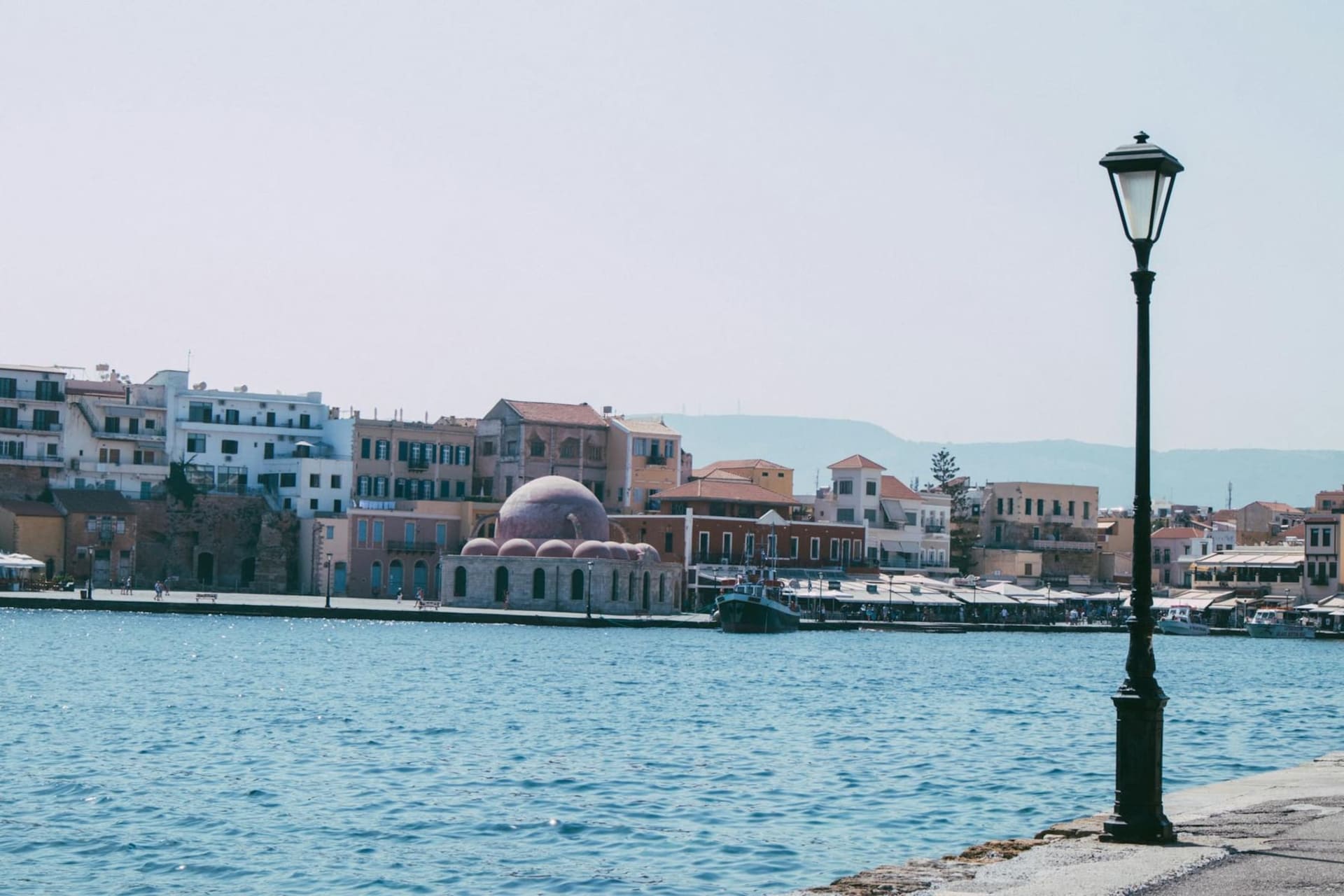
The Enetiko Limani was built in the fourteenth century and the Venetians left it with the architecture of people who planned to stay. The lighthouse at the mouth of the harbor is actually Egyptian — rebuilt in the nineteenth century by Ottoman hands — and this layering of empires is the thing that makes Chania so strange and so compelling. The buildings along the quay are painted in faded golds and pinks that sharpen at golden hour into something almost violent in their beauty. Lia and I walked the full length of the waterfront each evening before dinner, which felt excessive until we realized we were doing it because we kept noticing new things — a carved lintel above a doorway, a Venetian cistern embedded in a café wall.
The smell of the harbor in the morning is brine and diesel and something floral I could never identify — jasmine, maybe, or wild herbs from the White Mountains carried down on the early air.
What to Eat and Where
The fish market on Skrydlof Street is the honest center of the city. Grilled octopus hung out to dry on a line in the sun is not a cliché here — it is preparation. The tavernas around the market, not the polished ones on the quay, serve the best food: boureki, the Cretan zucchini and cheese pie with mint; gamopilafo, a wedding rice dish cooked in lamb stock that no menu calls beautiful but that is. At Apostolis, just off the inner harbor, we ate a simple plate of just-caught dentex with lemon oil and nothing else for forty minutes without speaking.
The unexpected discovery was the covered market itself — the agora, built in 1913 in the shape of a cross — where a stall near the eastern entrance sells Cretan graviera aged longer than the wheel I find in any French supermarket. I bought three hundred grams and ate most of it standing on the street.
Into Splantzia and Beyond
The neighborhood behind the harbor, Splantzia, is where the city lives when it is not performing for visitors. The square around the Venetian church of Agios Nikolaos — which was converted to a mosque under Ottoman rule and now functions as neither — has plane trees old enough to have shaded every version of Chania. The Orthodox cathedral of Trimartiri is two minutes from a hammam. History here does not organize itself into periods. It coexists.
When to go: May and early October are ideal — the light is at its most intense, the water is warm, and the harbor belongs more to the city than to the crowds. July and August are manageable at the edges of the day, impossible in the middle.