Ngorongoro Crater
"The mist cleared and the crater floor appeared — the feeling was something between vertigo and understanding."
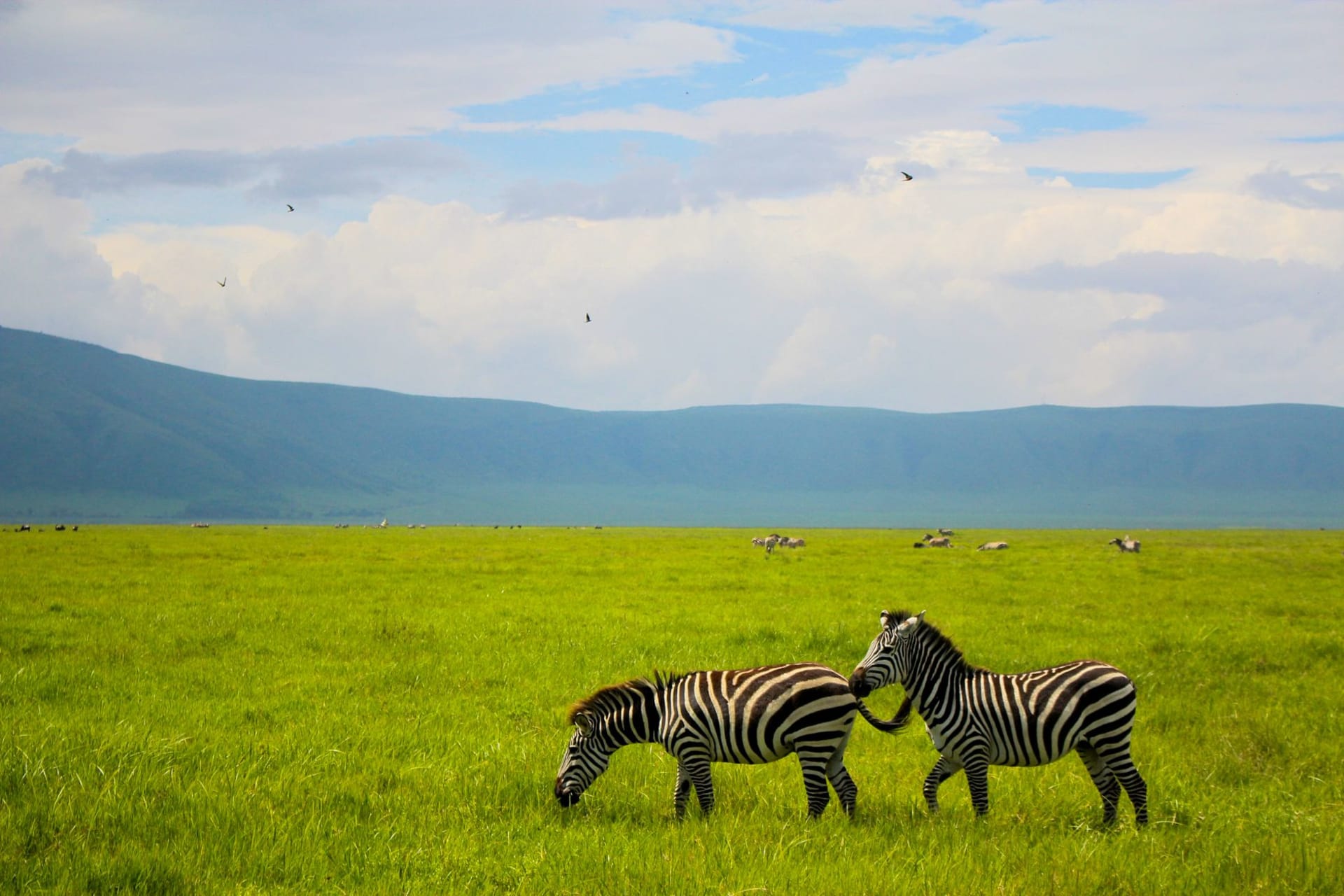
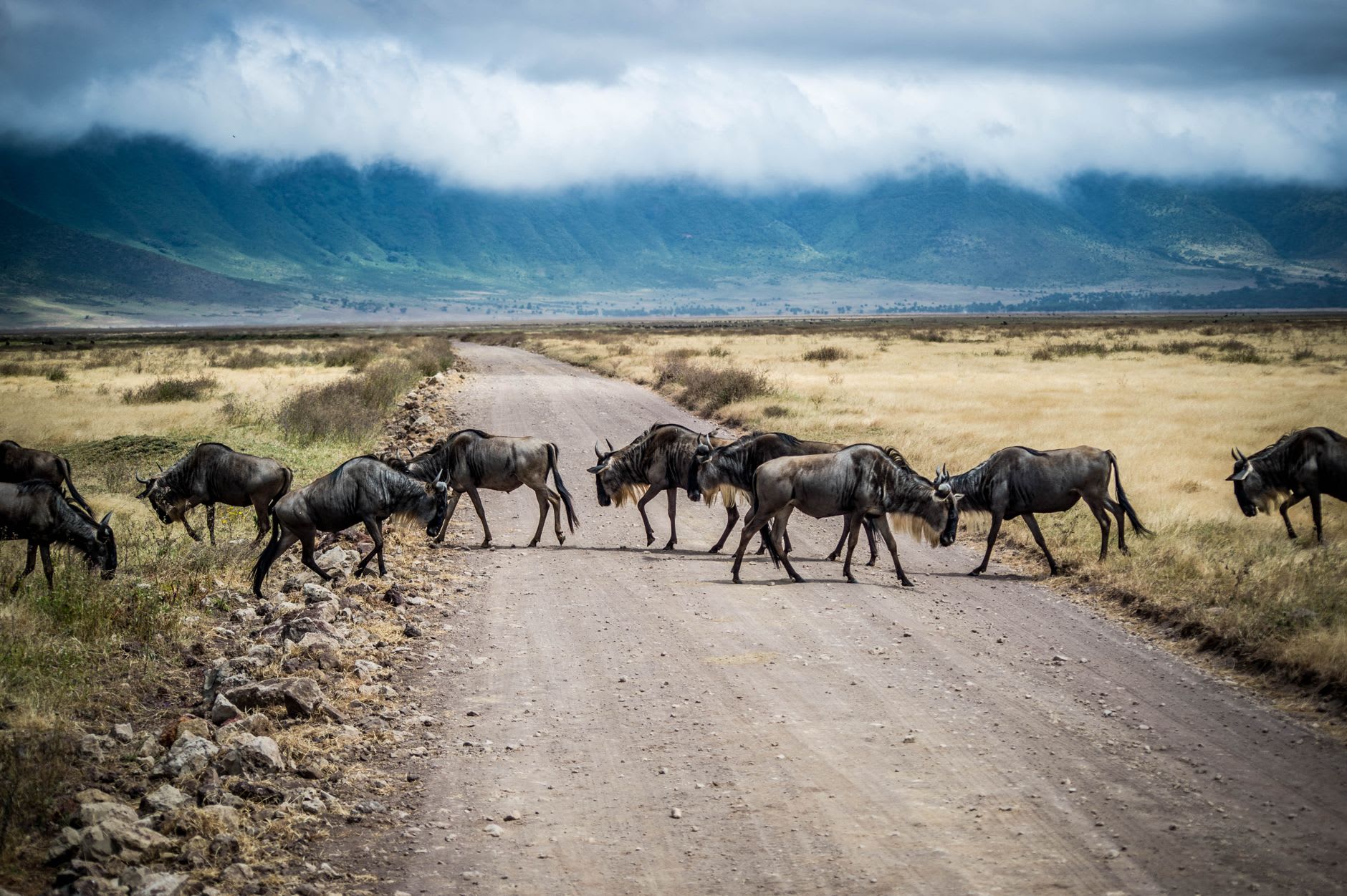
The morning I arrived at the crater rim, Ngorongoro was entirely invisible. Clouds and mist had filled the caldera so completely that looking out from the viewpoint was like looking at a grey wall with trees at the top. The other people at the viewpoint were checking their phones, visibly disappointed. I waited. Twenty minutes later the wind shifted, the mist began to shred, and the crater floor appeared below — all two hundred and sixty square kilometers of it — and then kept appearing, in stages, as if being unveiled deliberately. A flat green plain at the center. The white salt shimmer of Lake Magadi, the soda lake at the caldera’s heart, with the distant pink edge of flamingos. Darker patches of acacia forest. And moving through the grass, small dark shapes that resolved, with binoculars, into a herd of wildebeest.
Ngorongoro is a caldera, not a crater — a technical distinction that matters because a caldera forms when a volcanic mountain evacuates itself and collapses inward, leaving not a cone but a bowl. This happened here roughly two to three million years ago, and the bowl that resulted is twelve kilometers wide and six hundred meters deep, with a relatively flat floor that has become one of the most densely populated wildlife habitats on earth. The walls are steep enough to prevent most elephant herds from climbing out (some males do, lone bulls with apparent destinations in the forest), so the populations inside are relatively contained. Dense is the right word: twenty-five thousand large mammals in an area smaller than the Isle of Man.

The black-maned lions are the most photographed animals in the crater, and the manes are genuinely more extravagant than the average — possibly an adaptation to the cooler microclimate inside the caldera, which sits at higher altitude than the surrounding plains. I watched a male walk across open grassland at close range, probably thirty meters, with the total self-absorption of an animal that has never had to develop any relationship with threat. The photographers went quiet. That happens here. The place overrides the social noise.
The Maasai presence inside the crater is often footnoted in travel writing and deserves more. Under the terms of the Ngorongoro Conservation Area, Maasai pastoralists retain grazing rights in the caldera, and you will see their cattle moving across the same plains as the wildebeest and zebra, attended by young herders in red shukas. This is not a colonial heritage attraction — the Maasai were here before the colonial boundaries were drawn. The coexistence of traditional pastoralism and predator-prey dynamics in the same landscape gives Ngorongoro a layered quality that purely wildlife-managed parks don’t have.
The rim itself is where the lodges sit, at around 2300 meters altitude, and the evening temperature is genuinely cold — cold enough for a proper blanket and a reason to stay near the fire. Clouds move through at rim level constantly. The forest on the rim is a high-altitude habitat of its own, supporting buffalo that never go down into the crater and elephant bulls moving through the trees at night. I heard them outside my cabin at two in the morning, branches breaking, the particular satisfied vocalization an elephant makes when it has found something worth eating.
When to go: The dry season, June through October, brings the clearest skies and the thickest wildlife concentrations on the crater floor as animals seek the permanent water sources. February is also excellent — the short rains have ended, the grass is green, and there are fewer vehicles. Avoid March through May if possible; the crater floor tracks become very muddy and some areas close entirely.