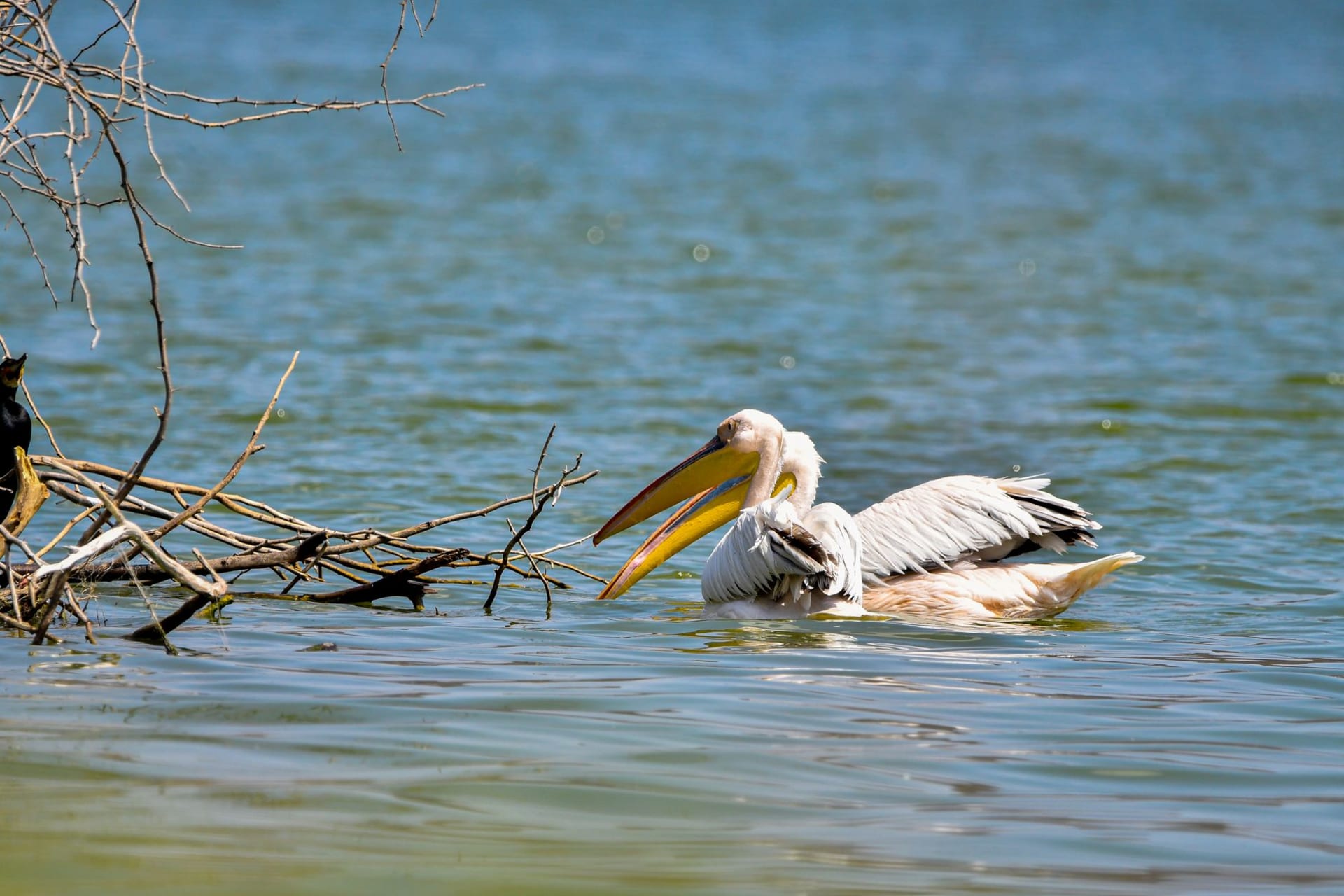
Lake Turkana
"Turkana makes you understand that the planet was very busy before humans arrived to have opinions about it."
The road to Lake Turkana is itself a destination of sorts — or a test, depending on your perspective. From Nairobi the drive north through the Rift Valley and into the Kaisut and Chalbi deserts takes the better part of two days, the tarmac giving way to corrugated gravel that shakes the fillings loose, the landscape transitioning from highland green to semi-arid brown to something that stops resembling anything you have a reference for. Doum palms appear, their multiple trunks splayed at improbable angles. Camels by the road. The Rendille and Samburu communities at the few settlements, the latter with their ochre-colored hair and elaborate beaded jewelry. And then, finally, over a rise in the lava-dark desert, a color that has no business being there: green. The lake is jade green. Not metaphorically. Vivid, mineral, implausible jade.
Lake Turkana is the world’s largest permanent desert lake, and the world’s largest alkaline lake, and the place where some of the most significant early hominid fossils have been recovered — including, at Koobi Fora on the eastern shore, specimens of Homo habilis and Homo ergaster that push the human story back further than most of us have intuitions about. The lake occupies a basin that was once much larger, fed by rivers that are now dry and shrunken by evaporation in this extraordinary heat. What remains is still a body of water more than two hundred and fifty kilometers long, with three volcanic islands rising from its center, including South Island, a national park and active volcano that puts sulphur in the air over the southern end.
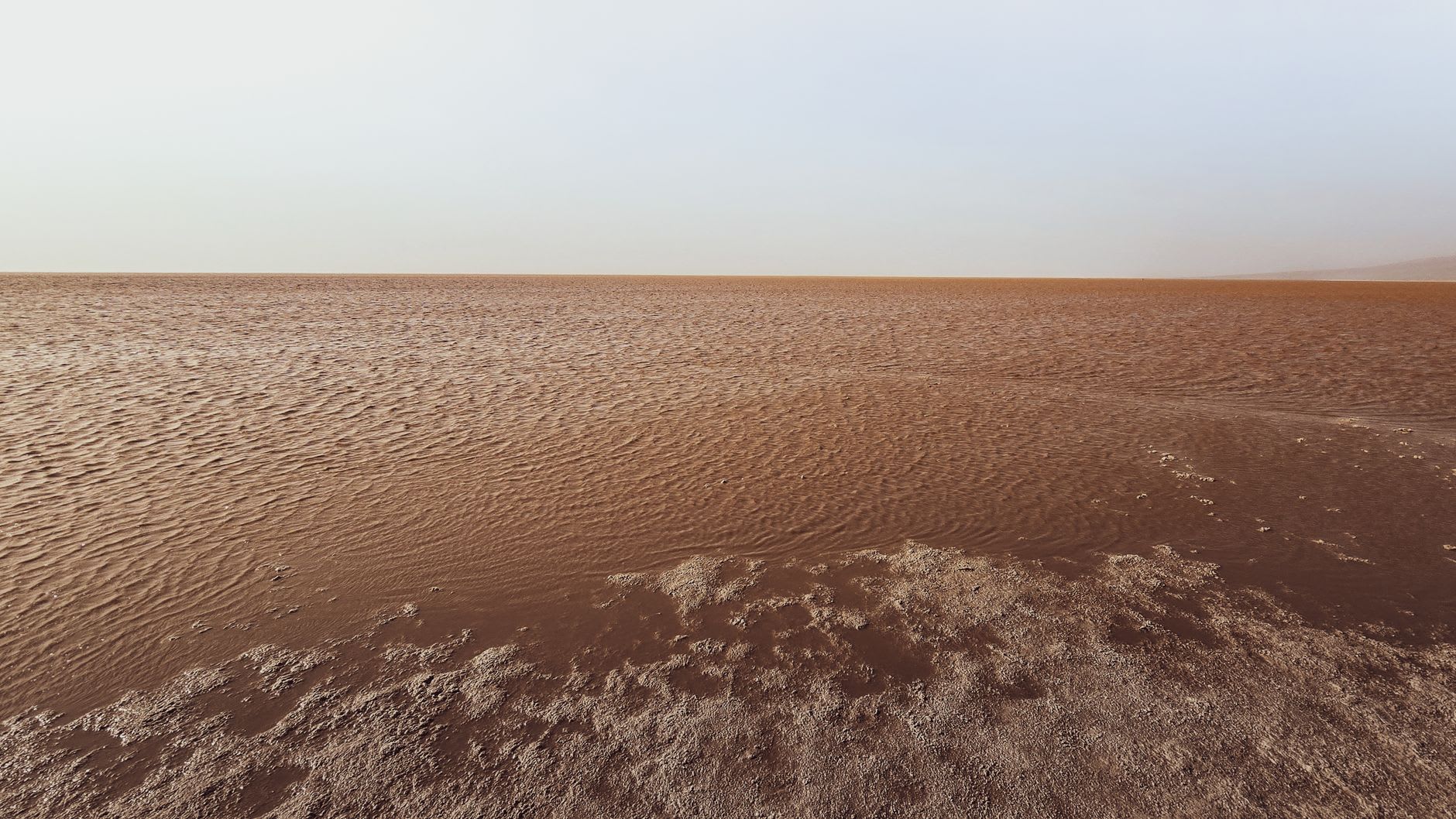
The El Molo, Kenya’s smallest ethnic community, live on the southeastern shore and have fished these waters for centuries in small boats made from doum palm logs. I spent a morning with a family near Loiyangalani, watching them mend nets in the shade of a palm-thatch shelter. The lake was completely flat and that color — that improbable jade — and the wind that Turkana is famous for had not yet started. By noon it would be blowing hard enough to pick up the fine volcanic sand and turn visibility to something amber and gritty. It always does, and the El Molo have organized their lives around this wind, working the early hours and taking shade in the afternoon.
The crocodiles of Lake Turkana are another order of magnitude from those you encounter elsewhere. This lake has one of the largest Nile crocodile populations on earth, concentrated especially around the delta where the Omo River enters from Ethiopia in the north. They are not shy. You can see them sunning on the volcanic rocks of the lakeshore in numbers that feel prehistoric, which makes sense, since the crocodile as a species is roughly two hundred million years old. Standing at the water’s edge with a guide who knows where to stand, watching one roll back into the green water with a complete absence of effort, I found myself thinking about deep time in a way that the fossil sites at Koobi Fora only intensified later.
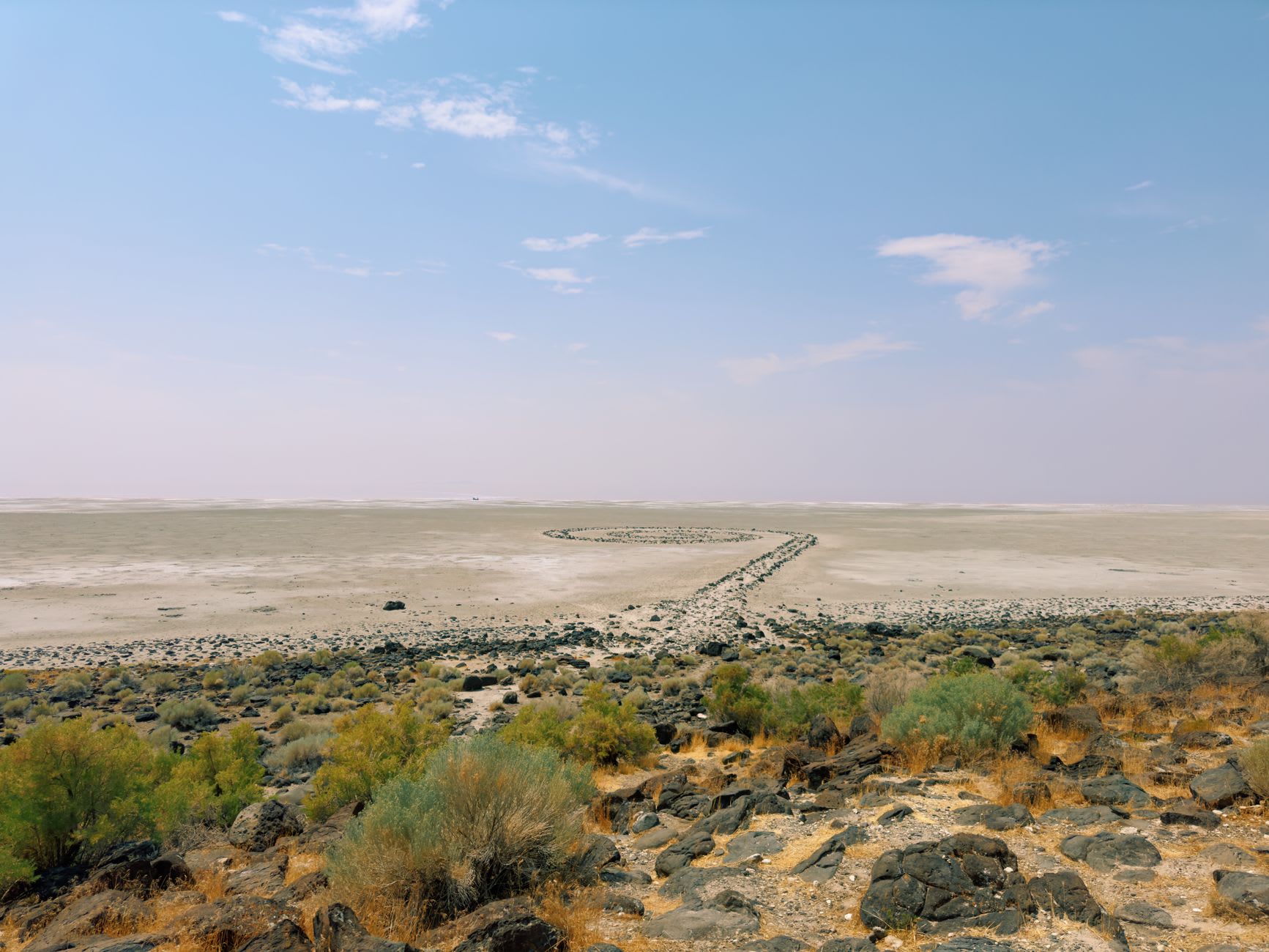
Koobi Fora, reachable by four-wheel drive along the eastern shore, holds a small museum beside the fossil beds where some of the most significant discoveries in paleoanthropology were made. The bones are gone — in Nairobi now, in casts around the world — but the landscape they came from remains: bleached and austere and ancient, the lake glittering just beyond, the wind coming in off the water and carrying nothing but itself.
When to go: October through April are the most accessible months — the rains in July and August can render the roads impassable. Plan for the wind: it arrives like clockwork every afternoon and can make open-air activities difficult after noon. Go with a guide who knows the lake; it is remote enough that preparation is not optional.