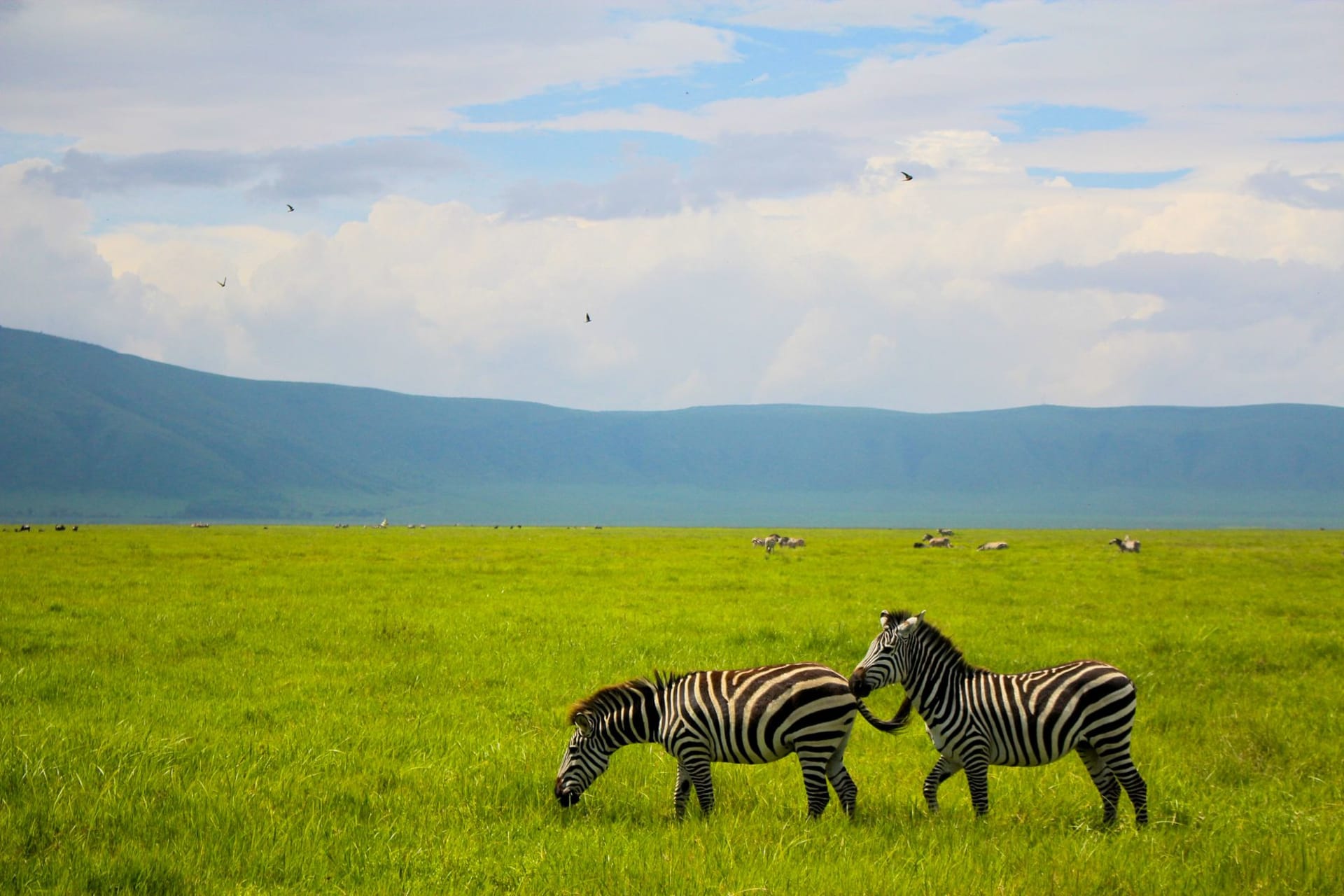
Lake Nakuru
"The lake was pink and the sky was orange and I stood there thinking: the planet does this for nobody."
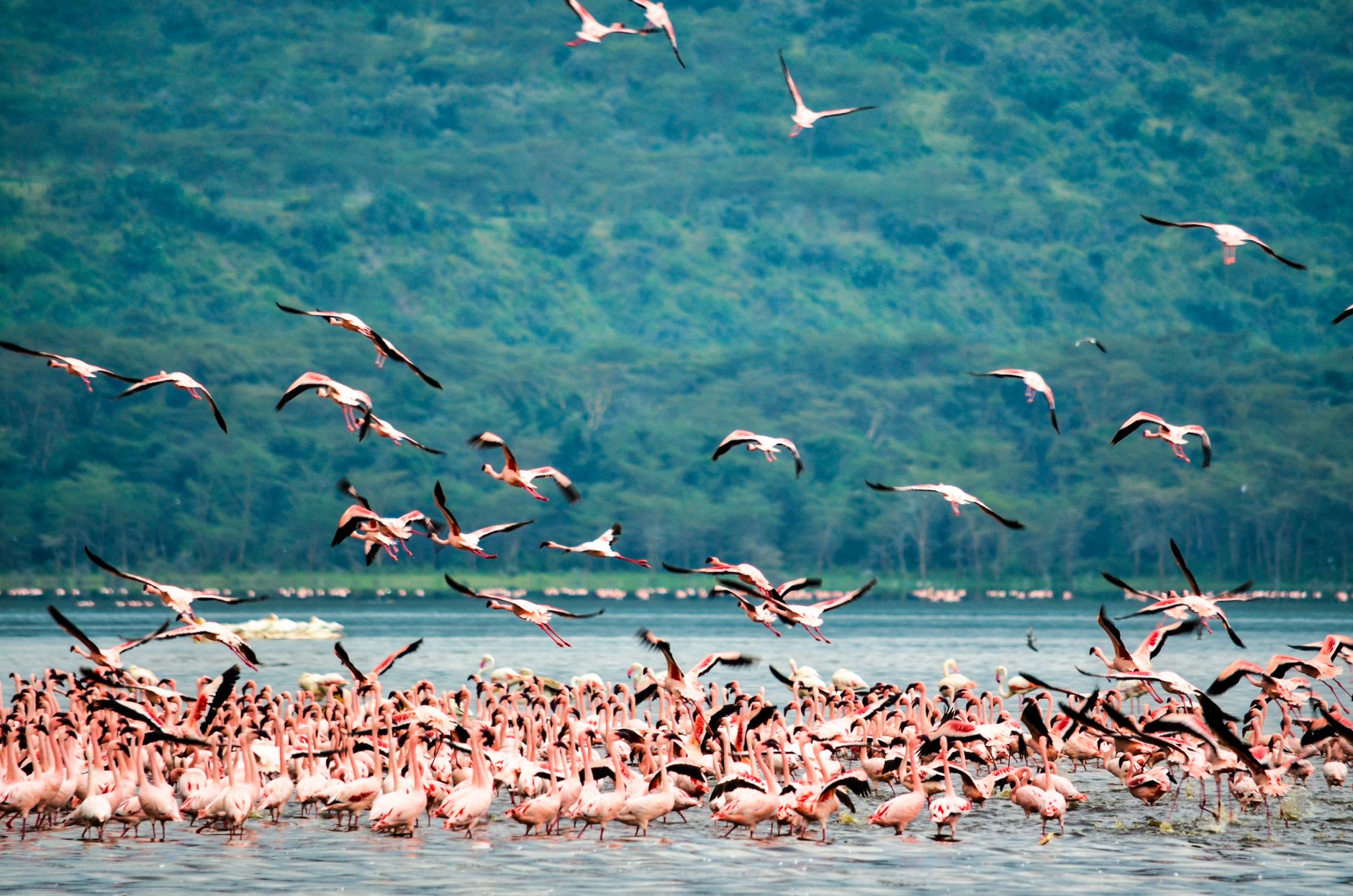
I reached Lake Nakuru on an afternoon when the light was already tilting gold, driving down from the escarpment through a stand of yellowwood trees and coming out suddenly onto a viewpoint above the water. From up here the flamingos don’t look like birds — they look like a weather front moving along the shore, a warm pink mass that shifts and pulses with the wind. I must have stood there fifteen minutes before I even thought about taking a photograph.
The lake sits inside a national park that is also a fenced sanctuary, which matters more than it sounds. Kenya’s rhino population was nearly wiped out in the 1970s and 80s, and Nakuru became one of the first places they were reintroduced and protected behind a perimeter fence. On my second morning I found a white rhino cow and her calf standing in open grassland at the lake’s southern end, the calf pressed against her flank, both of them utterly calm while a dozen vehicles idled at respectful distance. There is something about proximity to an animal that size — roughly the weight of a small car, breathing, unhurried — that recalibrates whatever you thought you understood about wilderness.
The alkaline chemistry of the lake is what produces the flamingos. Lesser flamingos filter cyanobacteria — blue-green algae — from the water through specialized bills, and when algae blooms, numbers can spike into the hundreds of thousands. The density shifts week to week depending on water levels and algae concentrations, so the local rangers always know more than any guidebook. I asked one morning at the gate and was sent to the northeastern shore, where the shallows were so thick with birds that the waterline itself seemed to be vibrating pink. The smell was mineral, alive, vaguely sulfuric. Not unpleasant. Just honest.
The forest inside the park carries its own surprises. Euphorbia candelabrum cacti grow on the drier slopes above the lake, giving the ridgelines a strange, almost Mexican silhouette against the sky — something I didn’t expect on this continent, in this latitude. Lions and leopards use the forest, and on one slow afternoon drive I came across a leopard stretched along a branch of a fever tree overlooking the water. It was doing what leopards do: absolutely nothing, with enormous self-possession, six meters above the road.
The town of Nakuru, just outside the park gates, is worth an evening. It is a working Kenyan market town, not a tourist staging post — the produce stalls overflow with blood oranges, passion fruit, and avocados so large they barely fit in one hand. I ate nyama choma, roasted goat, at a place near the bus station: charred at the edges, served with ugali and a pile of kachumbari, the tomato and onion salsa that arrives with everything. Nobody was performing anything for a foreign audience. It was just dinner, loud and easy and good.
When to go: June through October delivers dry conditions and peak flamingo concentrations. January and February are also excellent — drier than the surrounding months with reliable wildlife throughout the park. Avoid April and May if you can, though the rains turn the escarpment an improbable shade of green and the roads inside remain passable.