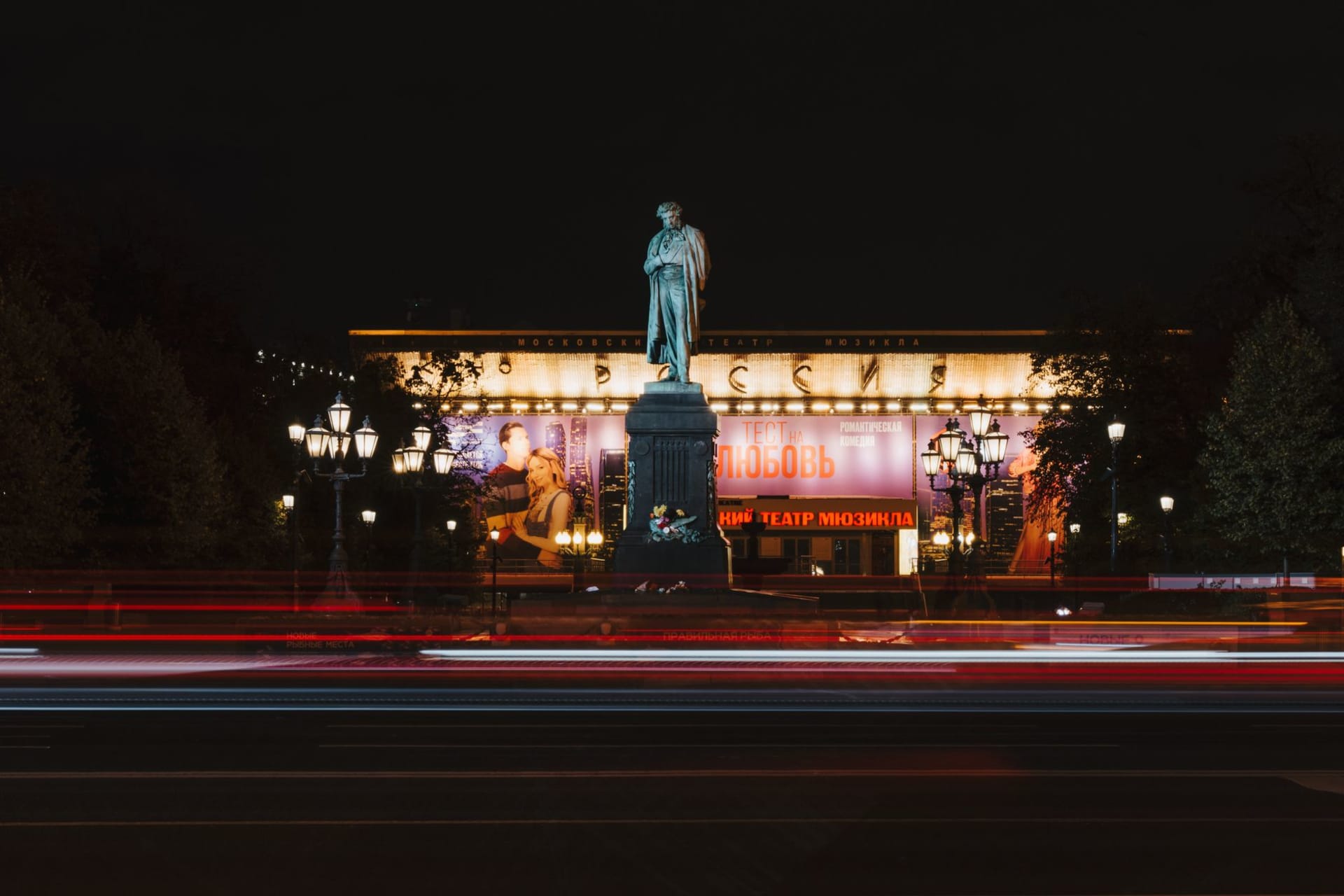
Vladimir
"Vladimir doesn't try to charm you — it just shows you Rublev's angels and gets on with its afternoon."
Vladimir is not Suzdal. It will not let you forget this. Where Suzdal is preserved in amber, Vladimir is a working provincial city of four hundred thousand people — there are traffic jams on the main street, a covered market where pensioners sell pickled mushrooms and used tools from the same table, and a fast-food strip near the train station that smells of fried dough and exhaust. I found this refreshing. After two days in the exquisite time-capsule of Suzdal, walking into Vladimir felt like being allowed to breathe normally again.
The Cathedral of the Assumption sits on a limestone bluff at the edge of the old city, and it is twelfth century, which means the walls have settled into themselves over nine hundred years and have the colour of old ivory. Inside, the murals include work by Andrei Rublev and Daniil Chyorny, painted in 1408. I stood in front of the Last Judgment fresco for what I kept telling myself would be five more minutes, and it kept being longer than that. The figures are elongated and calm, painted in ochre and Prussian blue, and the light falling through the narrow windows hit them at an angle that made them look like they were generating their own luminosity. Entry costs almost nothing. There were four other visitors.

The Golden Gate stands at the western end of the old city, a twelfth-century triumphal arch that once marked the entrance to the princely capital of all northeastern Rus. It is squat and massive, built from the same white limestone as everything in Vladimir, and it wears its age like a boxer wears scar tissue — with a kind of blunt pride. The small military museum inside is cheerfully haphazard: scale models of medieval sieges, a diorama of the 1238 Mongol sacking, and a collection of medieval weapons labelled in Russian only. A teenage boy was explaining the siege engines to his grandmother in rapid, enthusiastic Russian. She looked skeptical but patient.
The cafés on Bolshaya Moskovskaya Street — Vladimir’s main drag — are where locals eat lunch, and they will not adjust the experience for you. The menu may not be translated. The soup of the day is what it is. I had a bowl of rassolnik — a pickle-and-barley soup — that was so precisely seasoned it made me rethink everything I thought I knew about the relationship between vinegar and dill. The woman behind the counter watched me finish it with the neutral satisfaction of someone who already knew it was good.
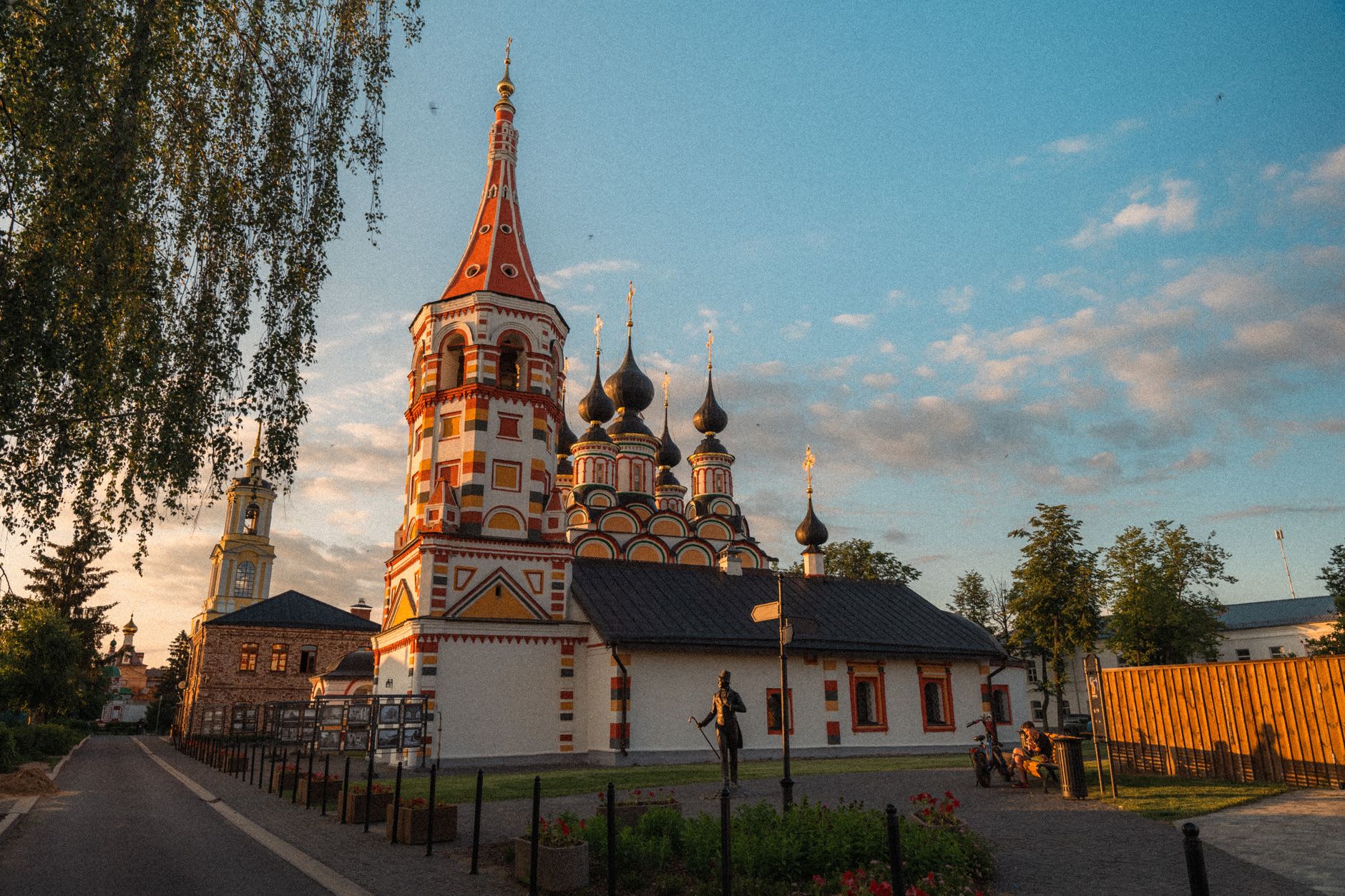
Vladimir is also the logical base for a visit to Bogolyubovo, eleven kilometres to the east, where the Church of the Intercession on the Nerl stands alone in a river meadow — one of the most perfectly sited buildings in Russia, reachable by a footpath across fields that flood in spring. From Vladimir you can also take the bus to Suzdal in forty minutes, which means you can stay somewhere with a real train connection and eat in the city and still have the churches.
When to go: Vladimir functions year-round in a way Suzdal doesn’t — it has a life beyond tourism. Winter gives you the cathedral frescoes without competition. Spring, when the Klyazma River floods the meadows around Bogolyubovo, is genuinely spectacular. Summer is fine if unremarkable.