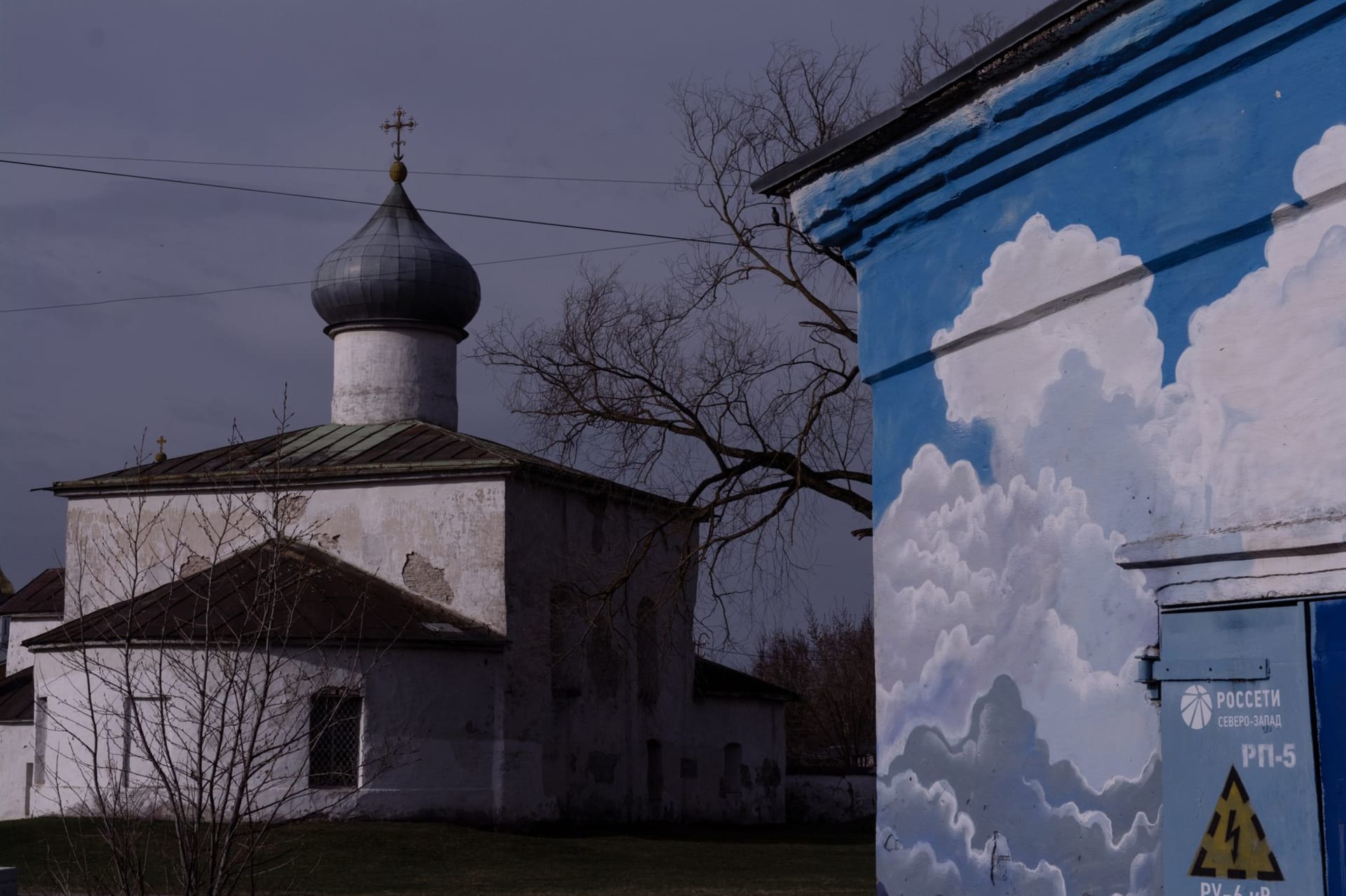
Sergiev Posad
"The gold on those domes is not decoration — it's a theological statement about what deserves to catch light."
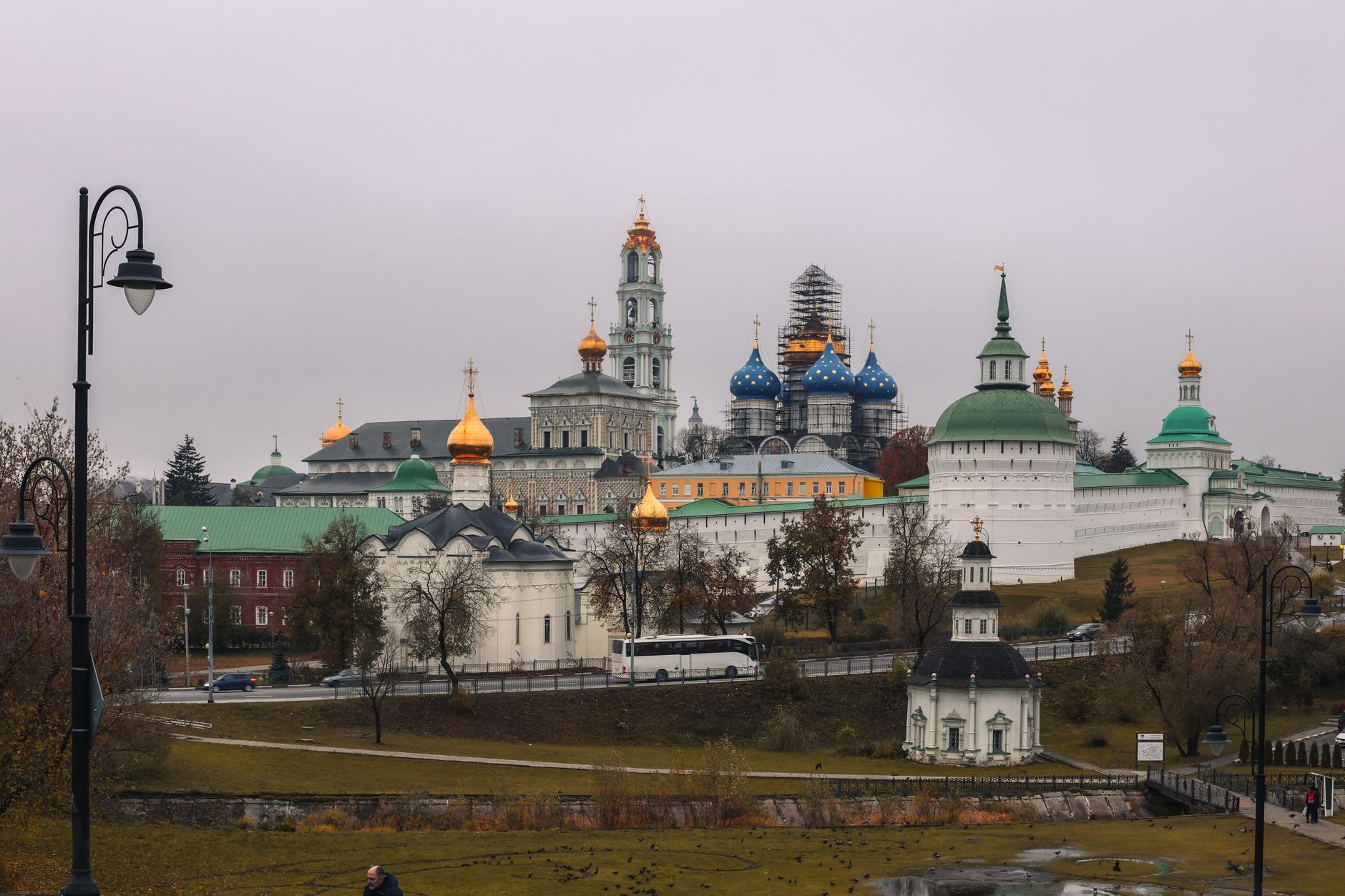
The Trinity-Sergius Lavra appears before you like an argument you weren’t expecting to have. I came up from the Sergiev Posad train station — an hour from Moscow, easy enough — and rounded a corner and there it was: white walls the thickness of a medieval fortress, blue and gold domes rising behind them in a sequence that kept revealing itself the closer I walked, each dome slightly different in scale and angle, the overall effect somewhere between a crown and a skyline. Pilgrims were arriving from a tour bus in the car park to my right. An old woman in black was crossing herself even before she reached the gates. I had come with a camera and a moderate amount of skepticism, and something about the sheer accumulated weight of the place — founded by Sergius of Radonezh in 1337, surviving the Time of Troubles, surviving Lenin — made the skepticism feel beside the point.
Inside the Lavra walls, the scale shifts in ways that keep catching you off guard. The Cathedral of the Trinity, where the relics of Saint Sergius lie in a silver shrine, is small and dark and perpetually crowded with the faithful — women in headscarves pressing forward, candles held upright, the smell of beeswax and old incense so dense it becomes its own kind of weather. The queue to venerate the relics moves slowly. I did not join it, but I stood at the back and watched for twenty minutes, which felt both intrusive and unavoidable, a foreigner witnessing something genuine happening at the centre of someone else’s faith.
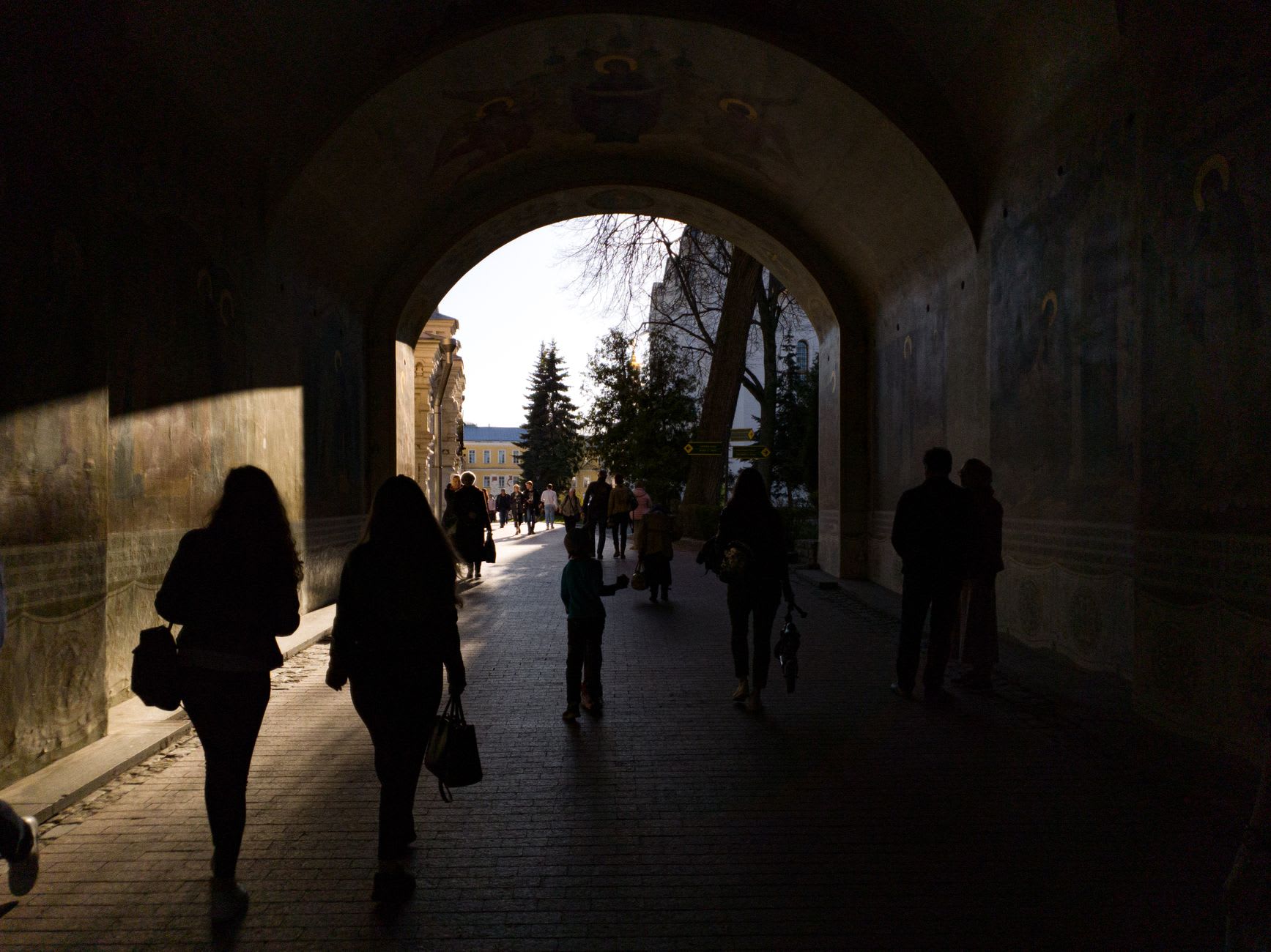
The Cathedral of the Assumption — the big one, fifteenth century, modelled on the one in Moscow’s Kremlin — has frescoes covering every surface, painted in deep blues and reds and the particular gold that Russian icon-painters derived from centuries of accumulated technique. The monks live and work within the compound, and occasionally you pass one on the cobbled paths — black robes, beard, moving with that particular speed that suggests a man with both divine and administrative obligations. The mundane and the sacred sit completely at ease with each other inside these walls, which is something that strikes me as distinctly Russian in a way I don’t have better language for.
The town of Sergiev Posad itself — outside the Lavra walls — is unremarkable in the best sense. There are toy shops selling matryoshka dolls painted with political figures, a market near the bus station where you can buy pickled garlic and dried fish, and a couple of cafés where the tea is strong and the cakes are the kind of dense, fruit-heavy things that taste better in cold weather. I had lunch in one of these places and sat by a window watching the Lavra’s domes catch the late afternoon light through the glass, turning the gold to something closer to copper.
The bell tower at the Lavra is the tallest in Russia — eighty-eight metres, eighteenth century, Baroque and massive and slightly incongruous above the older medieval ensemble around it. When the bells ring, the sound doesn’t so much fill the air as replace it. I was standing in the courtyard when the noon peal started and I found myself holding very still, not because it was beautiful — though it was — but because it seemed like the wrong moment to move.
When to go: Sergiev Posad makes sense as a day trip from Moscow year-round. The Lavra is most affecting in winter, when the snow on the domes and the low light turns the whole complex monochromatic and severe. Easter is the most significant time religiously — the overnight vigil and procession are extraordinary — though crowds are enormous. Avoid weekends if possible; the site is genuinely packed with domestic pilgrims and tourists alike.