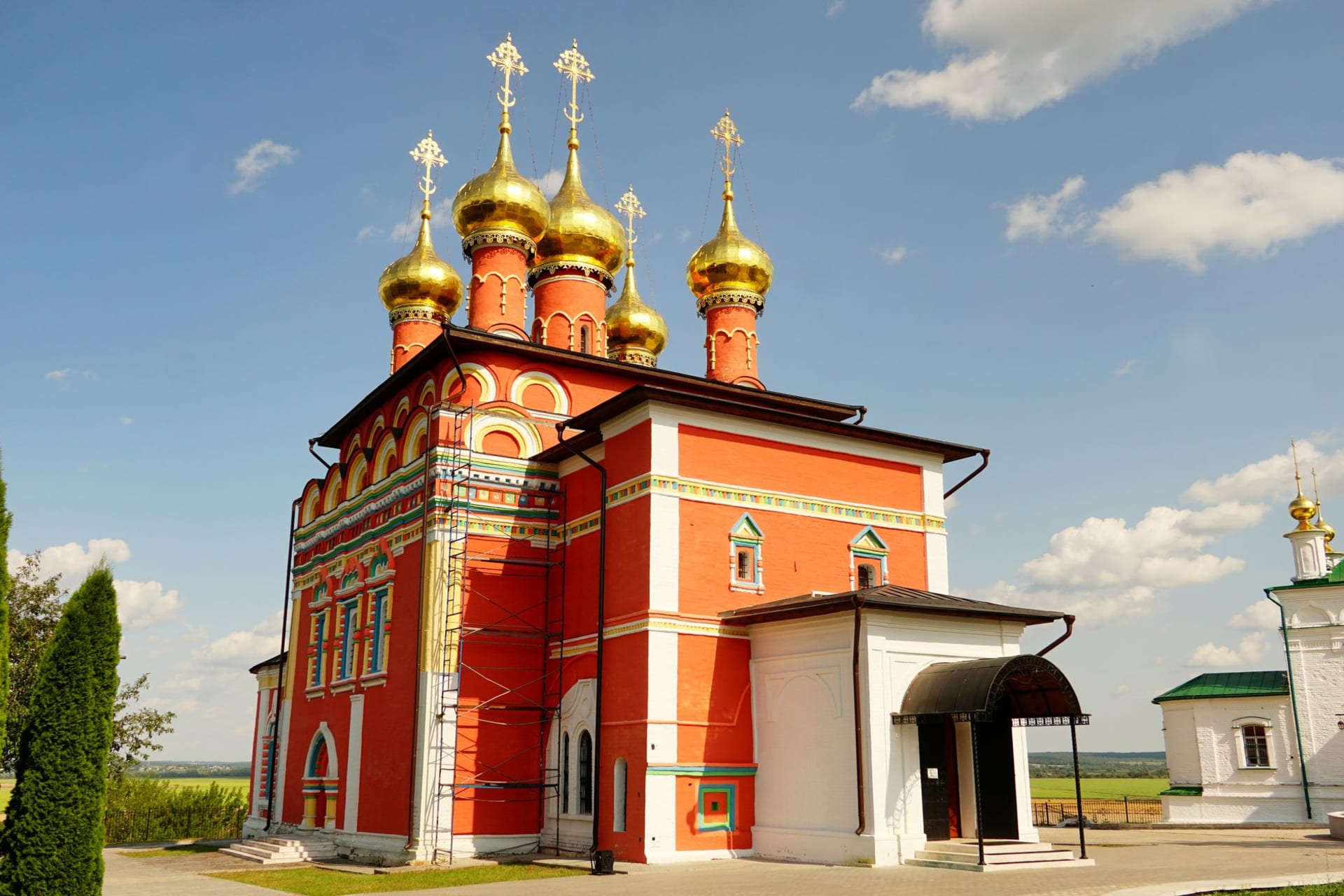
Pereslavl-Zalessky
"Pereslavl is where Peter the Great played at being an admiral before he had an ocean — the lake still keeps his boats."
Lake Pleshcheyevo is not small — seventeen square kilometres of cold, dark, startlingly clear water cupped in a landscape of birch and pine forest — but it feels intimate in the way that northern Russian lakes often do, because the sky above them is so enormous that the lake reads as modesty in comparison. I arrived in late October, just before the first ice, when the surface was a pewter mirror and the fishing boats pulled up on the shore at the south end had been hauled above the waterline for the winter. The town of Pereslavl-Zalessky climbs a low rise at the lake’s southern edge, and from the water’s edge you can see the white tower of the Cathedral of the Transfiguration rising above the autumn birches. It is twelfth century. Alexander Nevsky was baptised there.
Pereslavl-Zalessky is the kind of town that appears in Russian history at key moments without ever becoming the main character. Founded in 1152 by Yuri Dolgoruky — the same prince who founded Moscow — it served as a significant princely seat, produced Alexander Nevsky, and was later the site where Peter the Great built his “toy fleet” on Lake Pleshcheyevo as a young man learning seamanship before he had any real sea to practice on. The lake was, in his mind, a rehearsal for the Baltic. The Botik Museum on the lake’s south shore preserves the only surviving vessel from Peter’s fleet — the boat Fortuna, a small wooden craft sitting under a neoclassical pavilion as if waiting to be recommissioned. The pavilion is surrounded by birch trees. The whole thing has an air of endearing, melancholy grandiosity.
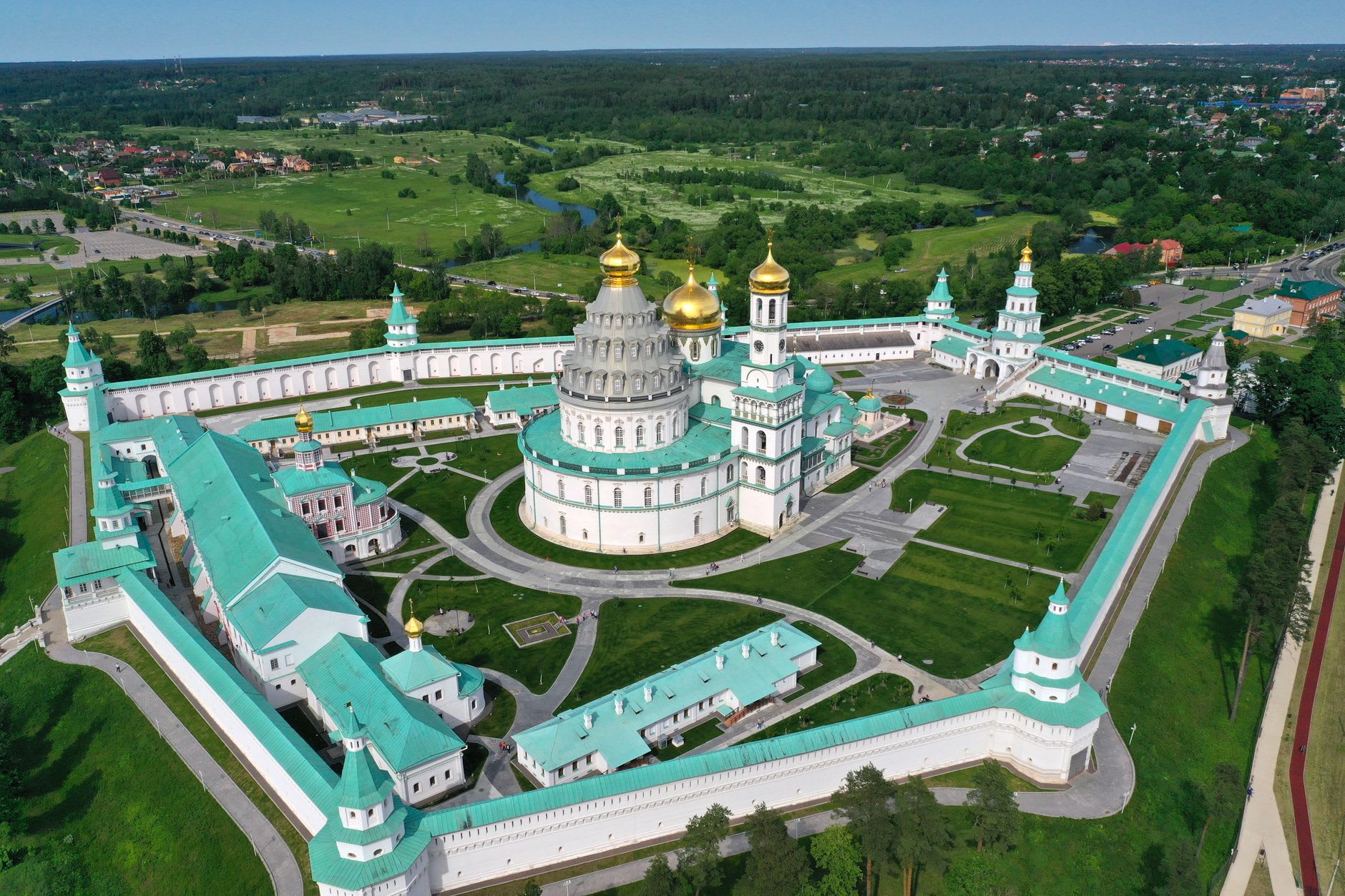
The Cathedral of the Transfiguration, in the central square, is the oldest standing building in the Moscow region — white limestone, austere, its walls the thickness of something that was built to last an argument. Inside, it is simple to the point of severity: bare stone, a handful of candles, and the particular quality of silence that old stone buildings in Russia achieve, a silence that feels accumulated rather than absent. The cathedral is modest by Golden Ring standards, which I found affecting. It has none of the polychrome exuberance of Yaroslavl or the gilded excess of the Lavra. It just stands there, being eight hundred years old, not making a fuss about it.
The town itself is a pleasant, unpolished place — hardware stores and vegetable stalls and a market near the bus station that smells of smoked fish. There is a small museum dedicated to the history of the Russian iron — the clothes-pressing kind — which may be the most improbable specialist museum I have encountered anywhere in Russia, but which turns out to contain a genuine collection of pressing irons spanning four centuries that is inexplicably moving in the way that obsessively specific collections sometimes are. The curator saw my expression and told me that it was ranked among the top unusual museums in Russia. She seemed absolutely certain this was a meaningful distinction.
On the northeast shore of the lake, above a section of beach called the Blue Stone — a glacial boulder that pre-Christian Slavic tribes venerated and that the Orthodox church repeatedly tried and failed to bury or remove — the water is shallow enough to see the sandy bottom even on overcast days. People still leave offerings at the stone. Coins, ribbons, small handmade objects. The stone has outlasted every attempt to disappear it.
When to go: October and early November hit a particular sweet spot: the birch forests are in full colour, the lake is at its most dramatic before ice forms, and there are essentially no tourists. Spring, when the snow melt fills the lake and the light turns soft and watery, is equally compelling. Avoid summer weekends when Muscovites use the lake for recreation and the town feels briefly busy.