
A pocket-sized merchant town on the Klyazma where 17th-century stone chambers still stand, untouched by the industrial century that reshaped everywhere else.
Lia found Gorokhovets almost by accident, a name scribbled at the bottom of a Golden Ring itinerary someone had shared with us, tacked on after the bigger names like an afterthought. We nearly skipped it. I’m glad we didn’t. There’s something about arriving in a town that first appears in written records in 1239 and finding it still shaped like a town rather than a monument to itself — narrow streets, chickens somewhere out of sight, laundry on a line — that no amount of reading prepares you for.
What struck me first were the stone houses. Gorokhovets was a trading town, and its merchants built for permanence: thick-walled, fortified chambers called palaty, with windows barely wider than an arm span, the kind of architecture that says as much about who might come knocking as who might drop by for tea. Most provincial Russian towns built in wood, which is why almost nothing from that period survives elsewhere. Here, several of these merchant houses are still standing, including the Sapozhnikov Chambers, and walking past them felt less like sightseeing and more like reading a very old letter that happened to still be legible.
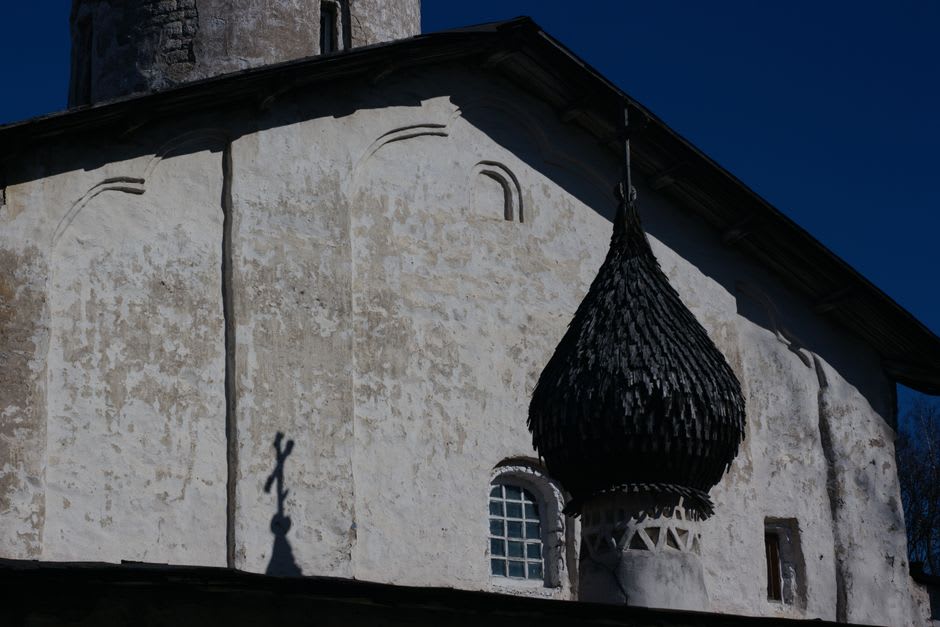
In the evening we crossed to the far bank of the Klyazma, where the Znamensky Monastery sits alone in the meadows, founded back in the 1640s and largely left to itself since. Lia sat on the grass while I wandered the grounds; a woman selling raspberries from a bucket near the path told me, in the little Russian I could follow, that the berries were from her own garden, and I believed her — they tasted like it. We ate most of them before we’d even started walking back.
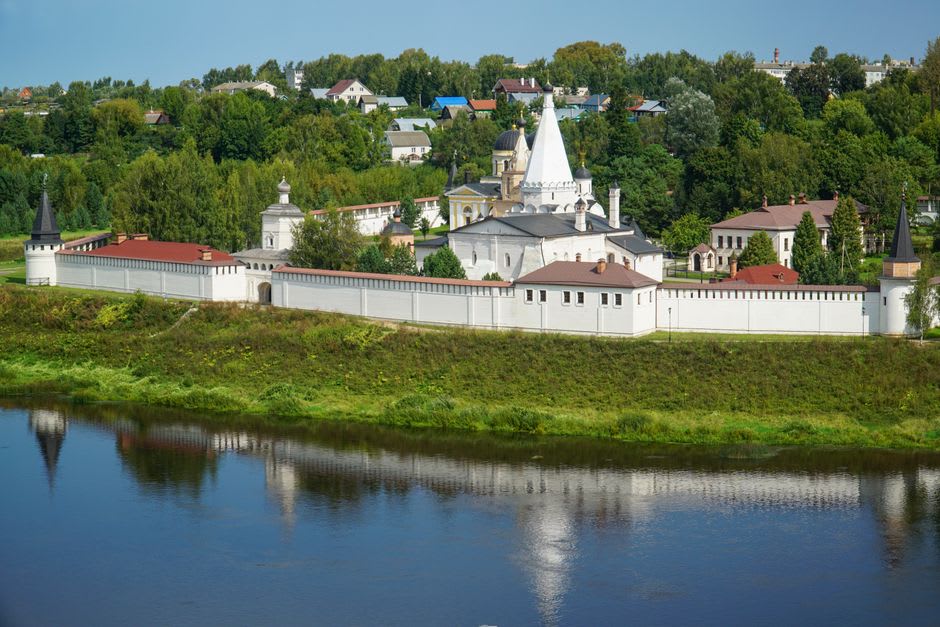
What I keep coming back to about Gorokhovets is that it was never rebuilt, because it was never important enough, industrially, to bother. That neglect turned out to be a kind of preservation. Standing on the hillside above the river at dusk, the town below looked less like a stop on a tourist route than like something that had simply been left alone long enough to still be itself.
When to go: Come in summer, when the Klyazma’s banks and the monastery’s meadows turn properly green and everything is easy to reach on foot.