Busua
"The wave closed out and I went under, and when I came up the beach looked like it had been there forever, which it had."
Ghana’s western coast doesn’t get the attention of the Cape Coast-to-Accra corridor, which is exactly why Busua works. It’s a fishing village about twenty kilometers west of Takoradi that has acquired a small surf culture without sacrificing the thing that made it worth coming to in the first place: the quiet, the fishing boats, the Atlantic light in the morning. I arrived expecting a weekend escape and stayed four days.
The Beach
Busua’s beach is a long crescent, maybe two kilometers from headland to headland, with the kind of consistent left-hand break that has drawn West Africa’s small surfing community for years. The sand is dark gold, almost ochre in places, and the water is warm by European standards — around 26 to 28 degrees Celsius, depending on the season. I am not a strong surfer. The local instructors at the surf school are patient and honest about this in equal measure. After two lessons I could get up most times. After four days I could occasionally get up and turn slightly, which felt like progress.
The Fishing Village
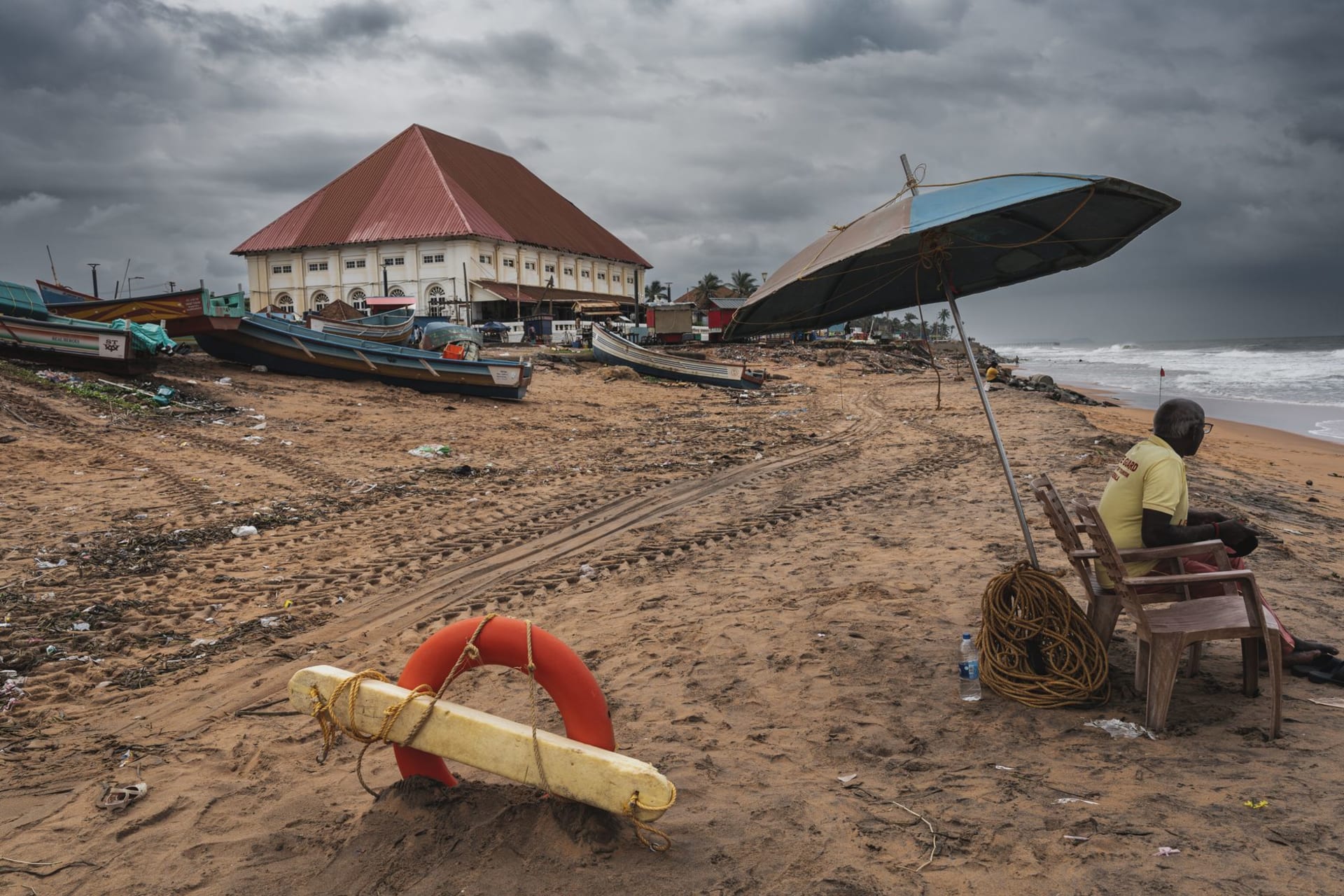
What I found more compelling than the surfing was the other half of the beach — the section where the fishing boats come in. Large wooden pirogues, brightly painted, powered by outboard motors, return in the late afternoon and early morning. The catch gets sorted and sold directly from the boats; women with basins on their heads carry fish to the road within minutes of the boats landing. Barracuda, snapper, tuna, small silvery fish I didn’t recognize that get salted and dried on wooden racks at the back of the beach. The smell is intense and completely alive. I stood there for an hour one afternoon doing nothing but watching the logistics of it and eating grilled fish from a stall that a woman ran directly adjacent to the whole operation.
Fort Dixcove
A short tro-tro or motorbike ride from Busua, the town of Dixcove holds one of Ghana’s less-visited slave forts — Fort Metal Cross, built by the British in the late seventeenth century. Unlike Cape Coast Castle, which has become a highly organized and emotionally intense memorial site, Fort Dixcove is quieter, a bit rougher around the edges, occupied now by a small community living within its walls. A local guide let me in and walked me around without commentary that felt packaged. The fort’s small rooms, the view from the cannon platform over the fishing harbor below, the way the Atlantic looked from those walls — it sat in my chest differently from Cape Coast, precisely because I was more or less alone with it.
Evenings at Busua
The social life of Busua at night is exactly one beach bar and one restaurant and however many guests happen to be staying at the handful of guesthouses along the beach. This is not a complaint. Lia and I ate grilled barracuda one evening at a table in the sand with a group of surfers from Accra and a French couple who had been there three weeks and showed no signs of leaving. The conversation ran until midnight. The generator cut out. We navigated back to the guesthouse by phone light, and the sand was still warm.
When to go: October through February for surf and dry weather. November and December hit the sweet spot — consistent swell, manageable humidity, no serious rain. Avoid the rainy season (March–July) when the beach can look rough and accommodation fills with Ghanaian families on domestic holiday. The Christmas to New Year window is busy; book guesthouses in advance.