Lüneburg Old Town
"The salt mines emptied and the buildings began to tilt. They leaned into it."
A medieval salt-mining town in Lower Saxony whose buildings tilt and lean as the ground subsides beneath them.
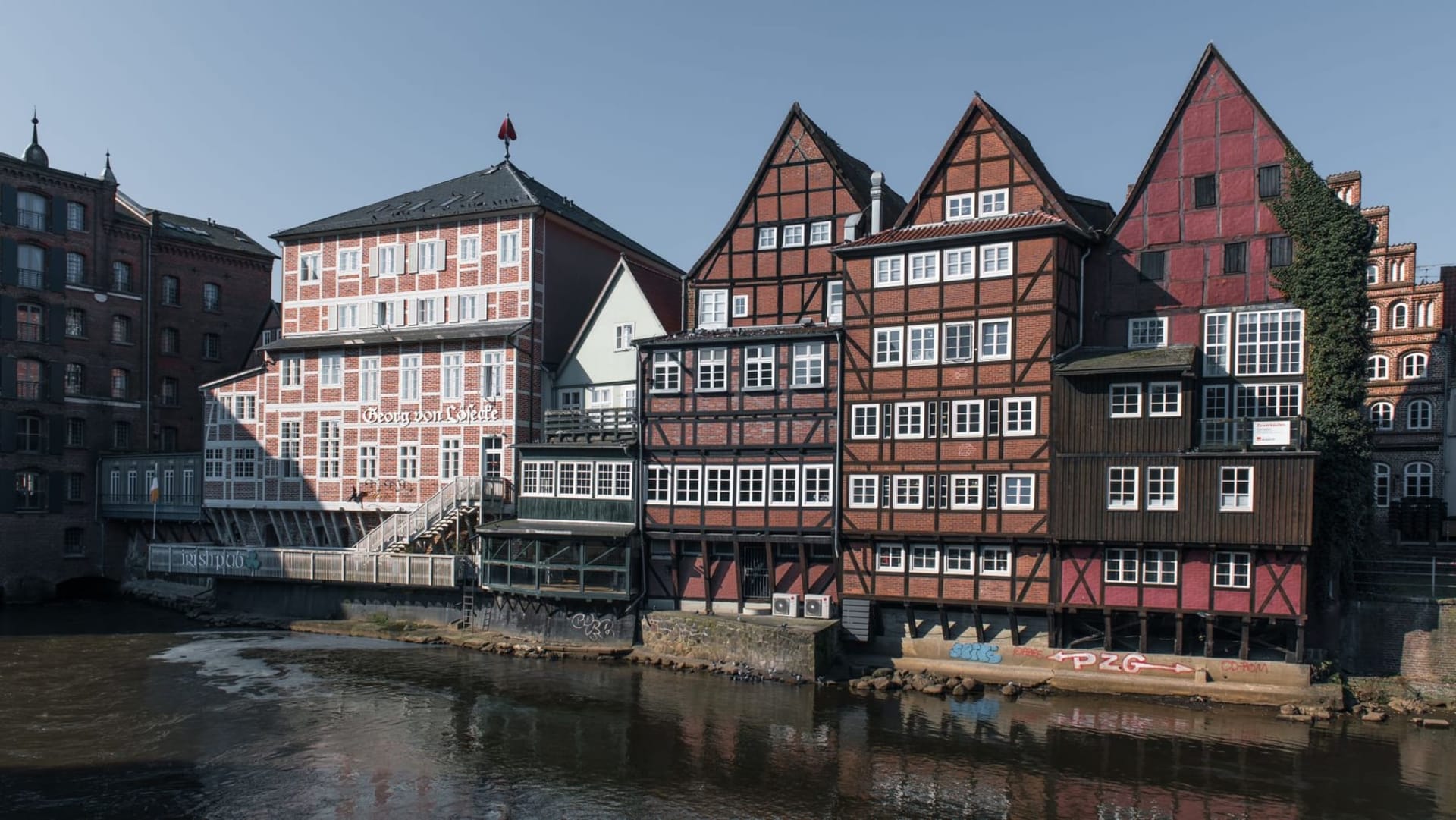
I had not expected a German town to feel so drunk. The first time I walked down Am Sande — Lüneburg’s long central plaza, framed by Gothic brick facades — I kept checking my own footing, convinced the problem was me. But no. The buildings themselves were listing. Doorframes parallelogram where they should be square. A sixteenth-century warehouse on the Stintmarkt leans several degrees from true, as if pressing an ear toward the river to hear something. The salt is gone. The ground is still settling.
The Weight of Salt
For six centuries Lüneburg was one of the wealthiest cities in northern Europe, supplying salt to preserve herring from the Baltic coast. The Saline — the great salt-works on the edge of the old town — ran continuously from the tenth century until 1980. What no one fully accounted for was the void left behind. As the brine was pumped up and the salt extracted, the ground beneath the city began, slowly, to collapse. Buildings that were plumb in 1400 are now tilted by meters. The subsidence is still happening. Lüneburg has been falling in geological slow motion for five hundred years and has simply built its identity around the fact.
I spent a long time in the Deutsches Salzmuseum, which sits inside the former Saline buildings. The exhibits are earnest and well-made, but the real draw is the machinery — enormous wooden evaporation pans, iron fittings worn smooth by generations of hands. The smell of damp timber and mineral residue has soaked into the walls. It smells like something ancient and industrial at once, which is exactly what it is.
Along the Ilmenau
Lia found the waterfront before I did. The Stintmarkt, where the old fishing boats once docked, is a strip of cafes and restaurants along the Ilmenau river, and on a cool afternoon the light comes flat and silver off the water. We ate Heidschnuckenbraten — slow-roasted heath mutton — at a place with wooden benches and no printed menu, just a handwritten board. It was dark and fatty and tasted like October. The waitress called it a local specialty with the casual authority of someone who has never needed to explain it.
The unexpected discovery came on Große Bäckerstraße, where I stopped in front of a pharmacy that had been operating, according to the sign above the door, since 1598. Not a reconstruction. Not a museum. An actual pharmacy, selling actual aspirin, in a building that was already old when Shakespeare was writing. That kind of continuity still startles me, arriving from a continent where almost nothing survives intact.
When to go: Late spring through early autumn gives the best light and warmest streets, but September is ideal — the summer crowds have thinned, the heath surrounding the city turns purple with heather, and the low northern sun turns the old brick a particular shade of amber that is difficult to photograph and impossible to forget.