Lübeck
"Lübeck's seven steeples have watched over the Baltic trade routes for eight centuries without tiring."
The queen of the Hanseatic League — a UNESCO island city of brick Gothic churches, marzipan shops, and Thomas Mann's shadow on every street.
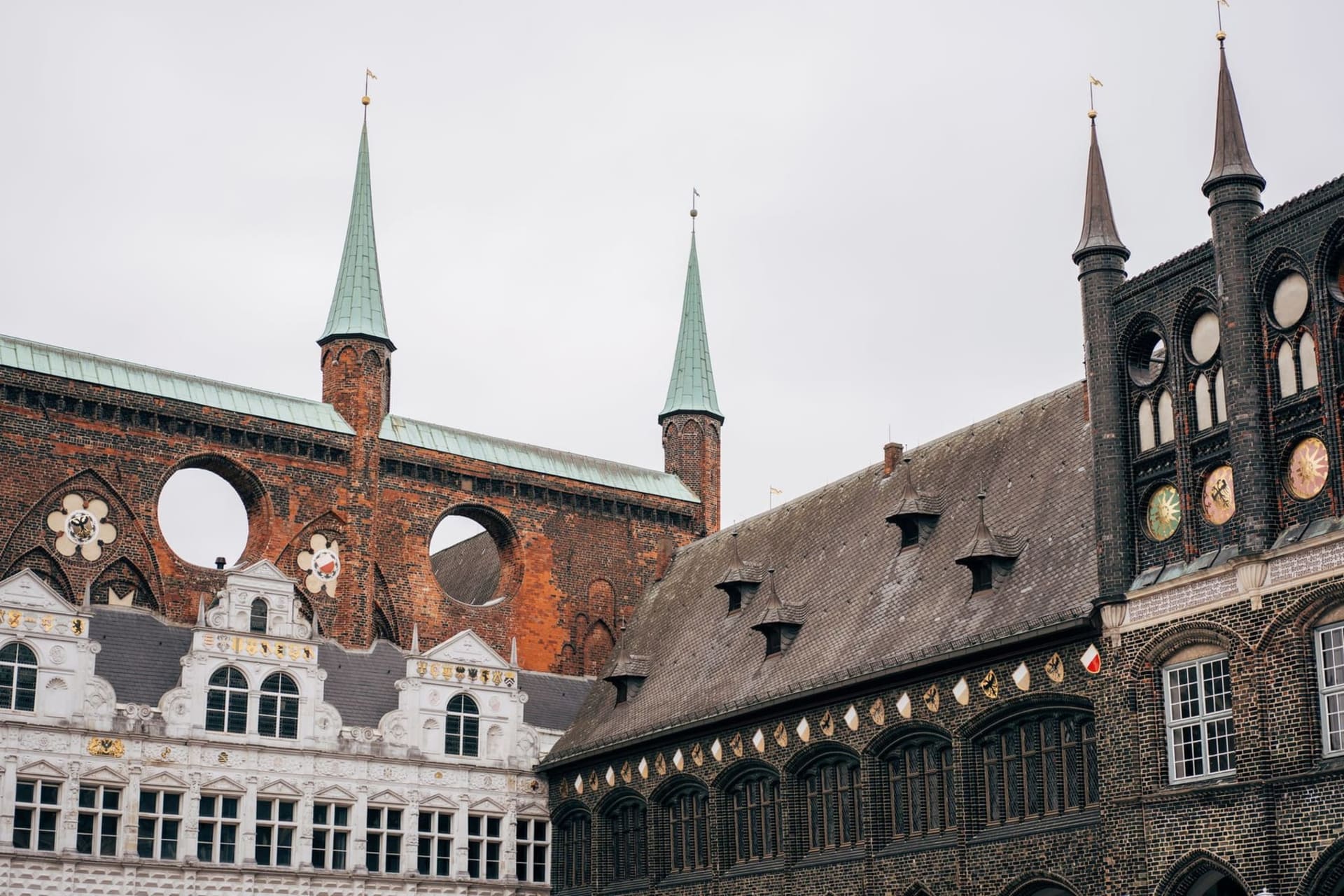
There is a particular quality to the light in Lübeck in early October — thin and white, the kind that makes brick glow like it has been heated from within. I arrived by train from Hamburg on a Tuesday morning and walked out of the Hauptbahnhof into a city that felt like it had been lifted whole from the fourteenth century and set down, carefully, without disturbing a single ornament.
An Island Held Together by Brick and Memory
Lübeck sits on an oval island between the Trave and the Wakenitz rivers, and the effect of that geography is that the city wraps around itself — you circle back to the same lanes without quite meaning to. I spent the first hour lost on Mengstraße, which is precisely where Thomas Mann was born and where his family home, the Buddenbrookhaus, stands with its pale baroque facade hiding the mercantile anxieties of an entire dynasty. Mann haunts Lübeck the way Kafka haunts Prague — not oppressively, but persistently, a shadow at the edge of every courtyard.
The Marienkirche anchors the city’s silhouette from every angle. Inside, the bells that fell during the 1942 bombing still lie on the floor of the nave, exactly where they landed, embedded in the stone as a kind of brutal memorial. Lia stood next to one of them for a long time without speaking. There is nothing to say, really. The weight of that iron does the speaking.
The Surprise Hiding in the Gangeviertel
What I did not expect was the Gängeviertel — the old merchants’ lanes threading between the main streets, passageways so narrow that the gabled warehouses nearly touch overhead. These were the storage corridors of the Hanseatic economy, and walking through them in the rain, the smell of wet brick and something vaguely fermented in the air, I felt genuinely removed from the twenty-first century. One of the lanes, Petersgrube, opens suddenly onto a small green and a view of the cathedral apse that stopped me cold. I had not seen it coming at all.
Marzipan, Seriously
The marzipan is not a tourist joke. Niederegger, on Breite Straße, has been making it since 1806, and the stuff they sell — dense, barely sweet, with a clean almond edge — tastes nothing like the cloying versions I grew up tolerating in France. I bought a small log of it and ate most of it on a bench outside the Holstentor, watching tour boats move slowly along the Trave. The gate’s two towers tilt slightly toward each other as if leaning in to confer, the result of centuries of settling into soft ground.
When to go: Late September through early November, before the Christmas market crowds descend and while the brick still holds some warmth from summer. The light is best in the morning, before the mist fully lifts off the Trave.