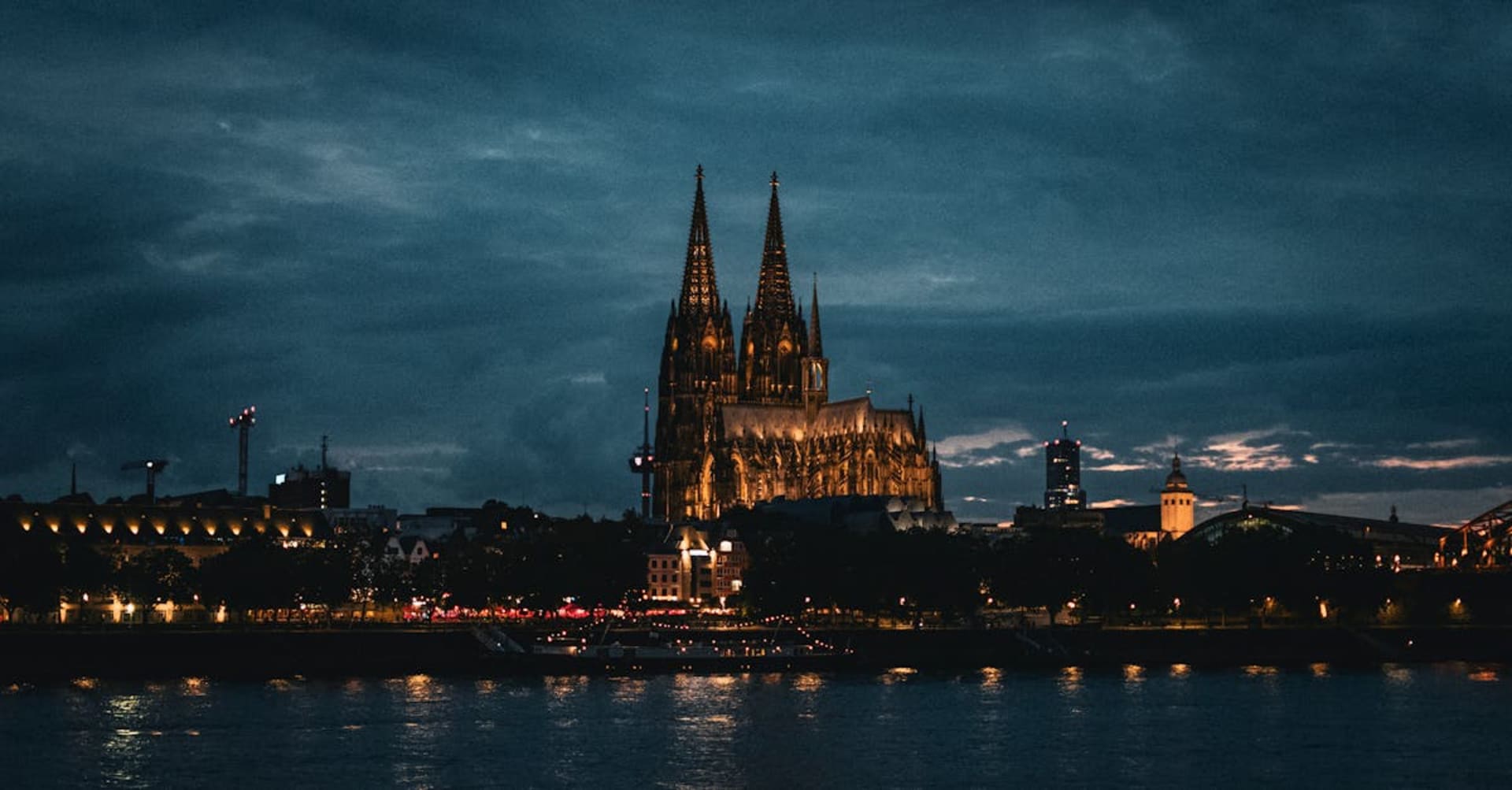
Cologne is dominated by its cathedral — the Kölner Dom — and nothing can quite prepare you for the scale of it. Twin Gothic spires rise 157 meters, making it the tallest twin-spired church in the world. Inside, the Shrine of the Three Kings gleams in gold, and medieval stained glass filters the light into colored pools on the stone floor. The cathedral survived sixty-one years of construction delays, Reformation iconoclasm, and fourteen direct bomb hits in World War II. It endures. I have stood in Notre-Dame, in Chartres, in the Sagrada Família, and the Kölner Dom belongs in that company — not for elegance, which the French cathedrals win, but for sheer vertical ambition. The building wants to be taller than God, and at 157 meters, it nearly manages.
Beyond the Dom, Cologne reveals itself as one of Germany’s most convivial cities. The Rhineland temperament is warmer than the rest of Germany — more Latin, people here will tell you, which as an actual Latin I find charming rather than accurate, though the beer-garden friendliness is genuine. The Altstadt brauhauses serve Kölsch — a light, crisp, top-fermented beer unique to the city — in small 200ml glasses called Stangen, replaced automatically by roaming waiters until you place your coaster on top to signal surrender. The system is efficient, relentless, and designed to ensure you always have a fresh glass. I placed my coaster too late and ended up with seven Stangen on my table. The waiter was unapologetic.

The Belgian Quarter is the trendy counterpart to the Altstadt: independent shops, brunch culture, wine bars, and a density of good coffee that would satisfy a Melburnian. The Museum Ludwig holds one of Europe’s finest collections of modern art, with Warhols, Lichtensteins, and a Picasso collection — the third largest in the world — that surprises people who do not expect to find Spanish modernism on the Rhine. The Kolumba Museum, built by Peter Zumthor around the ruins of a bombed Gothic church, is architecture as philosophy — grey brick and filtered light and silence, the medieval walls absorbed into the modern structure with a delicacy that made me stop breathing.
The Ehrenfeld neighborhood is where Cologne’s creative class has migrated — street art, galleries in former industrial spaces, and restaurants where the menus change daily based on what arrived at the market that morning. The transformation from working-class to creative quarter follows a pattern familiar in every European city, but Ehrenfeld has maintained enough grit to feel genuine rather than curated.

Cologne’s relationship with the Rhine defines its character. The river promenades fill on warm evenings with people drinking Kölsch from kiosks, watching the barges pass, the cathedral lit up behind them. The annual Karneval — which Cologne takes as seriously as Rio takes its — transforms the city every February into five days of costumes, parades, and public drinking that makes Oktoberfest look restrained. I happened to arrive during Weiberfastnacht, the women’s carnival day, and had my tie cut off by a stranger with scissors before I understood what was happening. Welcome to the Rhineland.

When to go: May through September for riverside promenades and the warm Rhineland light. November brings Karneval season’s opening salvo on the 11th at 11:11 AM. December’s Christmas markets around the Dom are legendary — seven separate markets across the city, each with its own character, the cathedral as backdrop to all of them.