Freiburg
"Freiburg is the kind of city that makes you want to find out why everyone here looks so content."
The sunniest city in Germany sits at the Black Forest's edge, its medieval minster presiding over a city of bikes, canals, and a student spirit.
I arrived in Freiburg on a Tuesday in late September, stepping off the train into air that smelled faintly of pine and warm stone. The platform was busy with bicycles. Not a few — hundreds, chained in overlapping rows, their owners nowhere to be seen, already folded into the city’s quiet routines. That was my first clue that something different was happening here.
The Münster and the Market Below It
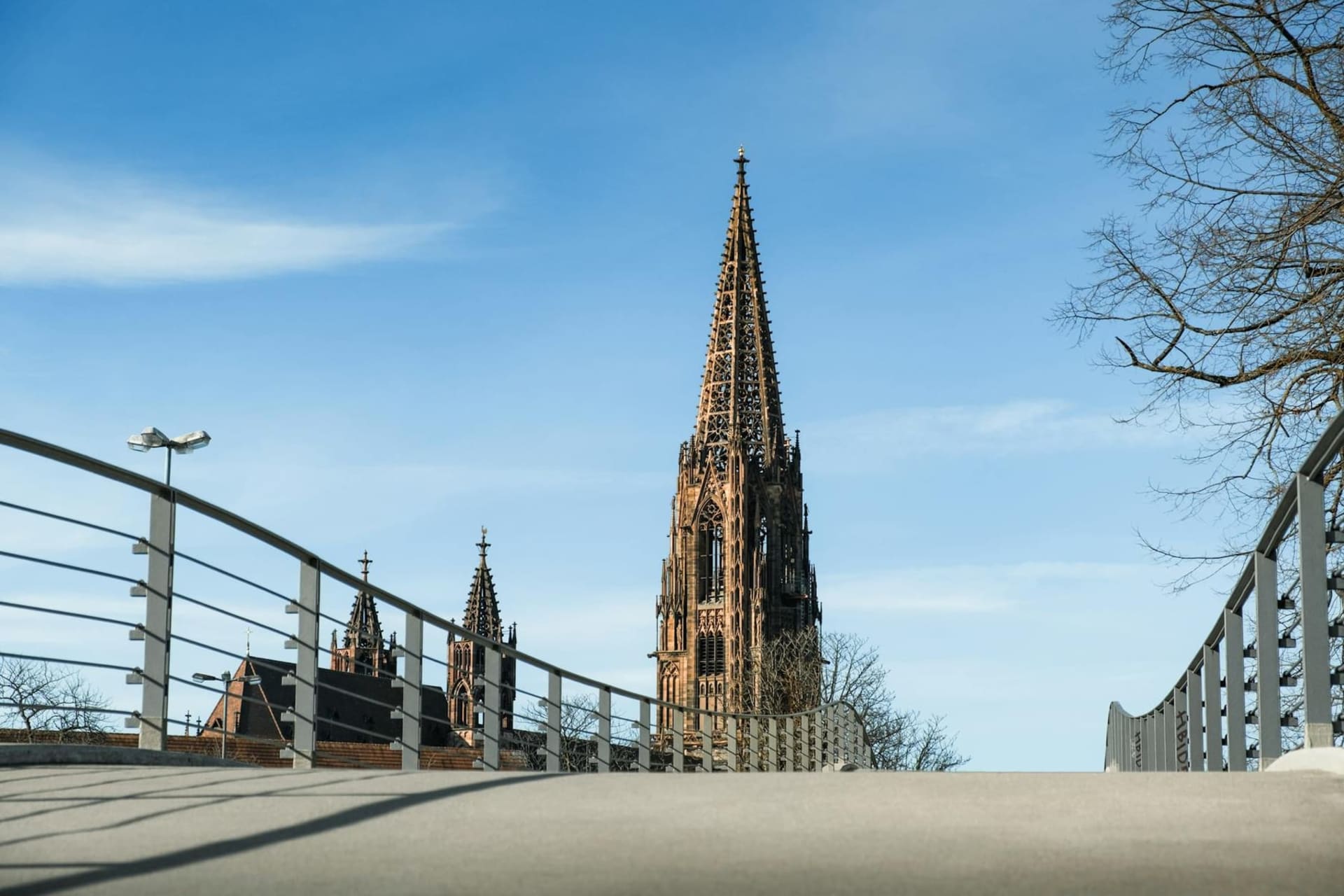
The Münsterplatz is one of those town squares that earns its reputation. The cathedral — the Freiburger Münster — took three centuries to finish, and the spire is so finely carved it looks like lace petrified in sandstone. I stood beneath it on a Wednesday morning when the weekly market was in full swing: stalls draped in late-summer produce, the dark red of Black Forest cherries in wooden crates, Flammkuchen grilling on open fires, the smoke threading upward past gargoyles. Lia bought a wedge of Munster cheese from a farmer who wrapped it in wax paper without a word, which felt right. The square doesn’t perform for visitors. It just continues.
The Münster’s interior is dim and unexpectedly intimate for its scale. The stained glass — much of it original medieval work that survived the Second World War by being removed and stored — throws pools of amber and crimson across the stone floor in the morning hours. I sat in a pew longer than I planned to.
Bächle and Bicycles
Freiburg is threaded with Bächle — narrow water channels cut into the cobblestones along the main streets, originally medieval infrastructure for firefighting and livestock. Now they’re just there, running clear and cold through the Kaiserstraße and the lanes off it, children dragging sticks through them, tourists stepping over them, locals walking around them with the automatic grace of long habit. I fell into one my first afternoon. Reportedly, legend holds that anyone who steps into a Bächle will marry a Freiburger. Lia found this much funnier than I did.
The cycling infrastructure is serious. The Dreisam river path runs east toward the Black Forest, flat and wide, and on a clear morning the Schlossberg hill turns gold above the rooftops. I rented a bike from a place near the Schwabentor gate and rode until the city gave way to vineyard slopes. That was the unexpected part — wine. The Kaiserstuhl volcanic hills just west of the city produce Pinot Noir and Pinot Gris of genuine quality, and the Martinstor area has wine bars where a glass costs less than a coffee in Paris.
When to go: Late spring through early October captures the famous Baden sunshine and the Black Forest trails in full form. Late September offers the grape harvest without peak summer crowds — the light at that hour, slanted and golden over the Münsterplatz, is worth the timing alone.