
Knysna
"The Heads at dusk look like they were placed there by someone who understood drama."
A tidal lagoon guarded by two sandstone cliffs, with oysters, timber history, and light that turns the water amber at exactly the right hour.

The first thing you need to understand about Knysna is that the lagoon is the town. Not a backdrop, not a feature — the lagoon. It sits at the centre of everything: the restaurants build themselves above it, the ferry crosses it, the oyster beds grow in it, the light falls on it differently every hour of the day, and when you drive into town from the N2 and catch your first glimpse of that teal water through the trees, something in you visibly relaxes. I’ve seen it happen to other people in the car. I’ve felt it happen to myself.

The Heads are what everyone photographs, and they earn it. Two massive sandstone cliffs guarding the lagoon’s narrow mouth, with the Indian Ocean beyond in perpetual motion and a current running through the gap that has claimed enough boats to make the bar notorious among sailors. I went out through them on a small charter one afternoon — the boat pitched hard as we crossed the bar, a wave came over the bow, the skipper laughed at nothing in particular — and then we were through, in the open sea, the swells rolling under us from the east, and Knysna was just a green smudge behind those red cliffs. Going back in was stranger: the lagoon so calm and protected, the sound of the ocean suddenly muffled.
The oysters. You have to talk about the oysters. Knysna oysters are farmed in the lagoon itself, cold and sweet from the tidal flush, and they are served everywhere from the upmarket waterfront restaurants to folding tables outside a corrugated iron shack near the watercraft ramps — and the ones from the shack, eaten with a squeeze of lemon and a Windhoek lager, taste marginally better than the identical oysters in the white-tablecloth places. There is a festival in October dedicated entirely to them. I have not been, but I would go.

The timber history is less obvious now but still present in the bones of the older buildings — Knysna grew on yellowwood and stinkwood hauled from the Outeniqua forests by oxen, a trade that stripped the indigenous forest dramatically before it was controlled. The museum on the waterfront tells it plainly. The Millwood section of the forest, an hour’s drive east, shows what the woodland looks like when left to recover: towering trees, fern-covered floor, the smell of damp earth and something vaguely like the inside of a very old building. I walked the Big Tree trail there one morning, stood under a yellowwood that was several hundred years old, and felt a very specific kind of smallness.
Knysna town itself has its contradictions — a Waterfront development that skews touristy, a township on the hill that the cable car views deliberately omit, coffee shops that charge Johannesburg prices for average flat whites. But the lagoon forgives everything. At dusk, when the herons line up on the channel markers and the light goes amber and the mountains behind town go dark, Knysna settles into something that matches its own mythology.
When to go: The Knysna Oyster Festival runs in late June and early July — not the warmest time of year, but wonderfully festive. October through April is beach weather, and the lagoon at Christmas is spectacular if you can tolerate the crowds. The quietest and most intimate version of Knysna is May and early June, when the tourists have gone and the forest walks are cool and often mist-wrapped.
Keep exploring
More from Garden Route
 garden-route
Mossel Bay
The western door of the Garden Route — where Portuguese sailors first landed, whales calve in the bay, and the point produces one of South Africa's most consistent surf breaks.
Explore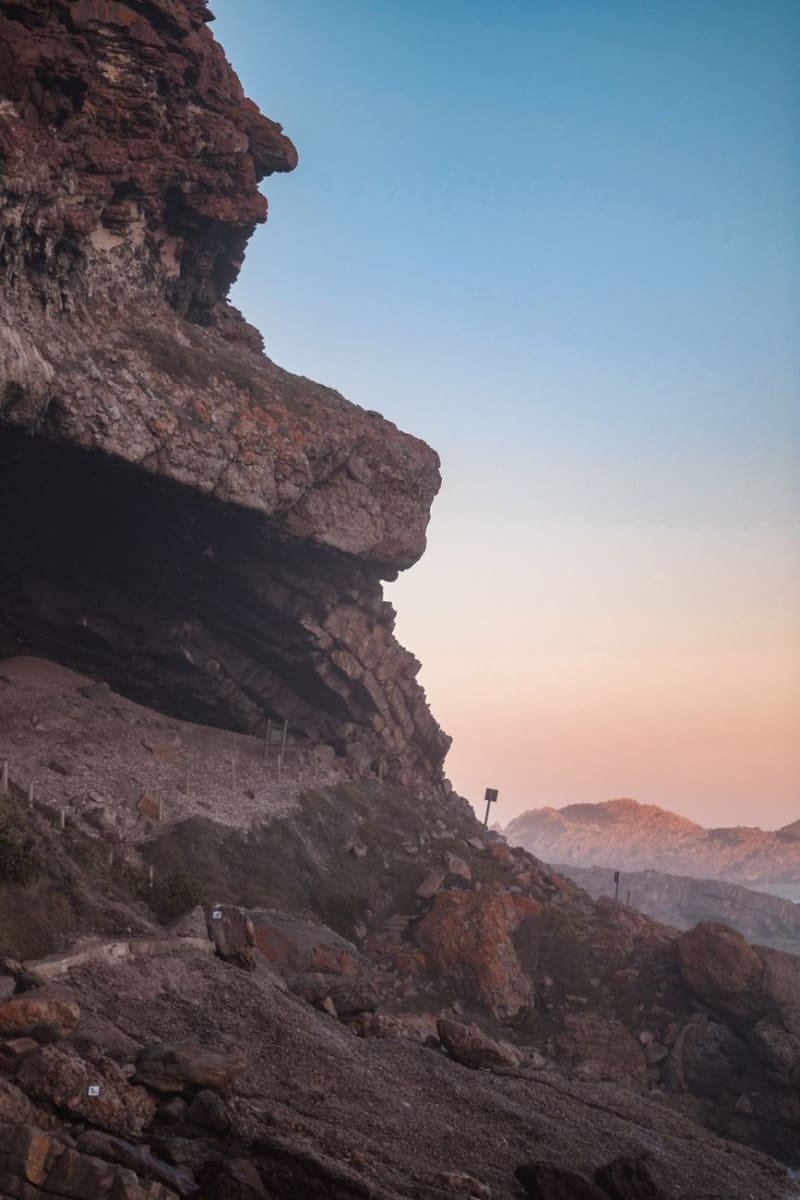 garden-route
Nature's Valley
A tiny village hidden between forest, lagoon, and a wild beach at the edge of Tsitsikamma, where there is exactly one shop and no reason to hurry.
Explore garden-route
Oudtshoorn
The ostrich capital of the world sits in the dry Karoo edge just over the mountains — half theatre, half agriculture, with one of the most startling cave systems in the southern hemisphere underneath it.
Explore garden-route
Plettenberg Bay
The Garden Route's most beautiful bay — wide, curved, impossibly blue — where dolphins work the surf line most mornings before the crowds arrive.
Explore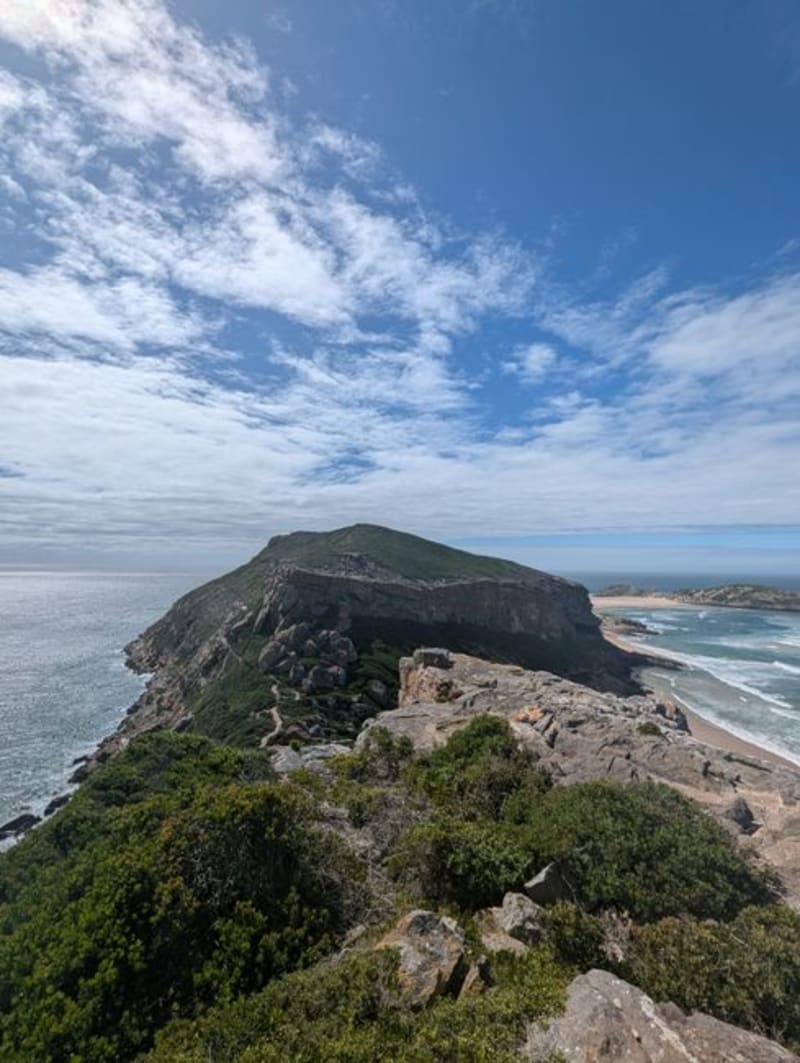 garden-route
Robberg Nature Reserve
A wind-scoured peninsula near Plettenberg Bay where seals, whales, and 120,000 years of human history share the same rocky trail.
Explore garden-route
Sedgefield
A slow, slightly weird village between lagoon and sea where the Saturday market has become a weekly reason to recalibrate what a morning can be.
Explore