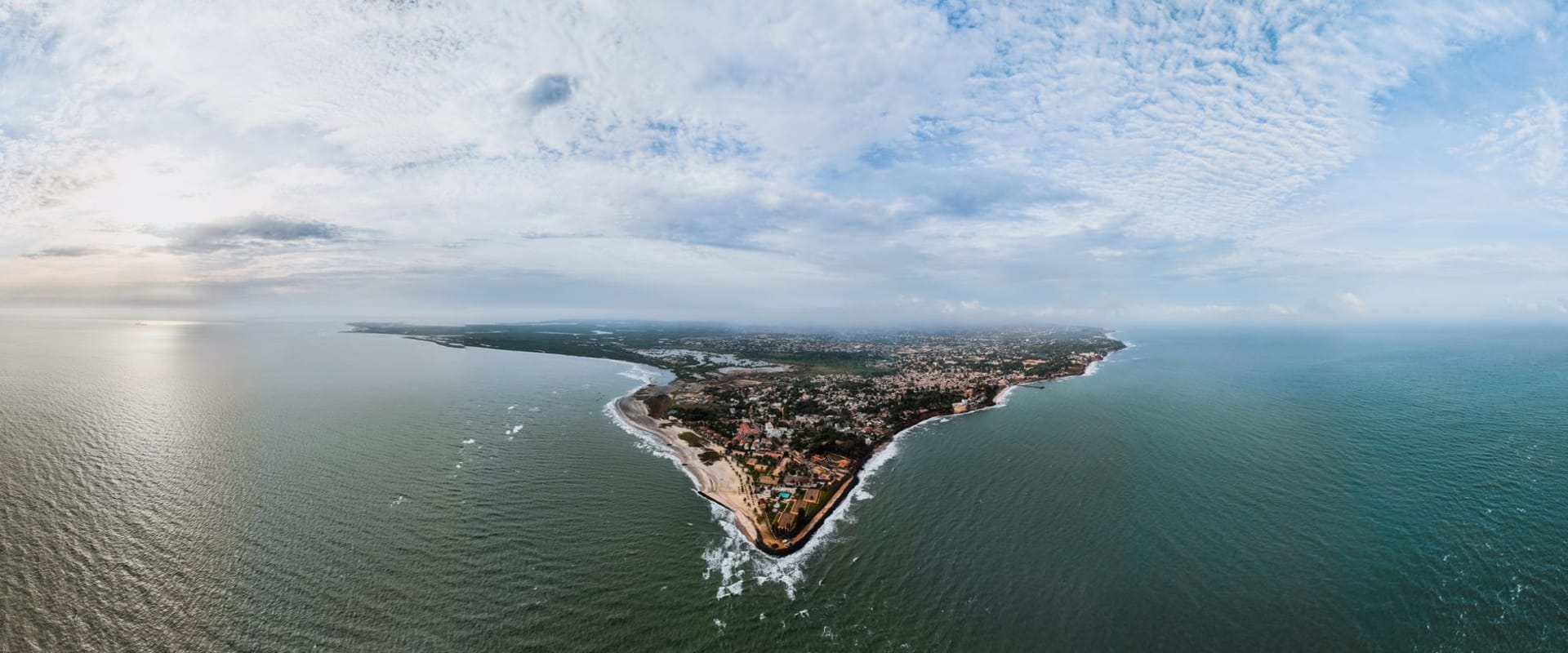
Banjul
"A capital city that chose to stay small, and somehow that became its most dignified quality."
I took the ferry from Barra on a Tuesday morning, wedged between a woman carrying a live chicken and a teenager with a phone playing Afrobeats at full volume. The crossing takes about forty minutes and the ferry is always full — people, motorcycles, goats, sacks of millet, boxes of Chinese-made goods wrapped in plastic. The wide brown mouth of the Gambia River opens around you and Banjul materialises on the south bank, low-slung and salt-bleached, looking less like a capital city than a town that got the title and decided not to change anything about itself.
That quality — of a place that has not tried too hard — is exactly what makes Banjul worth a day of your time. Albert Market sits at the city’s heart, a dense warren of fabric sellers, second-hand clothes, mobile phone accessories, ground spices sold in plastic bags, and women selling freshly squeezed orange juice from hand-cranked machines. I bought a length of batik fabric for a price we argued over pleasantly for ten minutes. Neither of us was trying very hard to win.
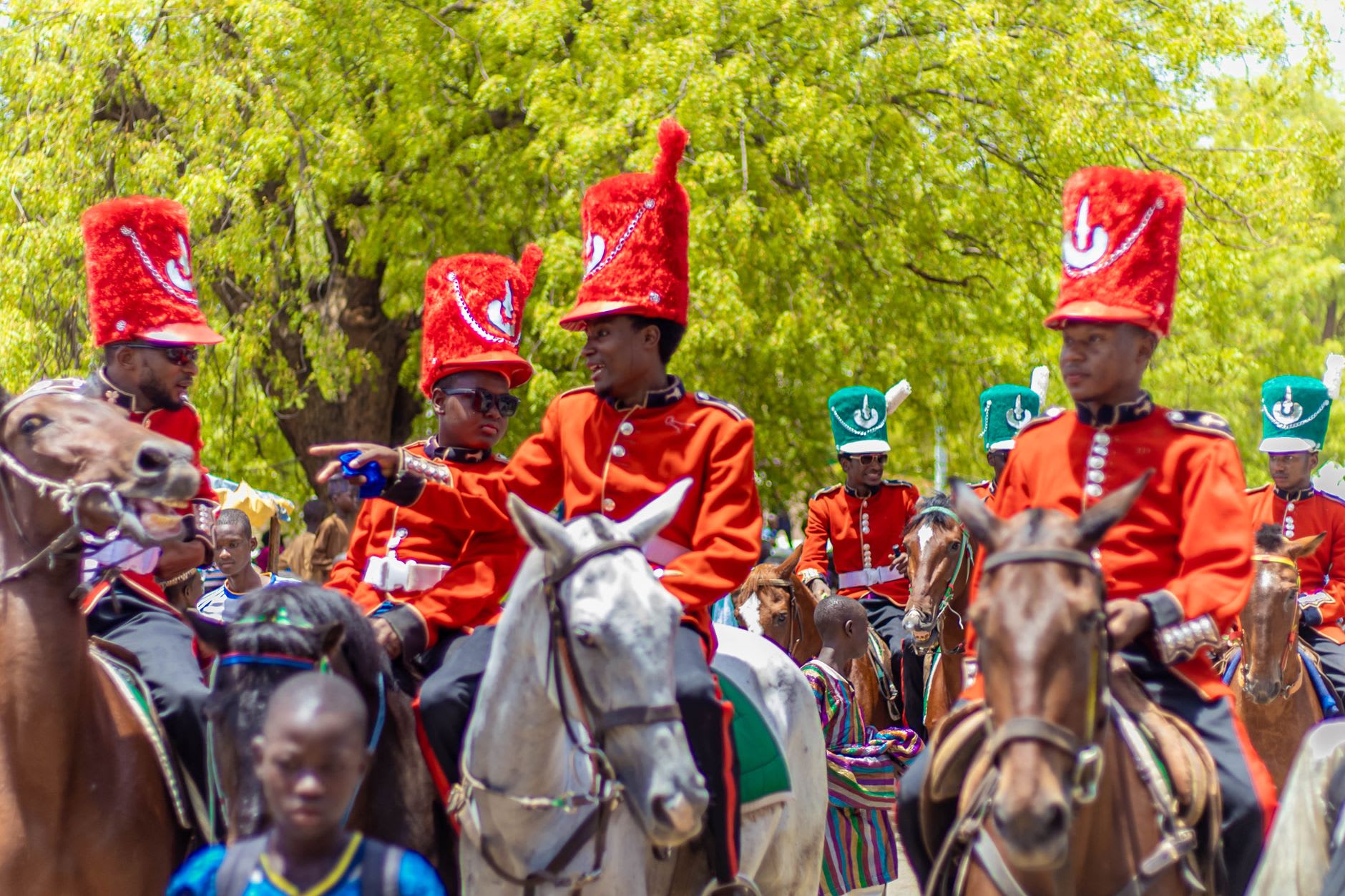
The colonial architecture has not aged gracefully but it has aged honestly. Along the main streets you find verandahed buildings in various states of gentle decomposition — paint peeling in long ribbons, iron railings rusting orange, doors swollen in their frames by decades of humidity. The Supreme Court building looks like it belongs in a Graham Greene novel. The National Museum is small but earnest, with displays on Mandinka and Wolof culture, Kora music, traditional dress, and the country’s groundnut-export history that nobody else will bother to explain to you. I spent an hour there and came out knowing more about Senegambian history than I had from three days of reading beforehand.
The waterfront in the late afternoon takes on a specific quality of light — the river glowing copper, the fishing pirogues moving in slow outline against it, the smell of salt and fish and diesel mixing in the air that comes off the water. Children swim off the jetty. A man repairs a net. Someone is always cooking something over charcoal somewhere nearby, and the smoke drifts sideways across the harbour in the heavy air.

Banjul does not compete with other African capitals on grandeur or growth or nightlife. What it offers instead is a kind of slow, unhurried legibility — a city you can actually read, walk across in an hour, and come away from feeling you understood something real. That is a rarer quality than it sounds.
When to go: November through February is the dry season and the most comfortable time to walk the streets. Mornings are especially pleasant — the market is busiest before ten, the light is good, and the heat hasn’t yet become the main character. Avoid visiting on Sundays when much of the market is closed.