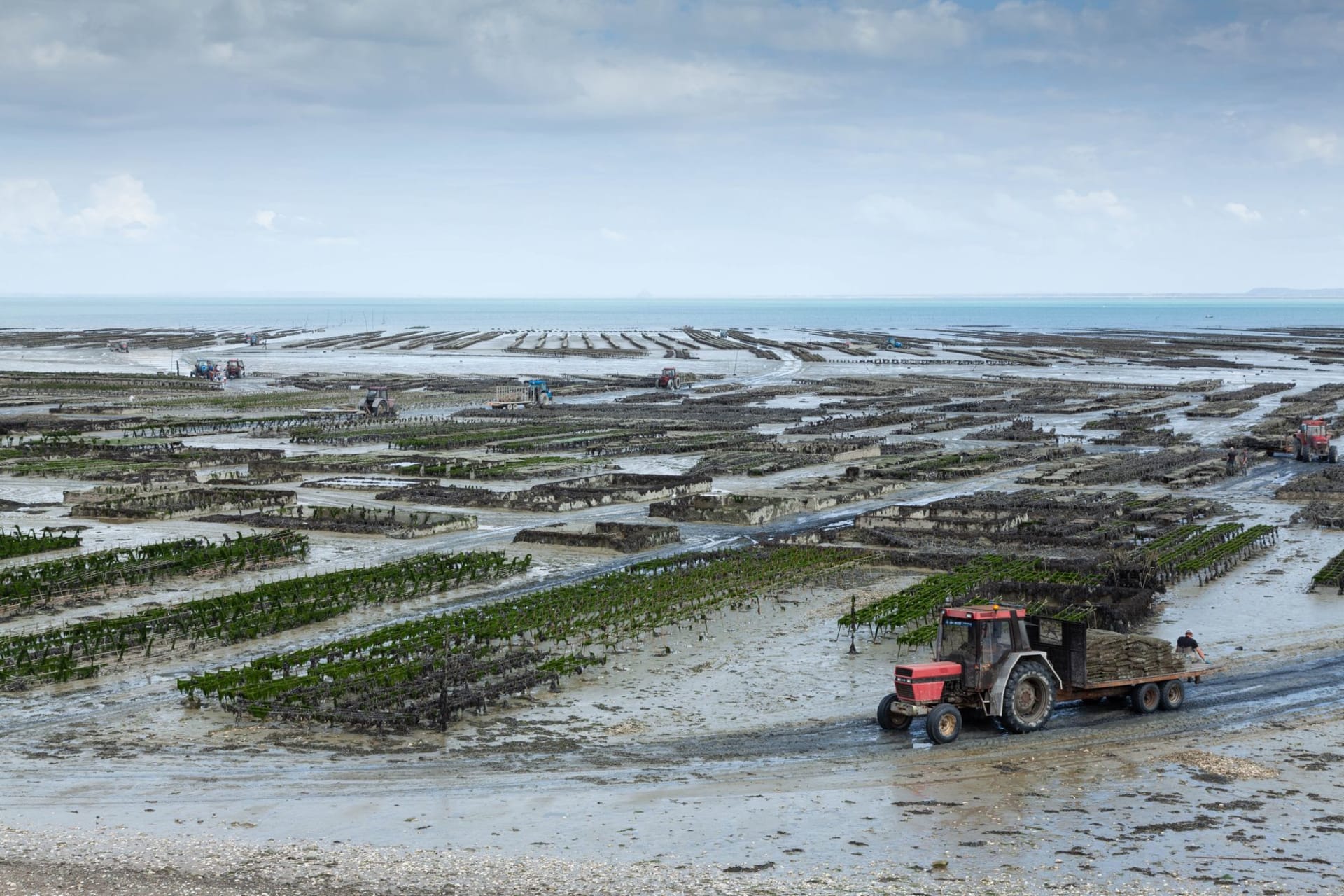
Xiapu Mudflats
"The alarm went off at 4:30am and I thought about ignoring it. I will never stop being glad I didn't."
The motorcycle taxi driver was waiting outside my guesthouse at 4:40 in the morning, engine already running, a cigarette lit and half-smoked in the dark. I climbed on behind him without speaking because there was nothing to say at that hour, and we rode up a dirt road into the hills above Xiapu County while the sky shifted from black to a deep undifferentiated grey that might, if everything went right, become something extraordinary. He dropped me at a viewpoint — a concrete platform with a guardrail, thirty other photographers already there with tripods set up — and I found a spot at the edge and looked down.
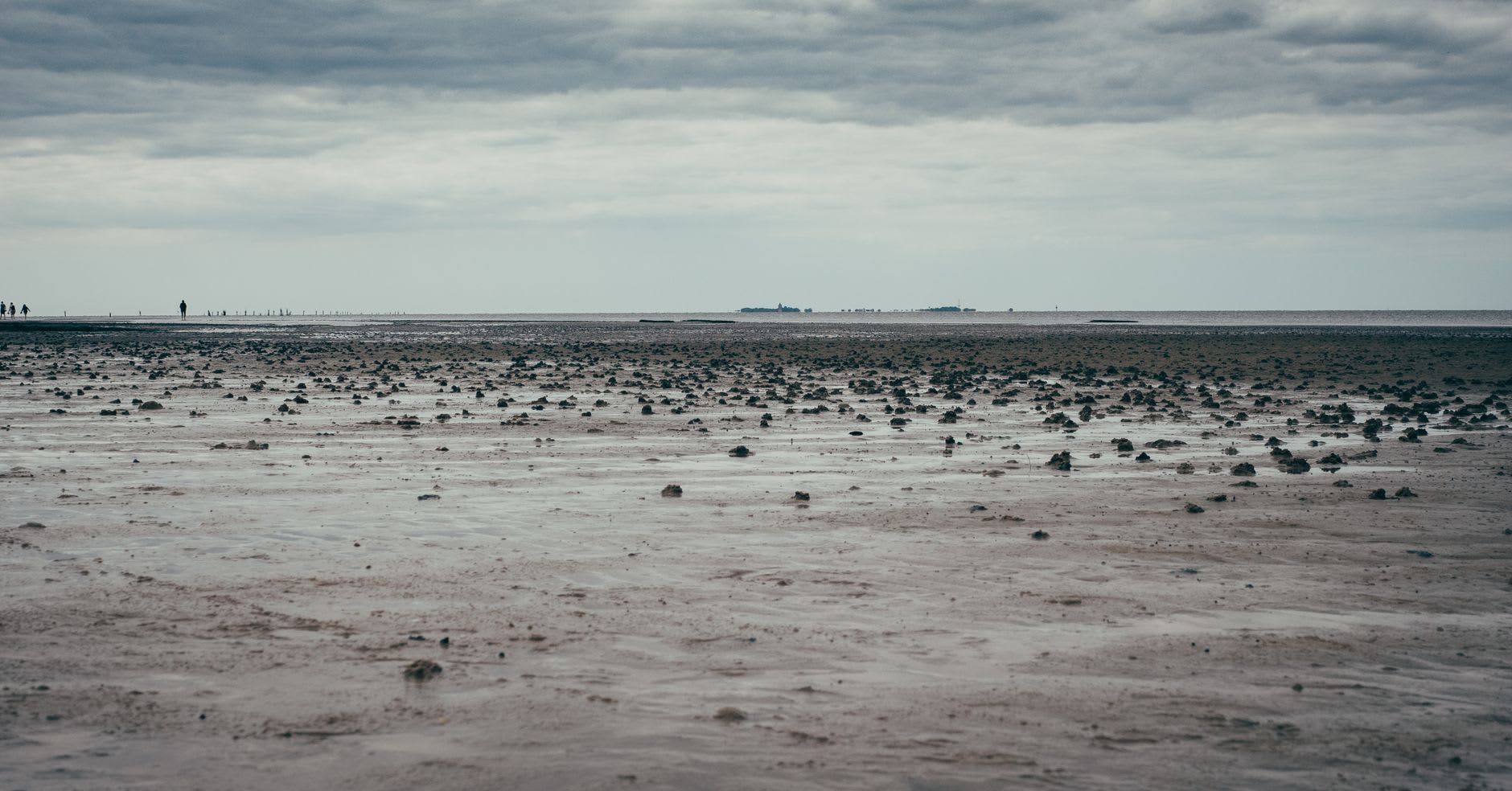
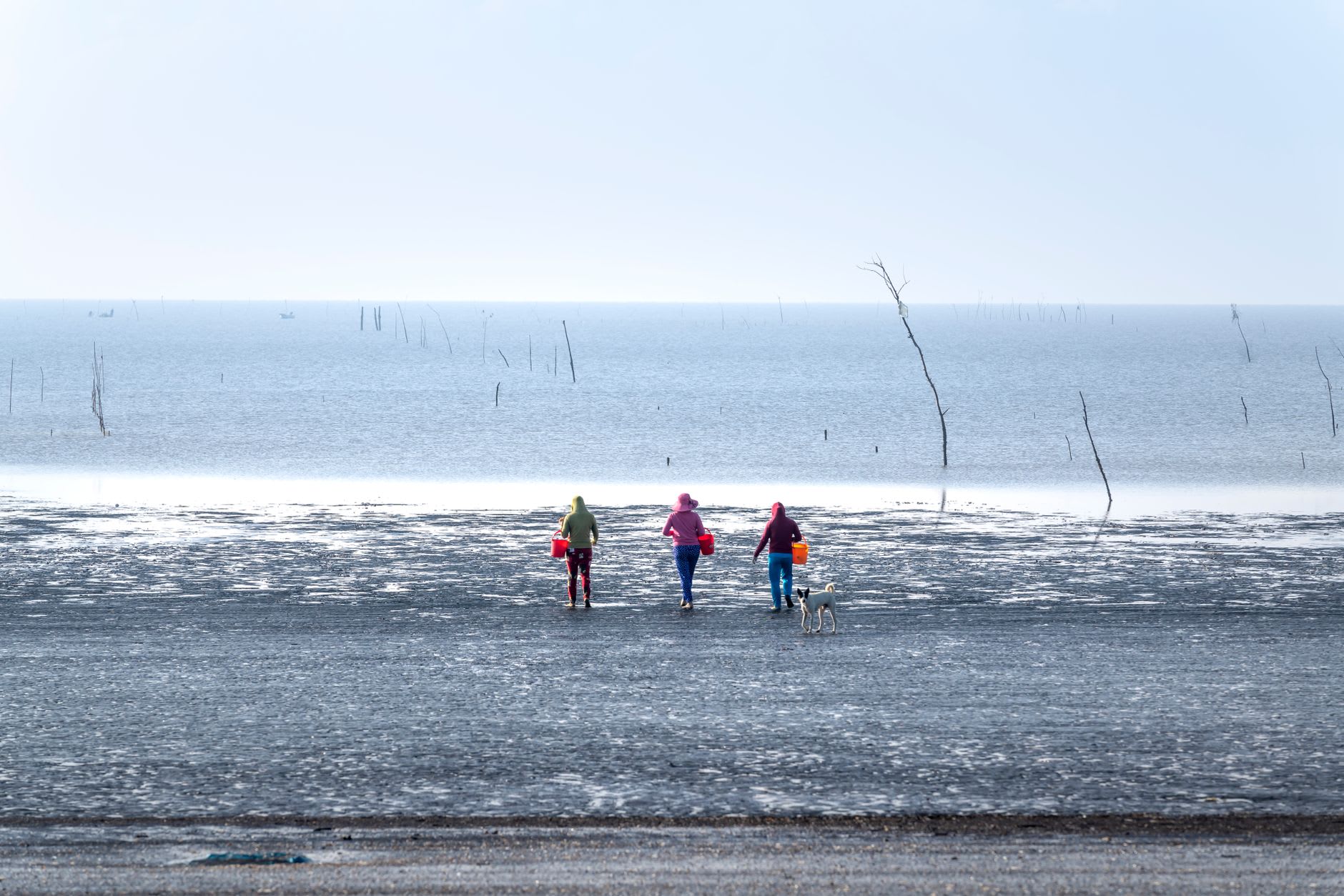
The mudflats of Xiapu are an estuary landscape, a place where three or four rivers come down to meet the sea through a maze of tidal channels. At low tide the mud exposes itself in vast panels of deep brown and charcoal grey, and through these panels the channels run with the residual tide water, catching the light differently from every angle. What makes the scene something beyond the merely photogenic is the people who work it. Before sunrise, in the dark, the fishing families launch their bamboo rafts — flat platforms assembled from poles, punted with a long stick — and move out along the channels to check their oyster lines and nets. From the hillside viewpoint, in the grey light before colour, they appear as silhouettes: the raft, the figure, the pole, the reflection in the water below, and around them this vast geometric landscape of channels cutting through dark mud like silver script.
The colour, when it comes, arrives slowly. The sky goes from grey to pale yellow to something that, on good mornings with coastal mist, becomes a suffused, gauzy gold that makes everything in the landscape glow from within. The mud loses its heaviness and takes on warmth. The water channels become molten. The silhouettes of the fishermen acquire detail: an orange jacket, a blue hat, the texture of the woven basket on the raft’s deck. I had seen this image in a hundred travel photographs and wondered if the reality could match the picture. It matched. It exceeded. What the photographs don’t carry is the smell — salt and mud and something fermented and organic that catches in your throat — or the sound, which is nearly nothing, just the occasional call between rafts and the distant cry of seabirds working the exposed mud for breakfast.
The viewpoints above Bashang and Ganjiang are the most popular, and the light changes what each one offers by the hour. At dawn, the Ganjiang point catches the best channels. By mid-morning, as the tide shifts, the mud rearranges itself and the scene at Bashang becomes something different — flatter, wider, the mist usually burned off by then but the scale suddenly legible in a way it isn’t in the soft early light. I walked between them over two mornings and found that the second morning, knowing where to stand and what to look for, was better than the first. This is the kind of place that rewards showing up twice.
The town of Xiapu itself is a working county seat with little tourist infrastructure and no particular interest beyond the mudflats — basic guesthouses, a market where the morning catch comes in, noodle shops that open at six. There is something honest about this, a place that hasn’t dressed itself up for the visitors who’ve started arriving in recent years. The woman who ran my guesthouse woke before me every morning, made me tea without being asked, and looked slightly baffled by the camera bag I was hauling into the dark. What the photographs were for was not her concern. The tide was what mattered here, and it went where it went on its own schedule.
When to go: October and November are the prime months — coastal mist is thickest in the morning hours, the light quality is extraordinary, and the mudflats are at their most photogenic. March and April also work well. The viewpoints are busiest on weekends and Chinese national holidays; arriving mid-week produces noticeably thinner crowds at the guardrails. The tidal schedule varies daily — check a local tidal chart and work backward from low tide to time your arrival at the viewpoints.