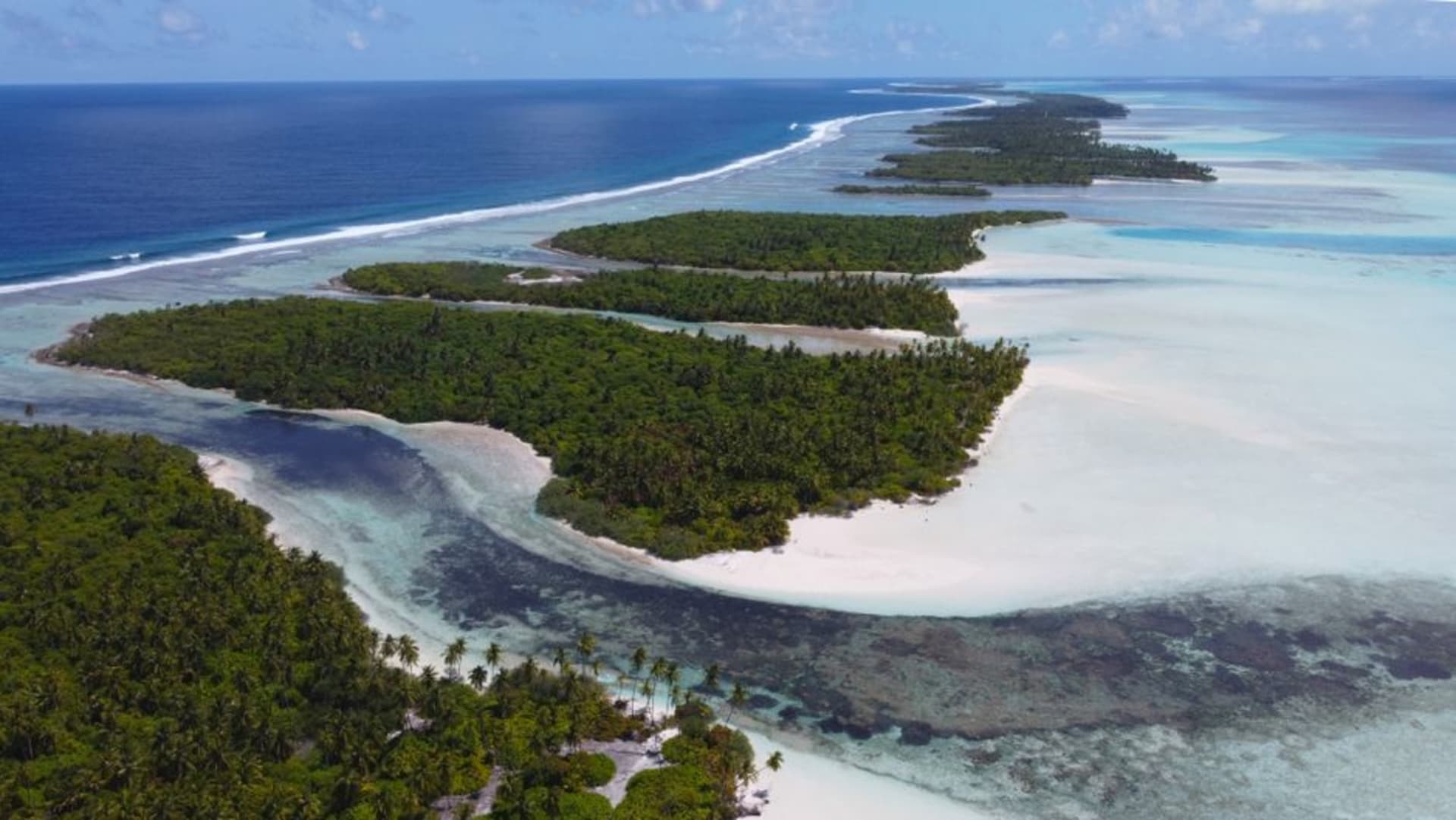
Mataiva
"From the plane window it looked like someone had tiled the ocean. Nobody could explain to me why, and I stopped needing them to."
The westernmost atoll of the Tuamotus, with a lagoon carved into a strange checkerboard pattern of coral ridges that looks manufactured until you remember nature doesn't need a reason.
Mataiva doesn’t get many visitors, and the ones who do come are usually there for one specific reason: the lagoon’s bizarre geometry. Seen from the air as the small plane banks in for its short final approach, the lagoon reveals itself as a grid of coral ridges dividing the water into dozens of rectangular basins, like a half-drained rice paddy scaled up to the size of an island. Geologists have theories involving ancient reef growth patterns and tidal circulation, but standing on the ground none of that explains what you’re actually looking at, and I found I preferred not fully understanding it.
I stayed in a small family-run pension near the only real settlement, a cluster of houses and a church close to the single pass connecting lagoon to ocean. There’s no real “town” here in any conventional sense — maybe three hundred people live on the atoll, most involved in copra production or small-scale pearl farming, and the rhythm of the place is dictated by the supply boat and the twice-weekly flight, nothing else.
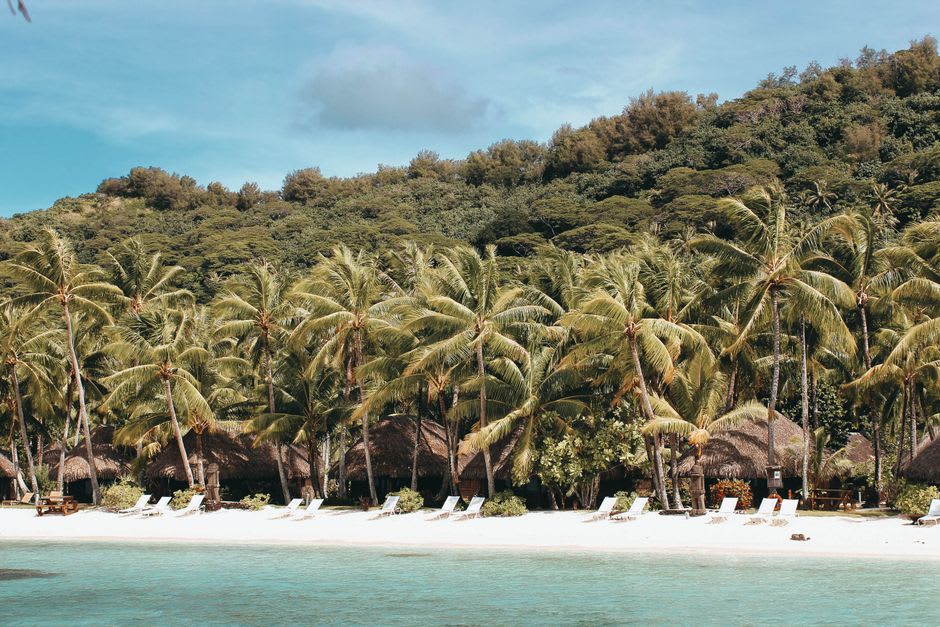
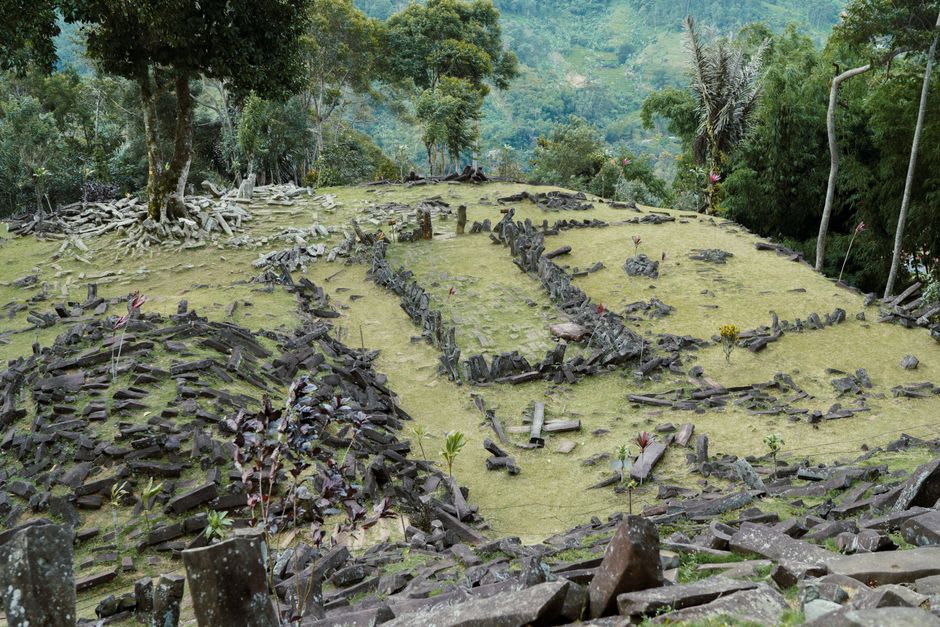
The diving and snorkeling around the pass is excellent and almost entirely unvisited by comparison to Rangiroa or Fakarava — I did a single drift dive through the pass with the atoll’s one dive guide, a taciturn man who ran the operation out of his garage, and saw grey reef sharks, eagle rays, and a turtle that seemed personally affronted by our presence. There are also a handful of ancient marae, stone temple platforms, scattered along the lagoon shore, overgrown and unrestored, which gave the whole visit an air of having stumbled onto something rather than having toured it.
What I remember most is the quiet at night — no generator hum after a certain hour, no other guests at the pension, just the sound of the pass working the tide back and forth and an absurd density of stars. It’s not an easy place to reach and it doesn’t try to convince you it’s worth the trouble. It simply is, if solitude and geometry are your thing.
When to go: The dry season, May to October, offers the calmest seas for the small inter-island flight and the best underwater visibility. Flights are infrequent year-round, so book well ahead regardless of season and confirm your return before committing.