Kourou
"The jungle shook. The monkeys panicked. The rocket climbed. I understood nothing and everything."
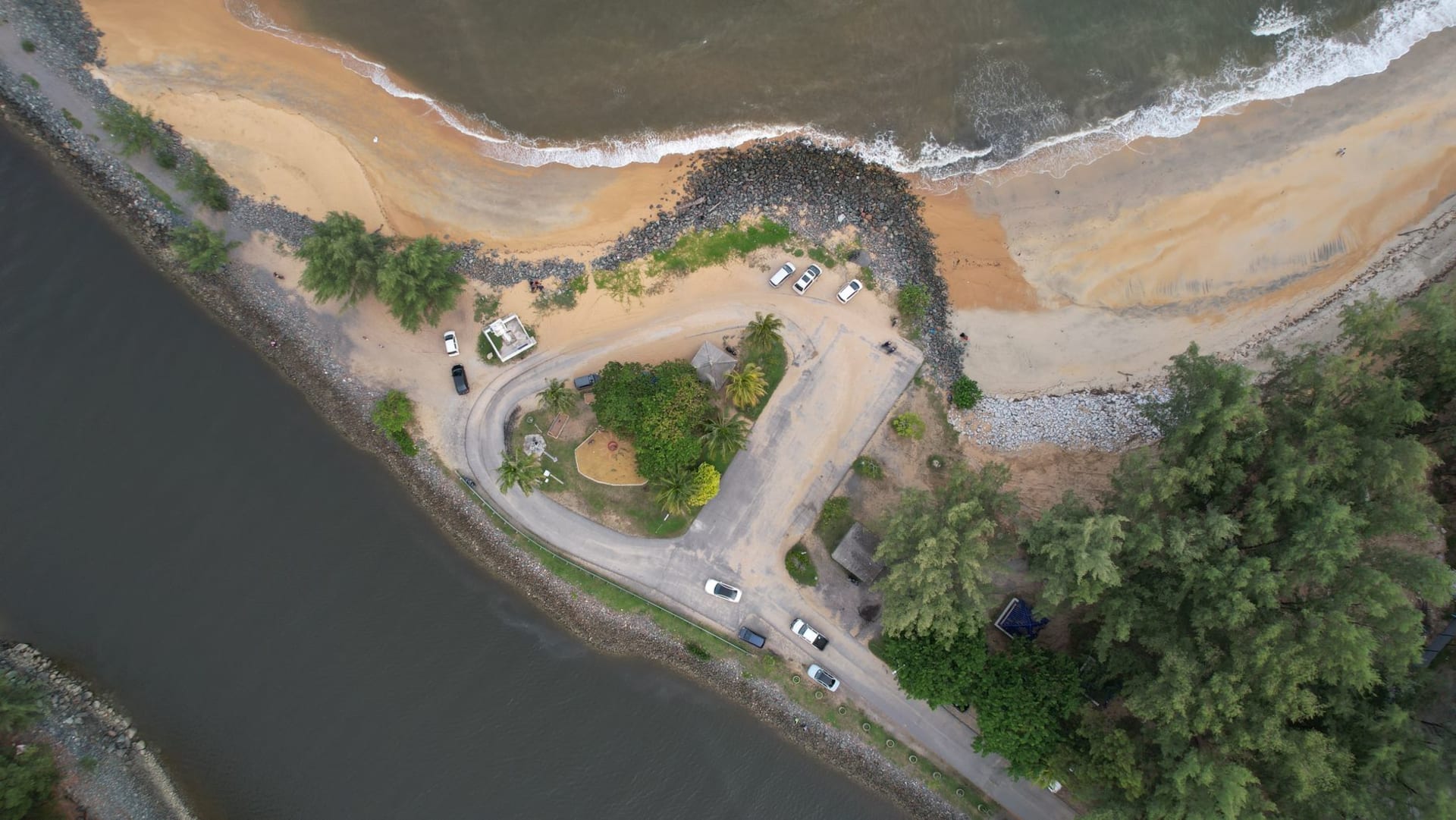
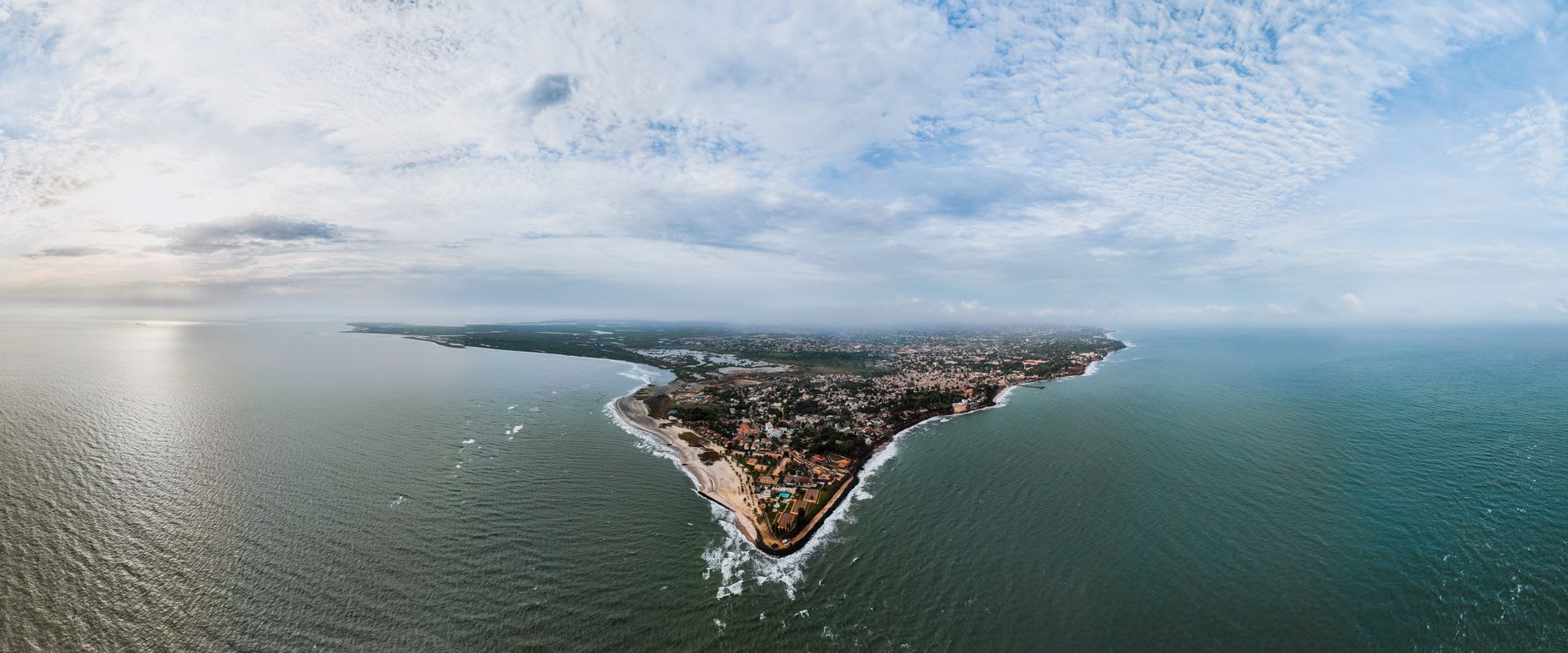
The drive from Cayenne takes forty minutes on a coast road that flickers between open savanna and sudden walls of green. I was expecting something industrial, or at least purposeful — the kind of place that looks like it means business. What I found at first was a town that looked oddly clean for the tropics: wide boulevards, organized roundabouts, a supermarket with European prices and a car park. Kourou was essentially rebuilt in the 1960s to house the personnel of the Guiana Space Centre, and it carries that origin in its bones — orderly, international, slightly detached from the Creole chaos of the coast. And then you drive past the end of the town and there, rising above the treeline, are the launch gantries.
Nothing quite prepares you for how strange the Centre Spatial Guyanais actually is. The guided tour takes you past the assembly building — one of the largest structures in South America by volume — and out to the launch zones, where Ariane and Vega rockets are prepared against a backdrop of jungle so dense and so close that it reads as theatrical. The location is not accidental: the equator’s spin assists launches here in a way that gives Kourou a physical advantage over Cape Canaveral. The Europeans built their rocket port in French Guiana for the same reason the French built their prison there — remoteness and geography, serving opposite purposes but arriving at the same place.
The museum at the visitor center is genuinely good — better than I expected — with models and video installations that explain the history from the early 1960s experiments onward, and enough detail about orbital mechanics to make you feel briefly clever. But the tour itself, the physical experience of standing on the launch pad while a guide explains the fuel loading process, is something else. The scale is wrong in a way that is hard to articulate. A rocket designed to lift satellites to geostationary orbit is taller than anything in its surroundings and somehow still looks inadequate against the sky it is trying to reach.
I had booked a night launch viewing two months before. These are the things you learn — that launches require advance booking, that the viewing area is several kilometers from the pad for reasons related to blast pressure and common sense, and that the countdown is more nerve-wracking than you’d expect even when you have no personal stake in the outcome. The launch itself lasted perhaps four minutes from ignition to disappearing into cloud cover. The first thirty seconds were the thing: the ground beneath my feet vibrated, the horizon went orange and then white, and the sound arrived a moment later — not a roar so much as a sustained physical event pressing against my chest. The jungle behind me rustled with what I choose to believe was audible primate concern.
After the launch the crowd dispersed quickly and I walked back along the road in the dark with the bugs singing and the smell of rocket exhaust still hanging faintly in the air. Kourou is not a town that rewards lingering. It exists to serve a purpose and it does so with European efficiency in the middle of the Amazon. But that specific intersection — the countdown timer and the howler monkey, France and the equatorial forest — is singular enough that I would drive forty minutes from anywhere to experience it.
When to go: Launches happen roughly ten to twelve times per year on no fixed seasonal schedule — check the Arianespace website months in advance and book viewing passes as soon as windows open. For the town itself, the dry seasons (February–March and July–November) make the heat more manageable.