Candes-Saint-Martin
"Two rivers becoming one, right where a saint chose to end his life — this village earns its atmosphere honestly."
The village where the Loire and the Vienne physically merge into one river, and where Saint Martin of Tours chose, on purpose, to die.
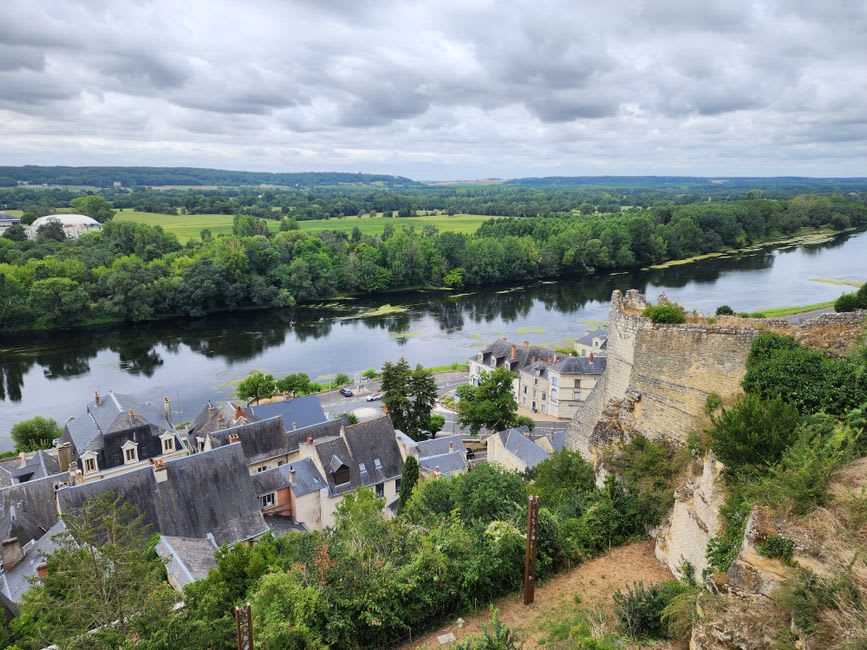
We came to Candes-Saint-Martin almost by accident, driving the small road that hugs the Vienne out of Montsoreau, and pulled over the moment we saw where the village actually sits: right at the point where the Vienne empties into the Loire, the two currents visibly different colours for a stretch before they finally blend. There’s a viewpoint above the village, a short climb up a chalky path, where you can see the whole confluence laid out — one river arriving pale and swift, the other broader and slower, meeting in a soft seam of mixed water that drifts for a surprisingly long distance before becoming uniform.
The saint who came here to die
The village’s full name honours Saint Martin of Tours, the fourth-century bishop who is arguably the most significant religious figure in this entire region — Tours became a major pilgrimage centre because of him, and his cult shaped Christianity across Gaul long before France existed as a concept. What makes Candes specific to his story is that this is reportedly where Martin died in 397, having travelled here deliberately to settle a dispute between quarrelling monks even though he was gravely ill and, by most accounts, aware he wouldn’t survive the trip. Tours and Poitiers both apparently argued over which town got to bury him, and the story goes that his body was smuggled down the river to Tours by boat while the residents of Candes slept, which either says something about medieval relic politics or is a very good legend — possibly both.
A church built like a fortress
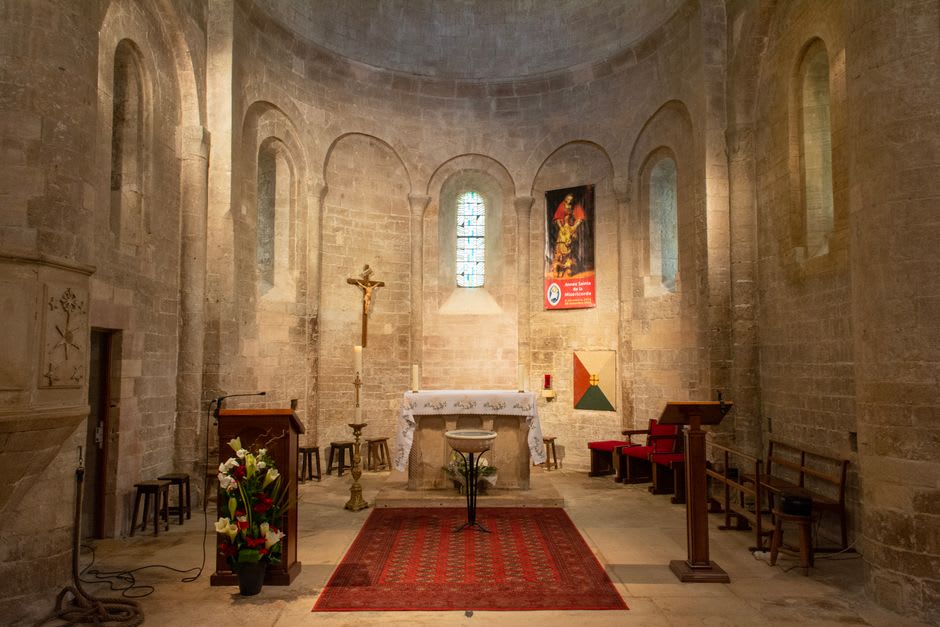
The collegiate church built on the site of his death is unusual for its defensive character — it has crenellations along its roofline and was genuinely fortified during the Hundred Years’ War, giving it a silhouette that reads more like a small castle than a place of worship from certain angles. Inside, the Gothic vaulting is surprisingly delicate given the fortress exterior, and there’s a quiet, cool stillness to the nave that felt earned rather than performed, the kind of atmosphere you can’t fake in a building this old. We sat in a back pew for a few minutes longer than we meant to.
The village itself is tiny — a handful of streets of pale tuffeau stone houses, one or two wine cellars open for tastings, and no attempt whatsoever to oversell itself. That restraint, after some of the more theatrical stops on this trip, was its own kind of relief.
When to go: Late afternoon on a clear day, when the light picks out the colour difference between the two rivers most clearly from the viewpoint above the village.
Keep exploring
More of Loire Valley