Roscoff
"My grandfather used to talk about Breton onion sellers cycling through English villages like it was a folk tale. It's a bus stop from here."
A ferry port town built from pink granite and onions, where my grandfather's stories about the Johnnies who peddled them door to door in England finally made sense.
Roscoff is the kind of place you arrive at by accident, because you’re catching or getting off the ferry to Plymouth or Cork, and then find yourself wanting to stay longer than the crossing schedule allows. I’d driven through it twice on the way to the boat without stopping properly, and it wasn’t until my grandfather mentioned, almost in passing, that his own grandfather used to talk about the “Johnnies” — Breton onion sellers who crossed the Channel every summer with bicycles strung with braided pink onions, peddling them door to door across England and Wales — that I realized this specific town was where that whole strange trade began.
The town the onion built
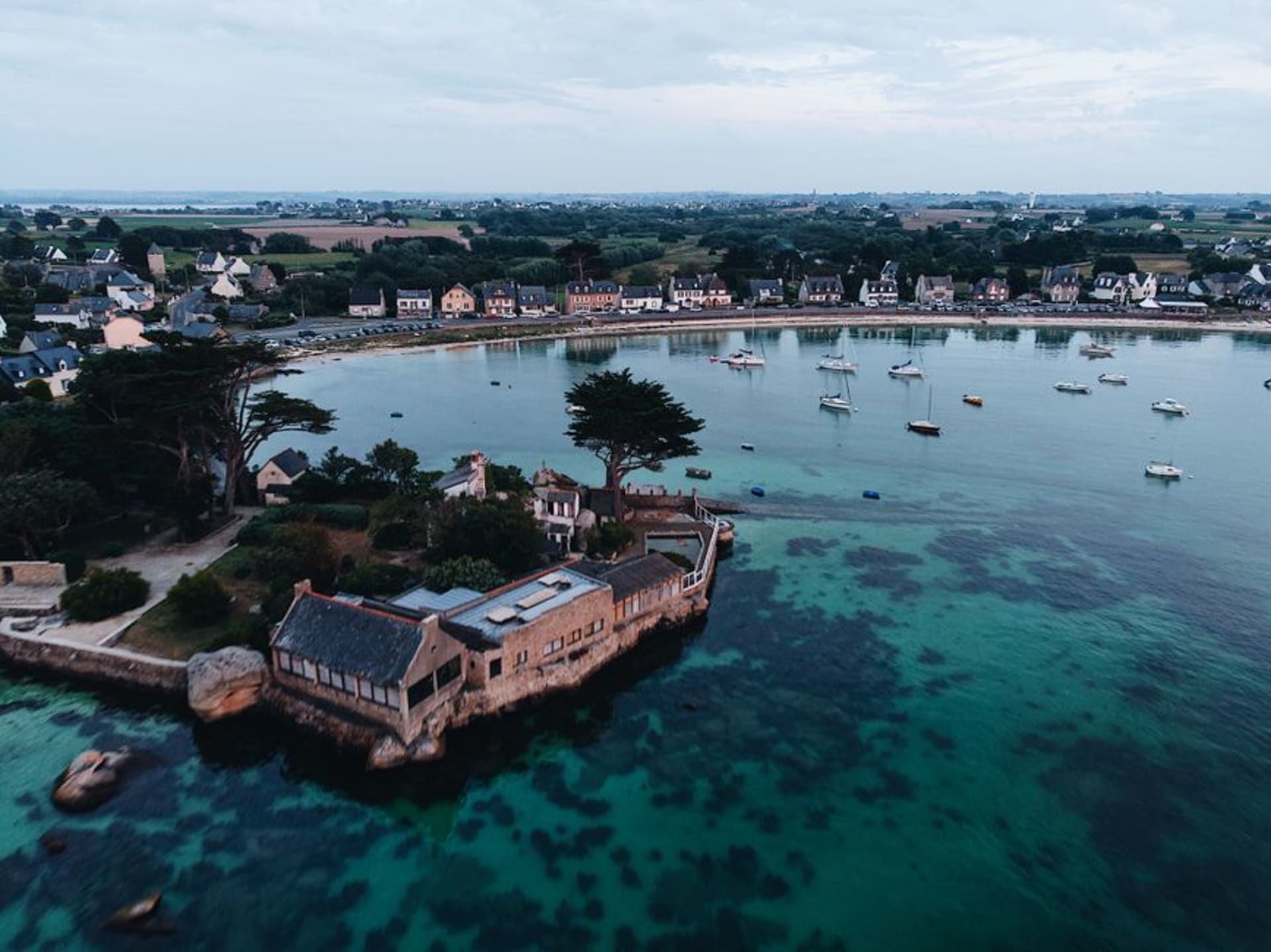
Roscoff’s pink granite houses, tight around a harbor that looks built for smugglers rather than commerce, tell you this was a serious port long before it became a ferry terminal, and the money that built the elaborate Renaissance houses along Rue Amiral Réveillère came largely from onions. From the 1820s onward, local farmers here grew a mild pink onion that kept for months, and rather than just sell it locally, they started shipping themselves across the Channel with it, cycling from door to door in England selling strings of onions off their handlebars — the “Onion Johnnies” who became such a fixture of British street life that some English children apparently grew up assuming all Frenchmen wore berets and rode bikes hung with onions. There’s a small museum, the Maison des Johnnies, dedicated to this improbable history, and after visiting it I couldn’t look at a supermarket net of shallots the same way again.
Where the sea became medicine
The other thing Roscoff invented, more or less, was thalassotherapy — the practice of using seawater and marine climate therapeutically, which a local doctor named Louis Bagot pioneered here in the 1890s after noticing that fishermen’s children seemed hardier than others. The Institut de Rééducation he founded grew into a whole spa industry that now lines the seafront with modern thalassotherapy centers, and we spent an afternoon at one after a long walk, which felt appropriately on-brand for a town that basically invented the concept. Beyond the spas, Roscoff’s mild microclimate — mild enough that the town cultivates palm trees and the exposed granite headland by the church of Notre-Dame-de-Croaz-Batz, with its improbably ornate Renaissance bell tower shaped like a ship’s mast, gives views clear out to the Île de Batz just offshore, a fifteen-minute ferry ride away and worth the detour for its lighthouse and exotic garden alone.
When to go: Spring and early summer bring the mildest weather and the town’s gardens into bloom, taking advantage of the same microclimate that made the onion trade possible. If you’re routing through on the ferry, build in an extra night rather than treating Roscoff as a pure transit point — the crossing schedules to Ireland and England run year-round but are busiest and priciest in July and August.
Keep exploring
More of Brittany