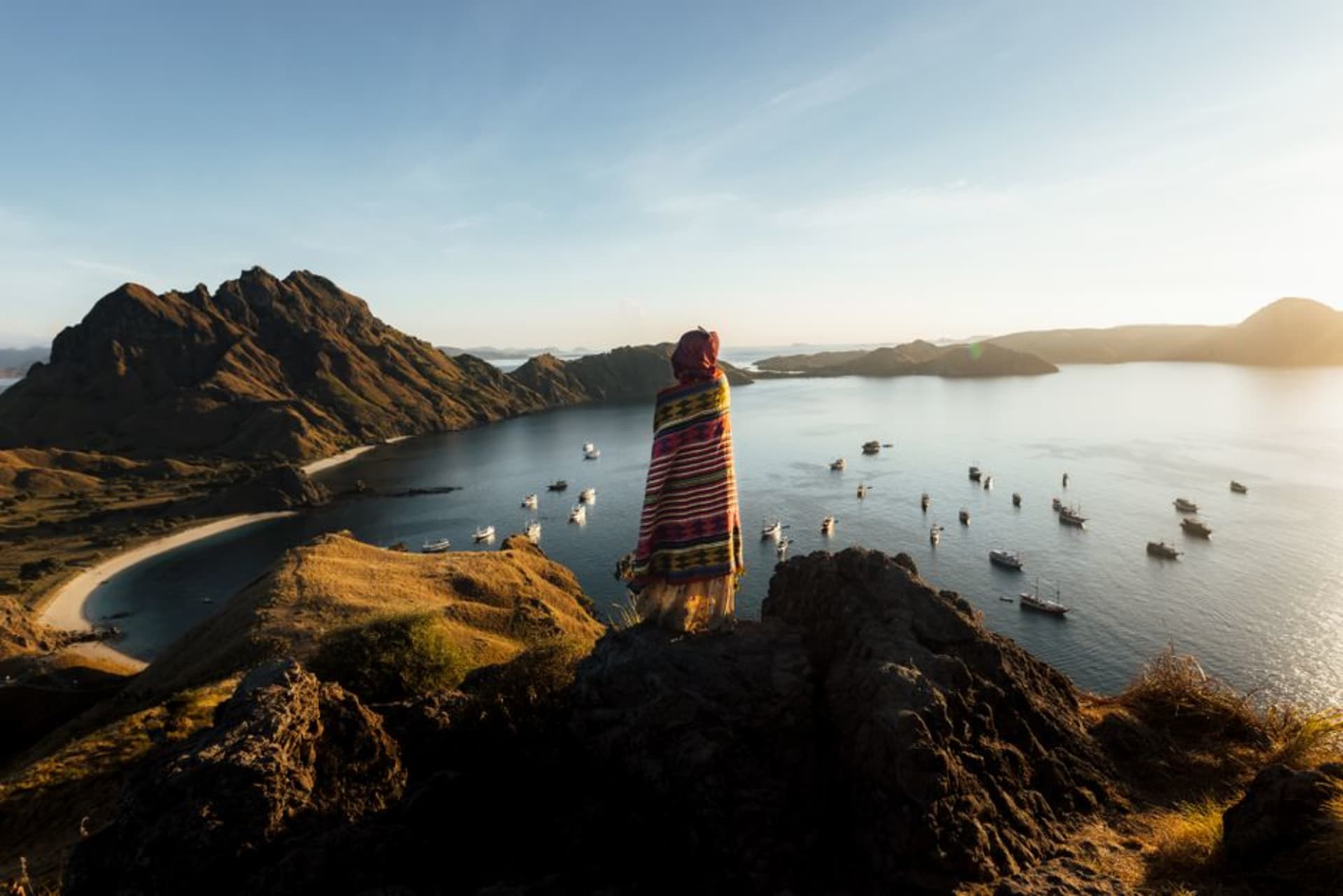
A dry, dragon-stalked island where rangers with forked sticks are the only thing standing between you and 1,300 wild Komodo dragons.
Lia booked the boat from Labuan Bajo the night before, and I remember not sleeping much — not from excitement exactly, more this low hum of unease I couldn’t quite place. Everyone talks about Komodo Island as the “real” one, but our guide on the boat, a wiry guy named Yanto who’d grown up fishing these waters, told us Rinca was where he’d take his own family. No long crossing, he said, and just as many dragons — more, actually, packed into a smaller stretch of dry hills. We pulled into Loh Buaya a little after eight, the bay ringed with mangroves and the water flat as glass, and I still didn’t quite believe there’d be dragons just waiting for us on land.
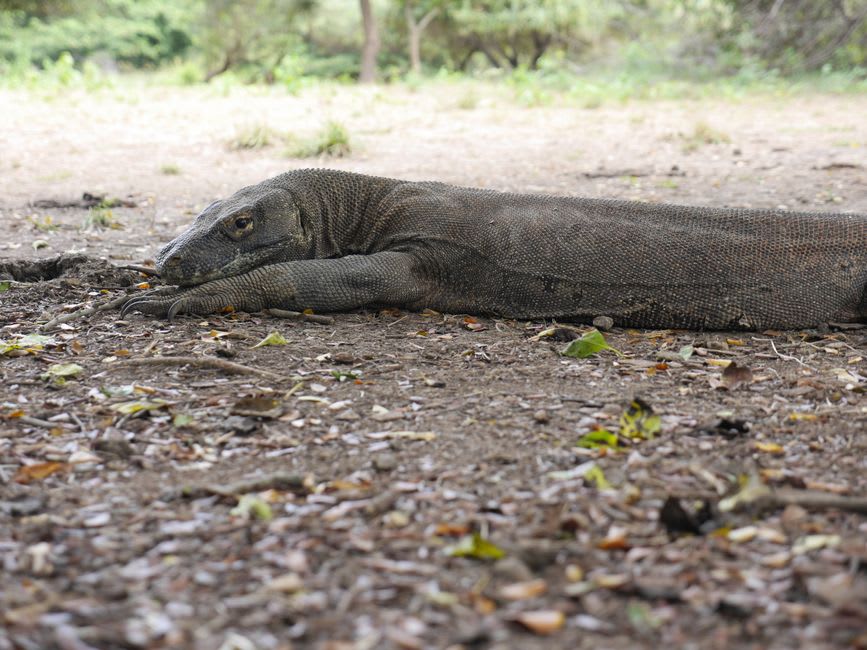
There were. Three of them, sprawled under the ranger station itself like enormous, patient dogs, barely twitching as we filed past with our two rangers — both carrying nothing but long forked sticks, which felt almost insulting given what these animals can do. Yanto explained, half-joking, half not, that the stick-and-trail system dates back to when the park was formally protected in the 1980s, and that it’s kept people safe ever since as long as nobody wanders off script. I kept my hands in my pockets and my eyes on the nearest dragon’s tail the entire first twenty minutes.
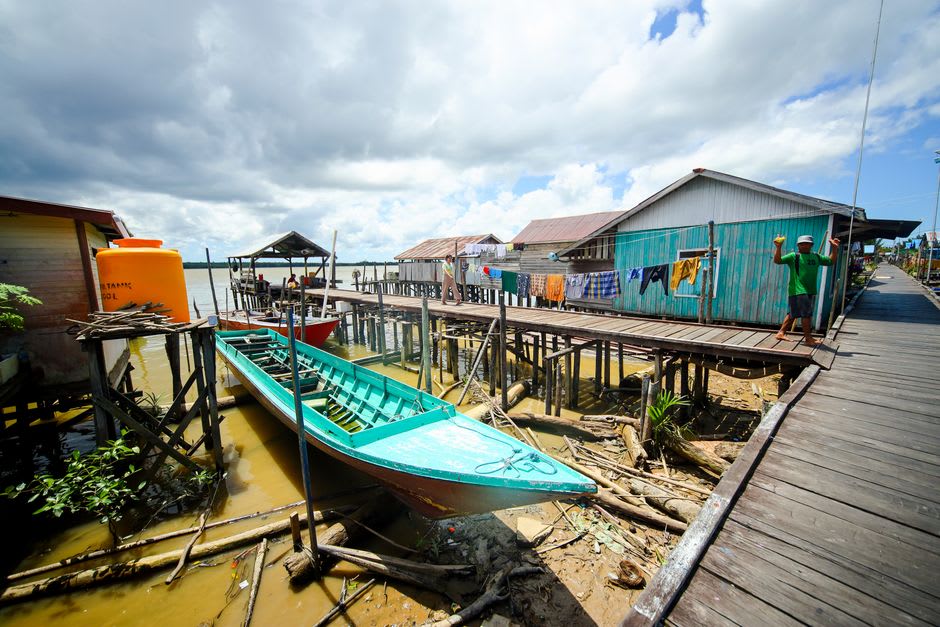
The trail climbed out of the mangroves into open savanna, all dry gold grass and scattered lontar palms, and that’s when the island stopped feeling like a zoo and started feeling like a place. We spotted Timor deer grazing warily at a distance, a pair of wild horses further up the ridge, and macaques chattering in a stand of trees near a waterhole — the whole food chain laid out in front of us, dragons included. From the top of the hill Yanto pointed us toward Kampung Rinca, the little Bajau and Bugis fishing village down on the coast, stilt houses over turquoise water, kids waving at boats coming in. It struck me how normal life just carries on there, a few hundred meters from where the world’s largest lizards sleep off the heat.
By the time we looped back to the boat, sweat-soaked and sunburnt on the backs of our necks, I’d stopped flinching every time a dragon shifted its weight. Lia said it best on the ride back to Labuan Bajo: it wasn’t the size of them that got her, it was how unbothered they were by us — like we were the ones being tolerated, not the other way around.
When to go: Aim for the dry season, April through November, when the trails stay open and the savanna thins out enough that the dragons are easy to spot instead of hidden in the brush.