
Porvoo
"Porvoo is what Finland looked like before it decided to be modern about everything."
Porvoo is an hour by bus from Helsinki, which means it’s the kind of place the capital sends itself on weekends when it needs to remember something. I arrived on a Saturday morning in early September, stepping off the bus into a small town that was immediately, obviously old — not in the preserved-for-tourists way but in the settled, organic way of a place where the same families have occupied the same houses for generations and the streets have been cobblestoned long enough that nobody thinks of them as charming anymore, just as streets.
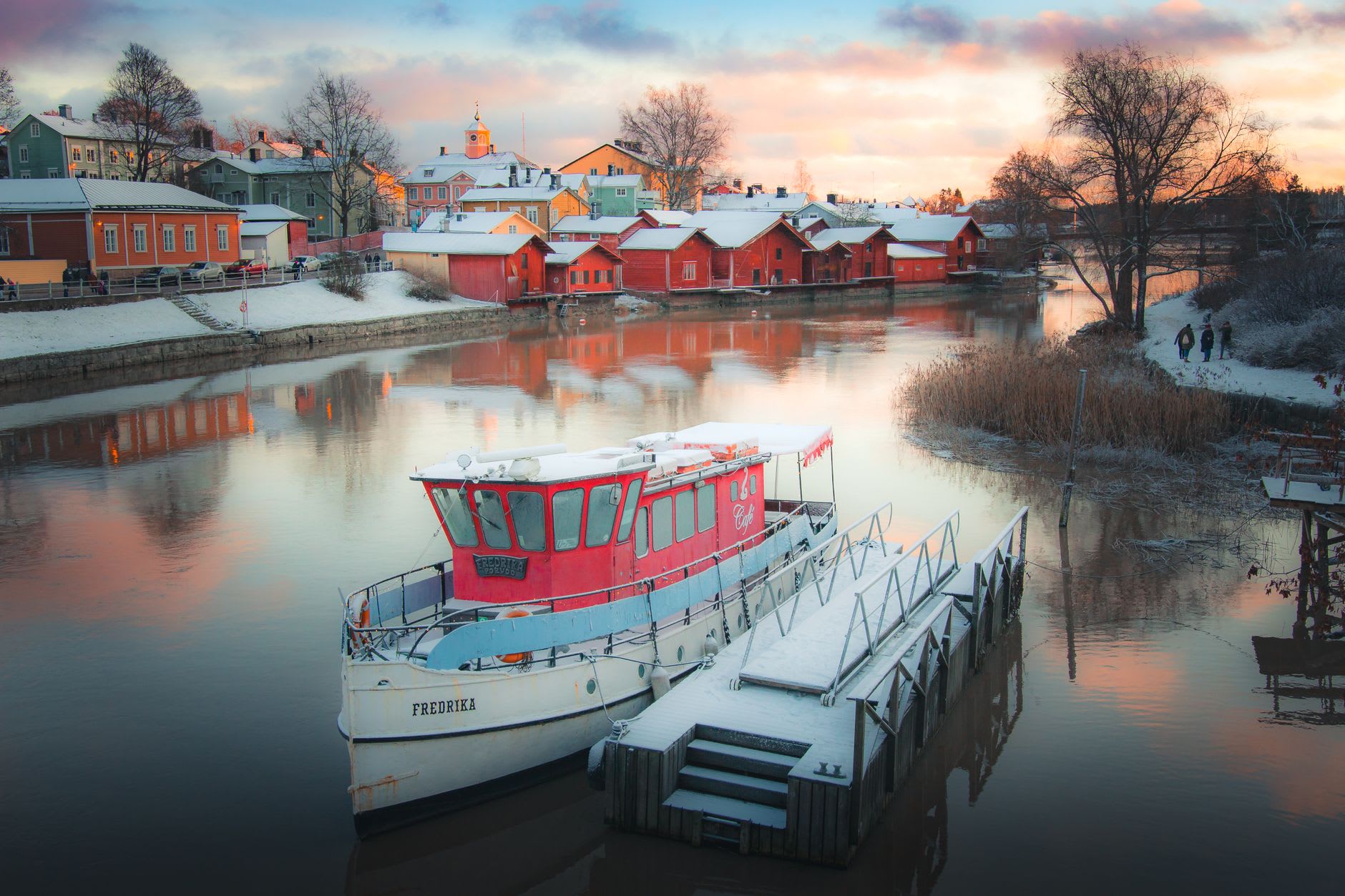
The old town sits on a low hill above the Porvoonjoki river, which runs past the cathedral at the top and down to the harbour where the famous red warehouses stand. Those warehouses are the image everyone takes away from Porvoo: a row of dark red wooden buildings with black roofs standing on pilings above the water, reflected in the river when it’s still. They were built in the eighteenth century for storing goods, and they’re still in use — now for galleries and small businesses rather than pitch and barrel goods — and the colour has survived because of an old Finnish tradition of painting wooden buildings with a red ochre pigment that was once a byproduct of copper smelting.
I walked up the hill to the medieval cathedral, which is plain and solid and smells of old wood and candle wax in the way that Scandinavian churches tend to, the interior pale and spare in the Lutheran manner, the light coming through small windows in the angled way of northern autumn. The cathedral was the site of the Diet of Porvoo in 1809, when Finland became a Grand Duchy of Russia rather than a province of Sweden — one of those political inflection points that sounds technical until you understand it’s why Finland exists as a country at all.
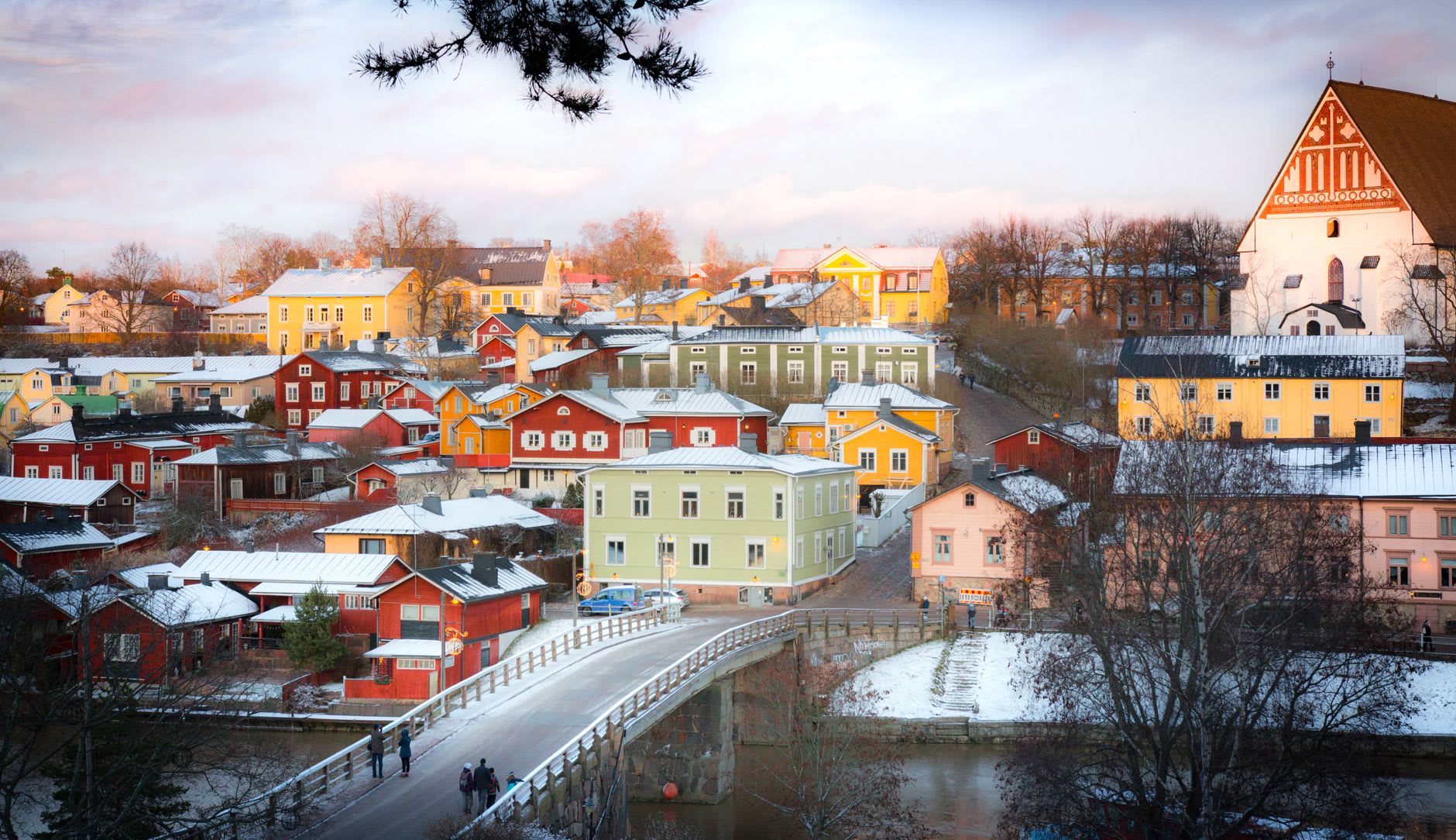
The streets of the old town run at angles determined by medieval necessity rather than urban planning, lined with small wooden houses in yellow, red, and grey, many of which have become the kind of artisan shops that make you spend more money than you planned. I went into a ceramics studio and stood for a while watching the potter work, buying eventually a small grey bowl that I still use for morning coffee. There’s a chocolate factory — Brunberg — that has been here since 1871 and whose pralines have genuine merit rather than just a good origin story. I bought a box and ate most of it on the bus back to Helsinki.
The café culture along the river is unhurried in a way that Helsinki’s café culture, which is also unhurried, still can’t quite match. The small cafés in old wooden buildings serve cinnamon rolls in the thicker, caramelized Finnish style, and coffee in mugs rather than tiny cups, and the combination of these with a view across the river to the warehouses is exactly what a Finnish September morning ought to feel like.
The town is also the final resting place of Johan Ludwig Runeberg, whose 1848 poem gave Finland its national anthem. His house is preserved as a museum, his desk exactly where he left it, the garden tidy, and the whole thing treated with the quiet reverence that Finns extend to the concept of earned solitude.
When to go: September and October for autumn colour along the river. December for the Christmas market in the old town, when the red warehouses are lit from within and the whole thing tips briefly into something that I am reluctant to call magical but have no better word for. June and July for river boat trips from Helsinki and the warmest weather.