Inari
"Inari is where you go when you finally understand that being at the edge of something is more interesting than being at the center."
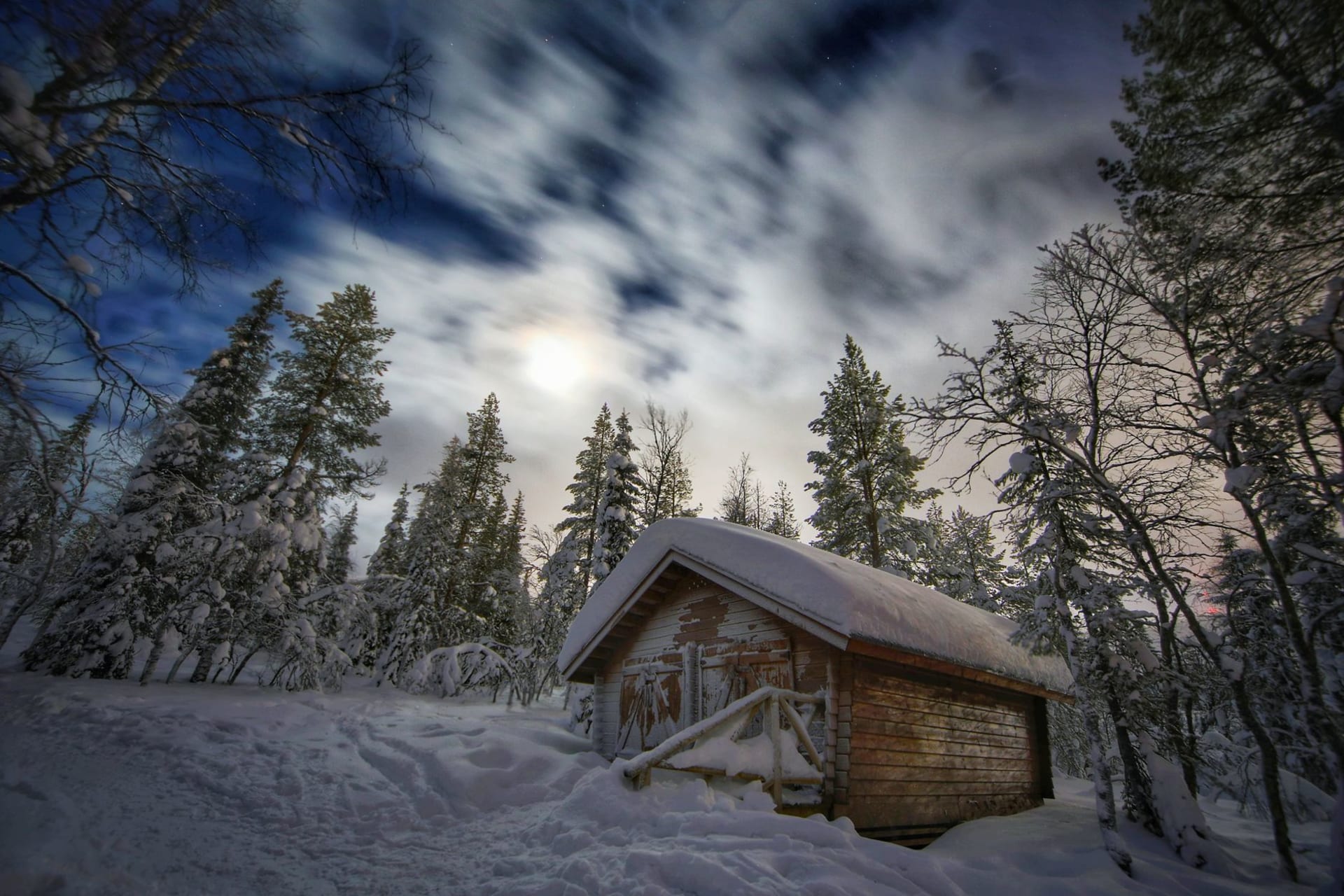
You have to want to go to Inari. It’s 330 kilometres north of Rovaniemi, which is already in the Arctic, which means that Inari sits at a latitude where the words “remote” and “northernmost” stop being adjectives and start being physical sensations. I drove there in March along a road that was dry on the map and comprehensively iced in reality, the Saariselkä fells behind me and the first trees of the birch scrub already shortening into something barely head-height on either side of the highway. I arrived in a village of about five hundred people with one main street, a church, and a view across the frozen surface of Inarijärvi that made the word “lake” feel insufficient.
Lake Inari is one of Finland’s largest — nearly a thousand square kilometres — and in March it is entirely frozen to a depth that snowmobiles cross with confidence. The surface in daylight is blinding, a flat white plane interrupted by islands that rise above it like dark exclamation points. The Sámi have fished and traveled across this lake for thousands of years, and the knowledge of its ice — which routes are safe, which channels run deep and freeze late — is the kind of inherited practical knowledge that took generations to accumulate and requires continuous active relationship to maintain.
The Siida museum is what makes Inari worth the drive beyond the landscape alone. It’s Finland’s national museum of the Sámi people, and it is exceptionally well done in the way that the best small regional museums sometimes are: specific, honest, and genuinely interested in complexity rather than presenting a clean narrative. The outdoor section follows the seasonal cycle of Sámi life around a ring of traditional structures — a gamme earthen shelter, a sijida summer camp, storage structures on high poles against the bears — set against the actual boreal landscape, which makes the exhibit feel inhabited rather than displayed.

I spent an afternoon with a Sámi reindeer herder who offered guided snowshoe excursions into the fell terrain east of the lake — not as a performance of culture but as practical snow-country travel with someone who knew the land in the way that requires being taught it rather than reading about it. We followed a reindeer trail from a valley up onto an open fell with a three-sixty view: the lake behind us, the Lemmenjoki national park to the west, and northward nothing but low fell and sky all the way to the Norwegian border.
The food in Inari is what you might expect at the end of a supply chain: practical, reindeer-forward, and supplemented by whatever the lake provides. Smoked arctic char — a relation of salmon that lives in cold, deep lakes — appears on the menu at the one restaurant in the village and is very good, with a texture smoother than trout and a flavour that suggests the cold depth it came from. I ate it two nights running without finding that choice difficult.

What Inari gave me that I hadn’t quite come for was a sense of proportion. In a place where the lake is older than memory, where the Sámi calendar still governs the rhythm of herding, and where the spring equinox is a genuine event rather than a calendar notation, the specificity of human concerns becomes briefly and usefully visible for what it is.
When to go: March for the best combination — good snow, returning daylight, and the spring reindeer herding season beginning. Late June for the midnight sun reflected in the lake and the local Sámi cultural events. Winter solstice in December for true polar night if you can tolerate the complete absence of sunlight.