Helsinki
"In Helsinki, the silence between words in a conversation is never awkward — it's just Finnish for 'I'm thinking.'"
I arrived at Helsinki harbour on the morning ferry from Tallinn, which is maybe the best way to arrive anywhere — from the water, at a pace slow enough to let a city reveal itself gradually. The market square was already open despite the cold, vendors in thick coats selling smoked Baltic herring from orange tents, steam rising off coffee thermoses, a seal-fur hat on one stall that I considered seriously for about ten minutes before my budget reasserted itself. The air smelled of fish and brine and something else, something metallic and clean that I later identified as the particular quality of Finnish winter air, which has almost no humidity and sits very still.
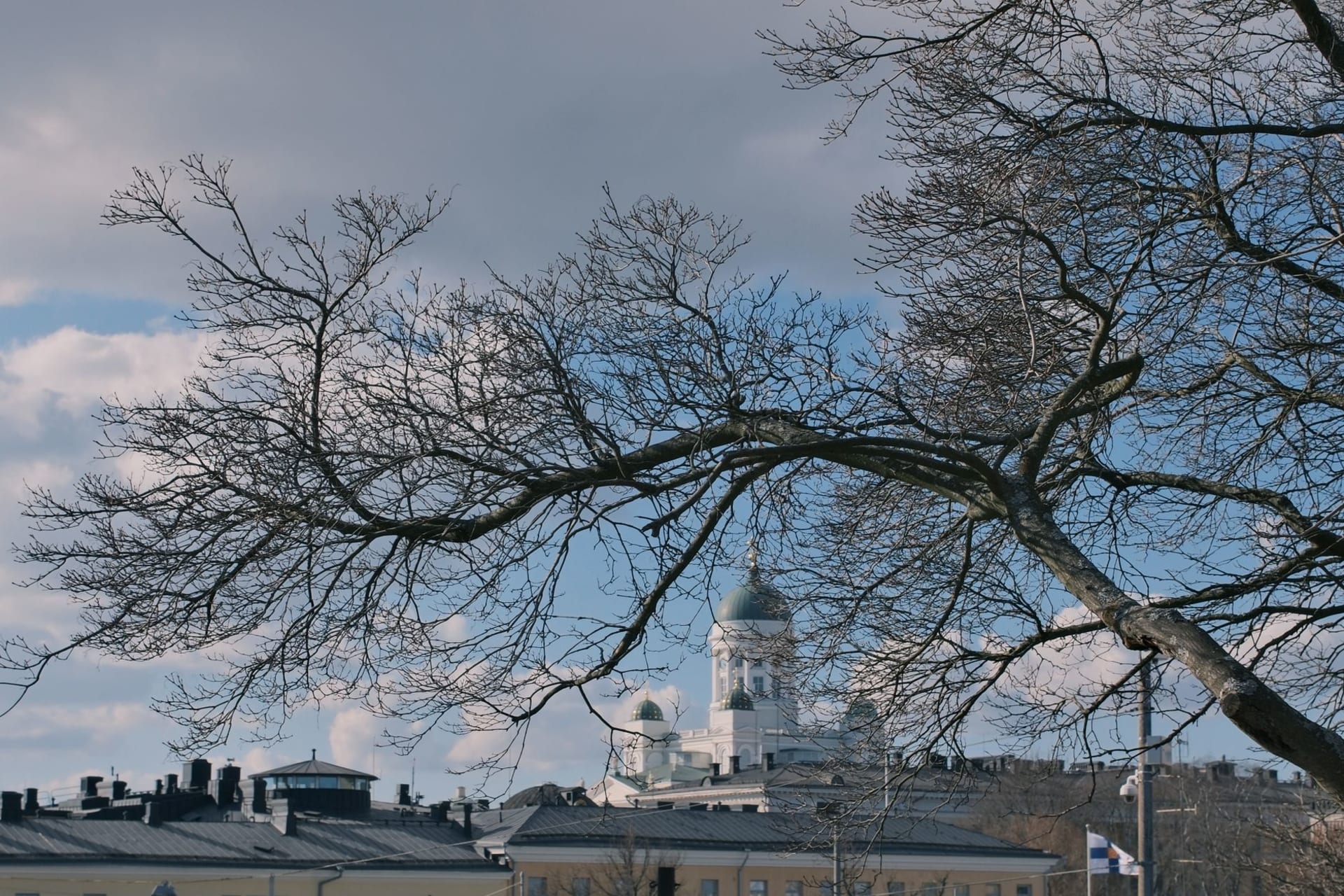
Helsinki is smaller than you expect for a capital — about 650,000 people — and it wears its scale with a certain comfort. The architecture downtown is neoclassical and wide-spaced, designed to impress the Russian tsars who commissioned it, all pale granite and Lutheran severity punctuated by the great white dome of the Cathedral on Senate Square. But walk ten minutes in any direction and you find something else: the red-brick warmth of the Old Market Hall on the waterfront, where vendors sell Finnish cheeses, cloudberry jam, salted liquorice in quantities that suggest a national obsession, and the city’s best reindeer stew ladled out from a stainless steel pot.

The Design District is where Helsinki gets interesting for the kind of traveller who likes to spend two hours in a shop that sells exactly one kind of object. A grid of streets between the harbour and the Ullanlinna neighbourhood holds furniture showrooms, ceramic studios, paper goods shops, and Iittala’s flagship where the glassware glows like it’s lit from inside. I bought a small white Aalto vase that I then carried by hand for three weeks because I refused to risk it in my pack. Worth it.
What nobody mentions about Helsinki is Temppeliaukio — the church blasted directly into solid granite bedrock, a circle of rough stone walls with a copper dome and a skylight around the rim that floods the interior with diffuse, even light. On a winter afternoon it had maybe a dozen people in it, all of them sitting in a silence so complete you could hear someone three pews over turning a page. The acoustics are famous but the atmosphere is the real thing — you feel underground and illuminated at the same time, which is either a spiritual metaphor or just good architecture.
For sauna I went to Löyly, the contemporary one on the Hernesaari waterfront, designed to look like weathered timber growing from the rocks. The sauna itself runs properly hot and the terrace faces directly onto the sea. In January, stepping outside into the dark and then walking down the wooden steps into the black water was the kind of thing you do exactly once and then spend years trying to explain to people who haven’t done it.

Eating in Helsinki requires knowing where to look. The streets around Fredrikinkatu have restaurants that aren’t trying to sell you a Finnish experience so much as actual Finnish food: open-faced sandwiches with cucumber and dill, herring pickled in at least four different ways, beet salads that are somehow vibrant under November grey. The café culture is serious — Finland has the highest per-capita coffee consumption in the world, a fact that becomes immediately plausible after your third cup of filter coffee standing at a wooden counter at seven in the morning.
When to go: Late November through February for the full Nordic winter atmosphere, the Christmas market, and the ice-swimming culture. Late June for midnight sun, outdoor terraces, and the harbour markets at their peak.