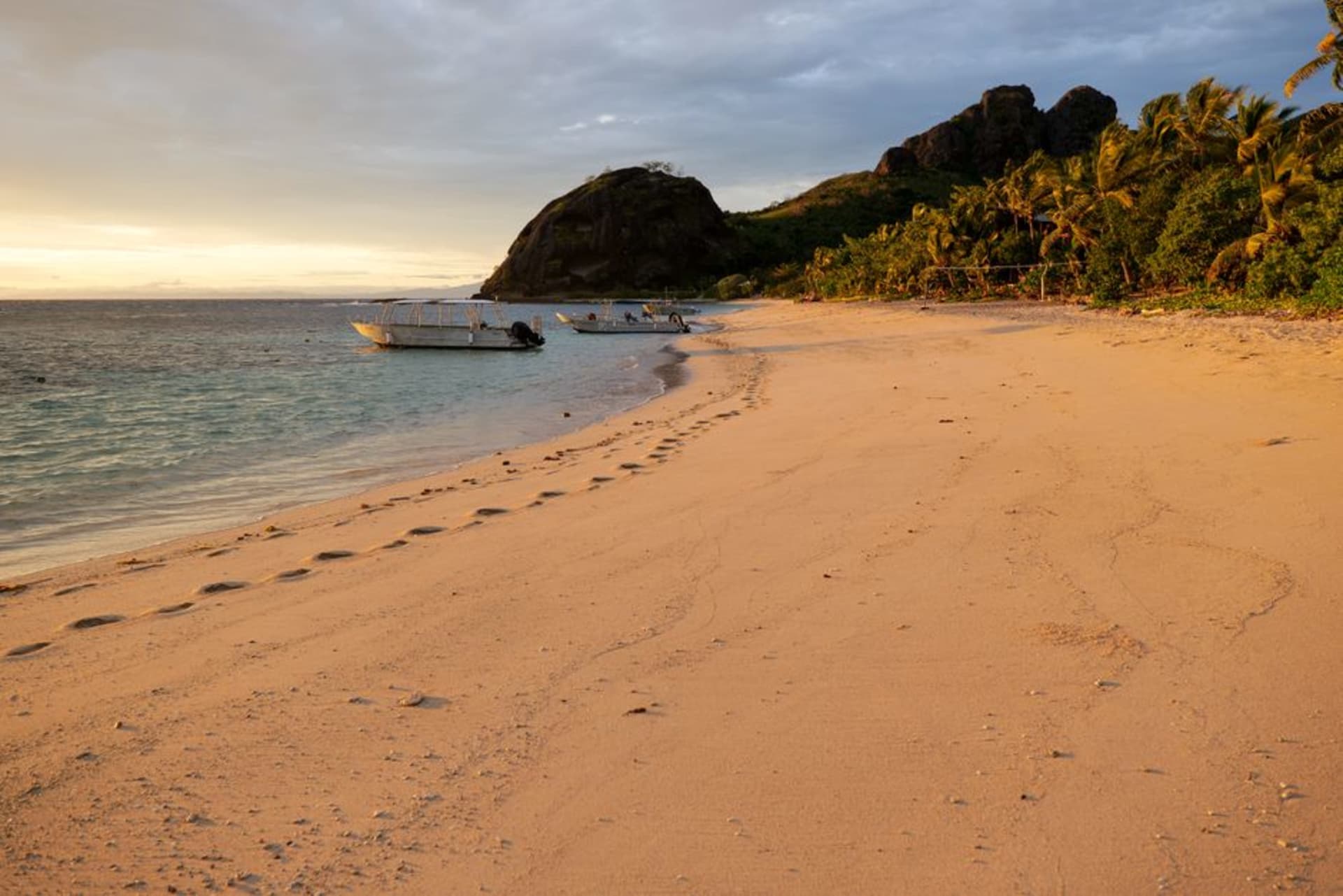
Waya Lailai Island
"Nothing happened on Waya Lailai for three days straight, and it was one of the best stretches of the whole trip."
Waya's smaller, quieter neighbor, where a single village and a scatter of family-run bures make for the kind of slow days that reset your whole nervous system.
Waya Lailai — “little Waya” — sits just south of its dramatic namesake, separated by a narrow channel that the local boats cross in about ten minutes. It gets a fraction of the visitors Waya does, mostly because it has less of an obvious headline attraction, and that turned out to be exactly the appeal. We came here after the Waya summit hike specifically to do nothing, and Waya Lailai obliged.
Nalauwaki is the main village, a tidy cluster of homes set back from a long beach that curves for most of the island’s western side. We stayed in a family-run bure a short walk from the village, run by a couple who’d converted two spare rooms into guest lodging and fed us more food than we could reasonably eat at every meal — reef fish grilled over coconut husks, cassava, a curry that Lia is still trying to recreate at home in Mexico without success. The daughter of the family taught us to weave a basic coconut-leaf basket over the course of an afternoon; mine fell apart within a day, Lia’s held up embarrassingly well.
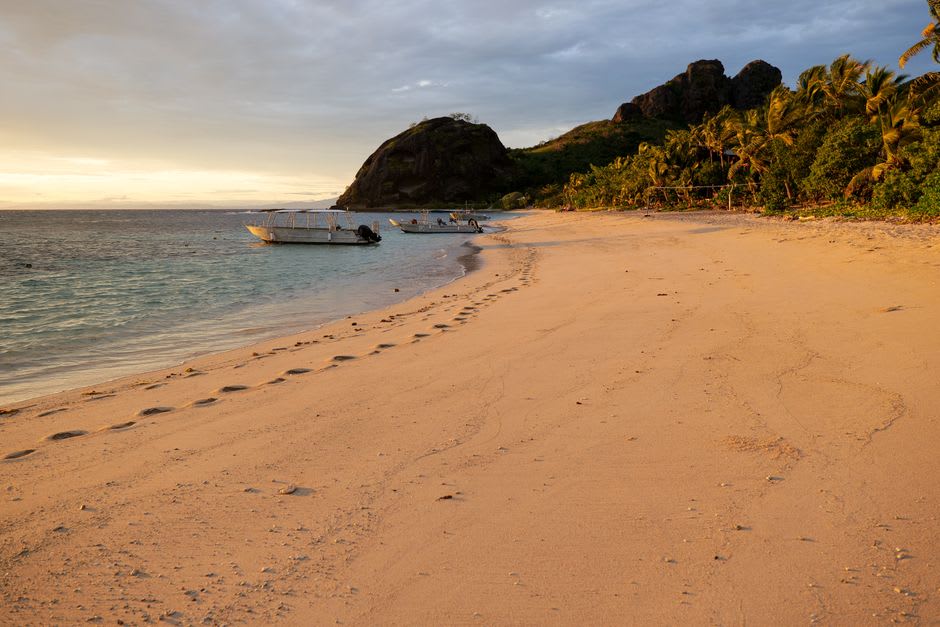
The snorkeling directly offshore rivals anything we found on the bigger islands — a shallow reef shelf a short swim from the beach, populated with the kind of reliably busy reef life that makes you stop checking the time. One afternoon a pod of dolphins moved through the channel between Waya Lailai and Waya while we were out swimming, close enough that we could hear them surface before we saw them, and the whole beach came down to watch.
The pace of the island reset something in both of us that the busier Yasawa stops hadn’t quite managed. There’s a viewpoint above the village, a short uphill walk past the school, where you can watch the sun drop behind Waya’s peaks across the channel, and we ended up going up there most evenings less because it was spectacular — though it was — and more because it had become the natural shape of the day.
When to go: The dry season from May to October keeps the unpaved village paths passable and the crossing from Waya calm. Bring cash for guesthouse stays — there’s no ATM anywhere nearby, and the nearest one is a ferry ride away.