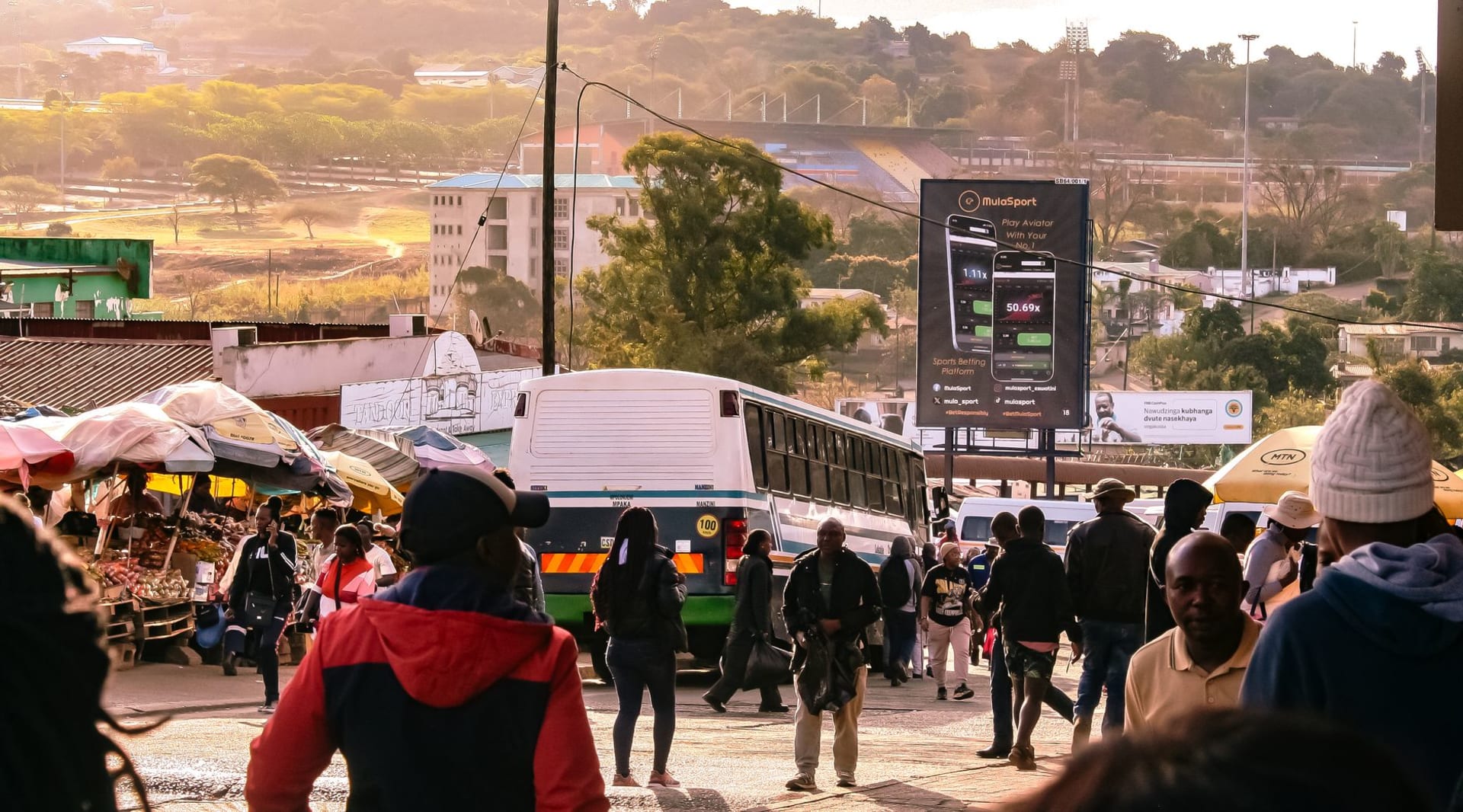
Mbabane appeared gradually through the mist as I drove in from the Ngwenya border, the road curling through pine-forested hills before the buildings started — a cluster of low-rise offices, a shopping mall with a car park full of minibuses, a roundabout where traffic policemen in white uniforms gestured with remarkable authority. For a national capital, it carries itself without ceremony. There is no grand boulevard, no imposing colonial architecture striving for historical weight. What there is, is a city of around 100,000 people that seems to know exactly what it is and has no particular ambition to be anything else.
I stayed near the Swazi Plaza, the city’s functional commercial heart, and spent the first morning simply walking. The streets around the market area smell of fried dough and engine exhaust and something sweet and green I never identified — possibly sugarcane juice from a nearby stall. Street vendors sell everything from airtime cards to live chickens, and the transaction energy is high but not aggressive. People move at a pace that has none of the grinding pressure I’d felt in Johannesburg a few days earlier.

The Swazi Market — tucked behind the main commercial strip — is smaller and more curated than the sprawl in Manzini, but more approachable. Woven grass baskets, clay pots, incense sticks and hand-dyed fabrics are laid out on low tables. The women who run the stalls are patient with the time it takes a foreigner to actually make a decision. I bought a wooden bowl that I immediately knew would make every meal I cooked at home feel more deliberate, paid what was asked without attempting to bargain, and was thanked in a way that made me feel I’d done something correct.
Food in Mbabane surprised me. I expected something serviceable and found something better. A small restaurant near the Parliament building served grilled bream with a tomato and chilli relish that had depth and patience to it — the kind of seasoning that suggests someone has been making this particular dish for a long time. The national drink, buganu — a fermented marula fruit wine — appears in colder months, though I arrived outside season and had to settle for a locally brewed lager that was perfectly adequate.

The real reward is the hills. Mbabane sits at roughly 1,200 meters and the Dlangeni Hills rise immediately to the west — easy enough to walk into from the city edge in under an hour. From up there, the capital spreads below in a way that makes you realize how completely it is held by the landscape, how the forested ridges contain it and soften it and prevent it from sprawling the way that cities without such geography tend to do.
When to go: April through October offers the most comfortable temperatures — Mbabane’s altitude keeps it cool even in summer. Avoid December through February if heavy afternoon rain bothers you, though the hills are extraordinary shades of green and the waterfalls near the city run strong.