
Santa Ana Volcano
"I have never smelled anything on a mountaintop like the sulfur coming off that lake, and I have also never seen a color quite like it."
El Salvador's tallest volcano hides a sulfurous turquoise crater lake at its summit, and the guided sunrise hike to see it is the single best morning I spent in the country.
We left the ranger station at Cerro Verde at six in the morning, headlamps mostly unnecessary because the sky was already going gray, and joined a loose column of maybe thirty other hikers heading up the flank of Ilamatepec — Santa Ana volcano, El Salvador’s highest peak at just over 2,300 meters. Salvadoran law requires an armed park ranger to accompany hiking groups here, a leftover precaution from an earlier decade, and ours walked at the back of the group with a rifle slung casually over one shoulder, chatting the whole way about coffee prices with another hiker. It set an odd, almost domestic tone for what turned out to be one of the more dramatic landscapes I’ve stood in front of.
The lake that shouldn’t be that color
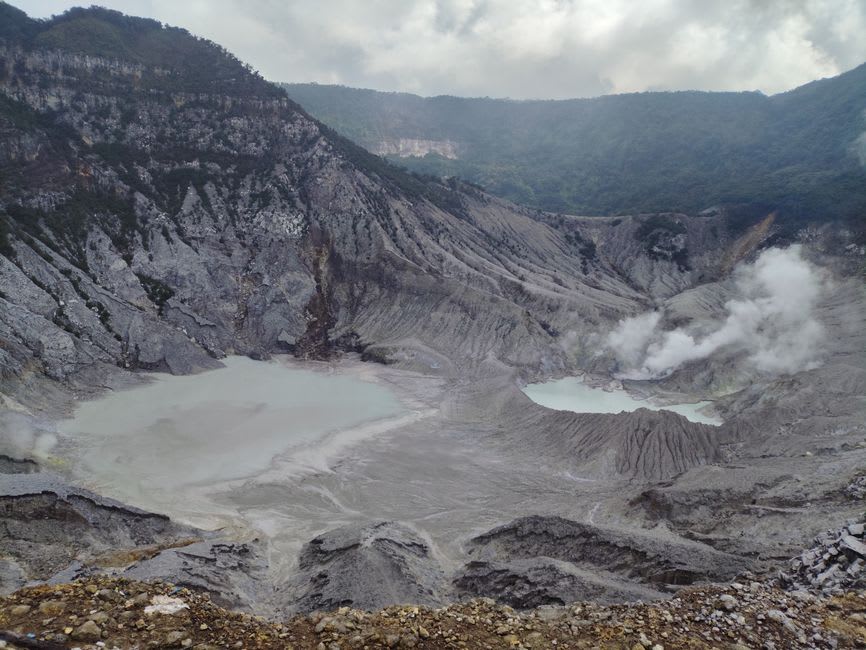
The trail climbs steadily through scrubby vegetation that thins as you gain altitude, the soil turning increasingly black and loose, volcanic gravel that shifts under your boots on the steeper switchbacks. It took us just over two hours to reach the rim, and nothing about the ascent prepares you for what’s on the other side. The crater drops away almost vertically into a lake the color of stained glass — an intense, almost artificial turquoise, the result of dissolved minerals and sulfur compounds leaching into water that sits at the bottom of an active crater. Steam vents along the far wall, and the smell of sulfur drifts up in gusts strong enough to make a few people in our group cover their noses. I just stood there. Photographs, mine included, don’t do the color justice — it shifts depending on the angle of the light, more green in shadow, more electric blue when the sun hits it directly.
Two other volcanoes for scale
What makes the summit view even better is the context — Santa Ana isn’t hiking in isolation. Turn around from the crater rim and you can see the perfect symmetrical cone of Izalco to the south, and beyond it, on a clear morning, the crater lake of Coatepeque glinting an entirely different, calmer blue in the middle distance. Our ranger pointed out each one by name, unprompted, clearly proud of the geography he spent his working life protecting. It’s rare to get three genuinely distinct volcanic landscapes in a single 360-degree turn, and I found myself doing slow, deliberate circles at the summit just to take it all in before the clouds that build most mornings started rolling in and swallowing the view.
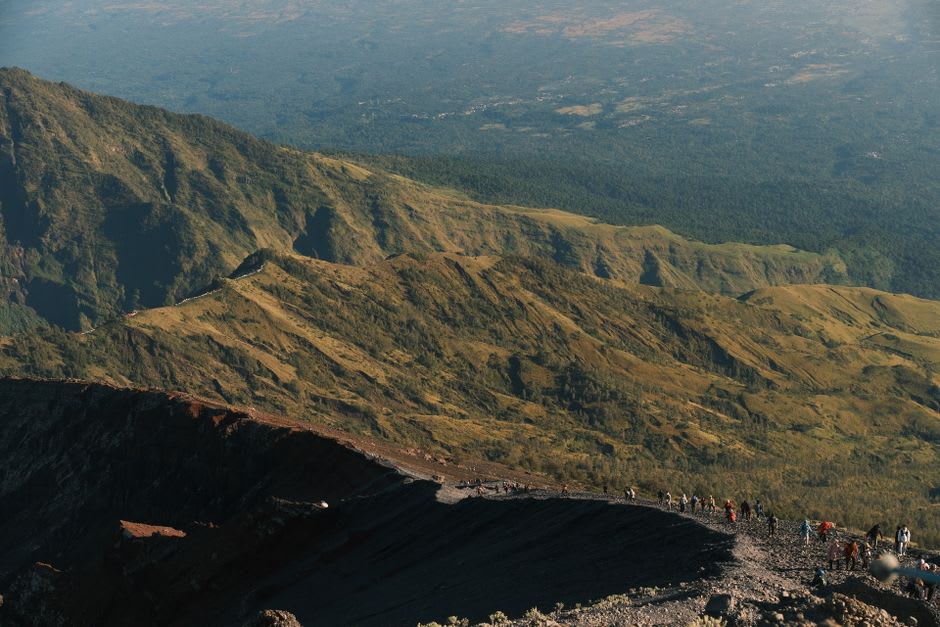
The descent took less than half the time and felt anticlimactic in the way descents always do after a summit like that, but I noticed the group was quieter going down than coming up. Nobody was talking about coffee prices anymore.
When to go: Start before dawn regardless of season to reach the summit before the clouds close in, which usually happens by mid-morning. November through April gives the clearest skies; the hike departs from Cerro Verde and generally requires joining an organized group with a ranger escort.