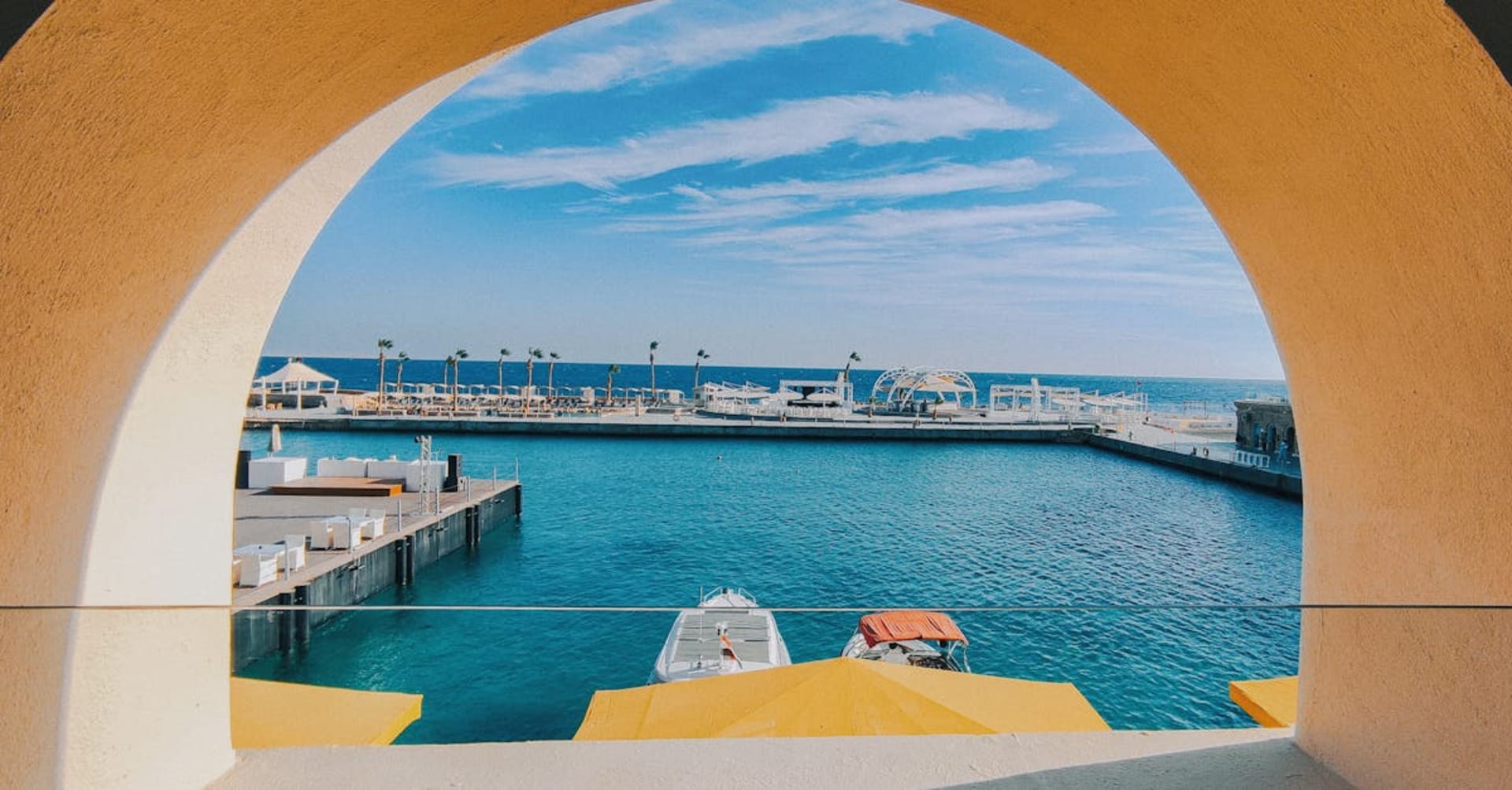
Hurghada’s transformation is one of Egypt’s stranger stories. Within living memory it was a small, unremarkable fishing settlement on the Red Sea coast, its harbour sheltering a handful of boats, its hinterland nothing but flat, baked desert. Today it stretches for nearly forty kilometres along the shore — a continuous ribbon of resorts, dive centres, and seafood restaurants — and the reason for all of it lies just offshore, in water so clear you can read a book through five metres of it. The Red Sea here is not merely good for diving. It is among the finest marine environments on earth, and everything in Hurghada orbits that fact.
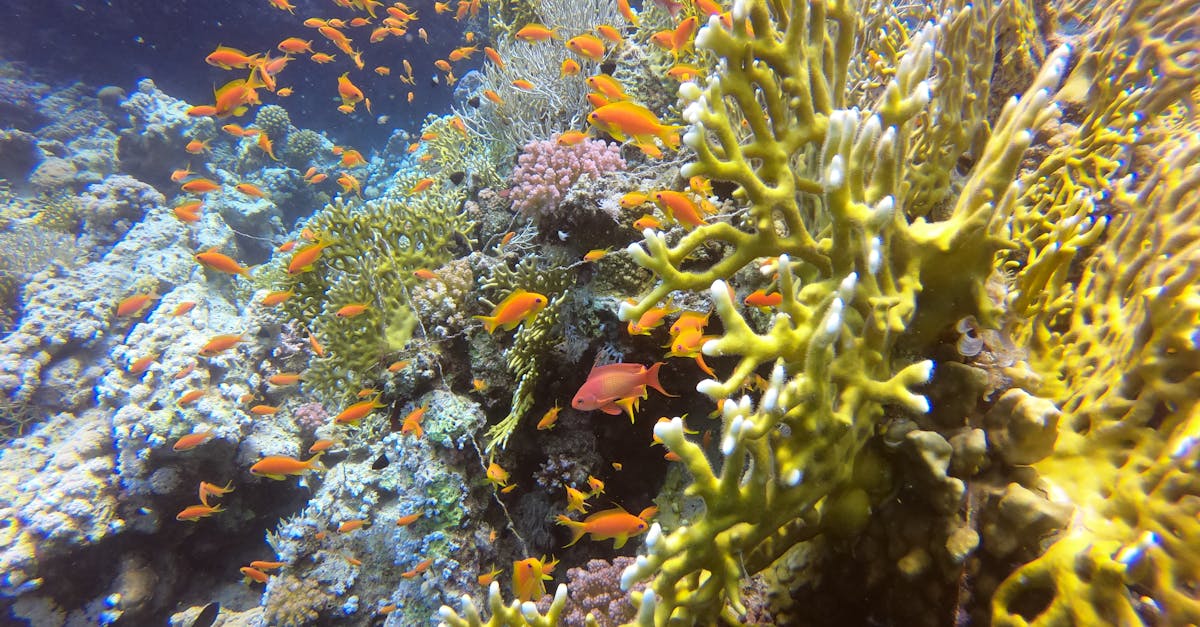
The Giftun Islands, a short boat ride from the marina, are the most accessible introduction. The two islands sit within a national park, their surrounding reefs dense with hard and soft coral in colours that seem engineered rather than natural — electric purples, fluorescent yellows, deep crimsons that pulse in the current. Snorkellers float over gardens of staghorn coral teeming with parrotfish, butterflyfish, and the occasional Napoleon wrasse, slow and enormous and entirely unbothered by human attention. Dolphins frequent the deeper channels between the islands, and boat captains know where to find them.
For serious divers, the offshore sites escalate quickly. The Brothers Islands — Big Brother and Little Brother — lie several hours by liveaboard to the south and rank among the most celebrated dive sites in the Red Sea. Sheer walls drop hundreds of metres into the abyss, swept by currents that bring oceanic sharks, hammerheads, thresher sharks, and vast schools of barracuda swirling in metallic columns. These are not beginner dives; the currents are strong and the depth unforgiving. But for experienced divers, the Brothers deliver encounters that are increasingly difficult to find anywhere else in the world. Closer to shore, sites like Abu Nuhas — a reef littered with four major shipwrecks — offer more accessible but equally thrilling diving, their hulls colonised by soft coral and home to glassfish so dense they form shimmering curtains.
North of Hurghada proper, El Gouna offers a polished alternative. This purpose-built resort town, designed around a series of lagoons and connected by bridges, has a distinctly European feel — boutique hotels, an international school, a small but well-curated marina district with wine bars and Italian restaurants. It is quieter, more manicured, and more expensive than Hurghada, and visitors who prefer their Red Sea experience with a side of architectural coherence tend to gravitate here. The lagoon system creates sheltered swimming areas, and the nearby reefs — particularly the sites around Abu Tig Marina — are excellent for both snorkelling and shore diving.
The marine life along this coast deserves its own attention. The Red Sea is a biological anomaly — a narrow, deep, warm body of water with minimal river input and exceptional clarity, conditions that have produced an unusually high rate of endemic species. Roughly ten percent of the fish species found here exist nowhere else. Hawksbill and green turtles cruise the reef edges. Moray eels peer from crevices with the vaguely offended expression that seems to be their permanent state. At night, the reef transforms entirely — lionfish emerge to hunt, octopuses change colour as they stalk across the coral, and the beams of dive torches reveal a world of crustaceans and nudibranchs invisible by day.
Back on land, the contrast between Hurghada’s two faces is striking. The resort strip along the coast is purpose-built and international, its hotels offering the familiar comforts of pools, buffets, and beach bars. But a few kilometres inland, El Dahar — the old town — retains the character of a working Egyptian community. The streets are narrower, louder, more chaotic. The souk sells spices, textiles, and alabaster alongside the inevitable tourist souvenirs. Shisha cafes occupy every corner, their patrons watching football on mounted televisions while sweet apple-scented smoke drifts into the evening air. The seafood restaurants here are simpler and cheaper than the waterfront establishments, and often better — grilled fish served with rice, salad, and fresh bread, ordered by pointing at the catch displayed on ice.
The Eastern Desert begins immediately behind the hotel strip, a reminder of just how narrow the habitable corridor is along this coast. Quad bike excursions, jeep safaris, and camel rides into the desert interior reach Bedouin camps within an hour, where tea is brewed over open fires and the silence is vast. Further afield, the Roman-era porphyry quarries of Mons Porphyrites lie deep in the mountains — ancient industrial sites that supplied the purple stone prized by emperors.
When to go: Hurghada enjoys year-round sunshine, with water temperatures rarely dropping below twenty-two degrees even in winter. March through May and September through November offer the ideal balance — warm seas, comfortable air temperatures, and good underwater visibility. Summer is fiercely hot on land, often exceeding forty degrees, though the diving remains excellent. Winter brings occasional wind, which can affect boat schedules but also draws kitesurfers to the coast in numbers.