Dahab is what happens when a Bedouin fishing village, a backpacker trail, and a world-class diving destination collide and decide they rather like each other’s company. Tucked on the eastern coast of the Sinai Peninsula, facing Saudi Arabia across the Gulf of Aqaba, it is the anti-Sharm el-Sheikh — no high-rise resorts, no all-inclusive wristbands, no imported nightlife. Instead, there are cushioned waterfront cafes where cats outnumber waiters, a main street that runs on flip-flop time, and a reef system so accessible and so rich that you can see things in waist-deep water that divers elsewhere spend thousands to find.
The town has a magnetic quality that travelers warn each other about. People come for three days and leave after three weeks, their departure date quietly pushed back each morning over mango juice and a view of the mountains turning pink at dawn. There is a word the locals use — bokra, meaning “tomorrow” — and in Dahab it functions less as a unit of time and more as a philosophy.
The Blue Hole and the Reefs
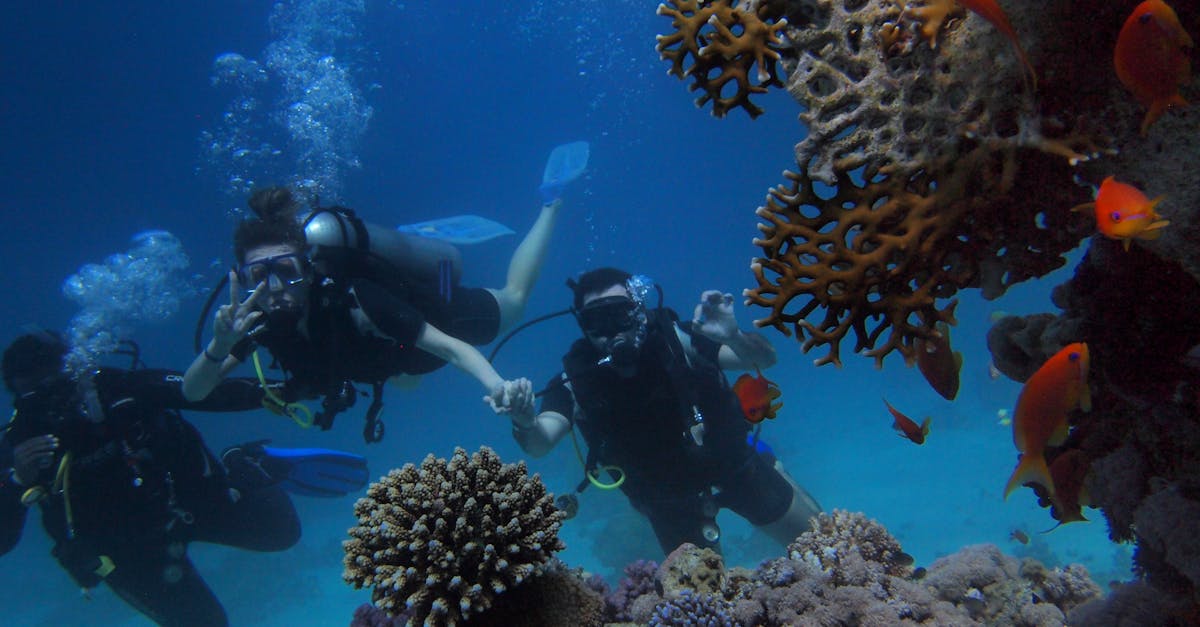
The Blue Hole is Dahab’s most famous feature and one of the most storied dive sites on the planet. A near-perfect circular sinkhole in the reef, it plunges 130 meters straight down, its walls encrusted with coral and its depths home to a notorious arch at fifty-six meters that connects the hole to the open sea. The arch has drawn — and, it must be said, claimed — advanced freedivers and technical divers for decades, its combination of depth, beauty, and danger giving it an almost mythic reputation in the diving world.
But Dahab’s genius is that you do not need to be an expert to experience extraordinary underwater life. The Lighthouse reef, a short walk from the center of town, is one of the best shore dives in the Red Sea — you literally walk in from the beach, and within minutes you are drifting over coral gardens alive with lionfish, moray eels, parrotfish, and the occasional turtle gliding past with the unhurried grace of something that has nowhere to be. The Canyon site threads through underwater crevasses filled with glassfish that part around you like living curtains of silver. The Islands, a short drive north, offers pristine coral plateaus and the chance of encountering dolphins in the blue water beyond the reef edge.
The Vibe
Above water, Dahab operates on a rhythm that owes more to the tide than to any clock. The waterfront promenade of Masbat Bay is the social heart of the town — a string of open-air restaurants and cafes built on platforms extending over the water, where you eat grilled fish and drink hibiscus tea while watching the sun set behind the Sinai mountains. The food is simple and good: fresh catches of the day, Egyptian mezze, Bedouin bread baked in sand, and the inevitable falafel wrap that somehow tastes better when eaten with sandy feet and salt-stiffened hair.
The traveler community here is a particular blend — freedivers training for depth records, yoga instructors who came for a week in 2019, digital nomads running on Egyptian coffee and cheap rent, and Bedouin guides who move between the desert and the sea with an ease that suggests neither element is foreign to them. Dahab attracts people who are slightly allergic to plans, and it rewards them for it.
Bedouin Culture and the Desert
The Sinai Desert begins at the edge of town and extends into one of the most beautiful and least visited wilderness areas in the Middle East. The Bedouin communities of the interior — primarily the Muzeina tribe in the Dahab area — offer guided treks into sandstone canyons, overnight camps under skies so clear the Milky Way casts a faint shadow, and a hospitality tradition that treats every guest as a gift. A Bedouin dinner in the desert — flatbread, tea brewed over coals, slow-roasted goat, the silence of a landscape that has not changed in millennia — is one of those experiences that recalibrates your sense of what constitutes a good evening.
Camel treks range from a few hours to multi-day expeditions through wadis and oases, and the landscape rewards every kilometer — rose-colored sandstone, wind-carved arches, acacia trees clinging to dry riverbeds, and a silence so complete it becomes a sound of its own.
Mount Sinai Day Trip
A few hours’ drive from Dahab, Mount Sinai (Jebel Musa) rises 2,285 meters from the desert floor, and the pre-dawn hike to its summit is one of Egypt’s most iconic experiences. Travelers set out around 2 AM, climbing by headlamp through a landscape of boulders and switchbacks, arriving at the peak just as the sun breaks over the mountains of Saudi Arabia and the entire Sinai Peninsula is laid out below in shades of gold and violet. At the base, St. Catherine’s Monastery — one of the oldest continuously operating Christian monasteries in the world, built in the sixth century — houses a library of ancient manuscripts second only to the Vatican’s. The combination of physical effort, spiritual history, and sheer visual spectacle makes it worth every lost hour of sleep.
When to go: Year-round, but October to May offers the best combination of warm sea temperatures and comfortable evenings. March and April bring the khamsin winds, which churn up sand but also bring excellent conditions for windsurfing and kitesurfing. Summer is hot but the sea remains inviting, and the town empties enough to feel like a local secret. For Mount Sinai, the cooler months are essential — the summit can be genuinely cold before dawn, even when Dahab is warm at sea level.