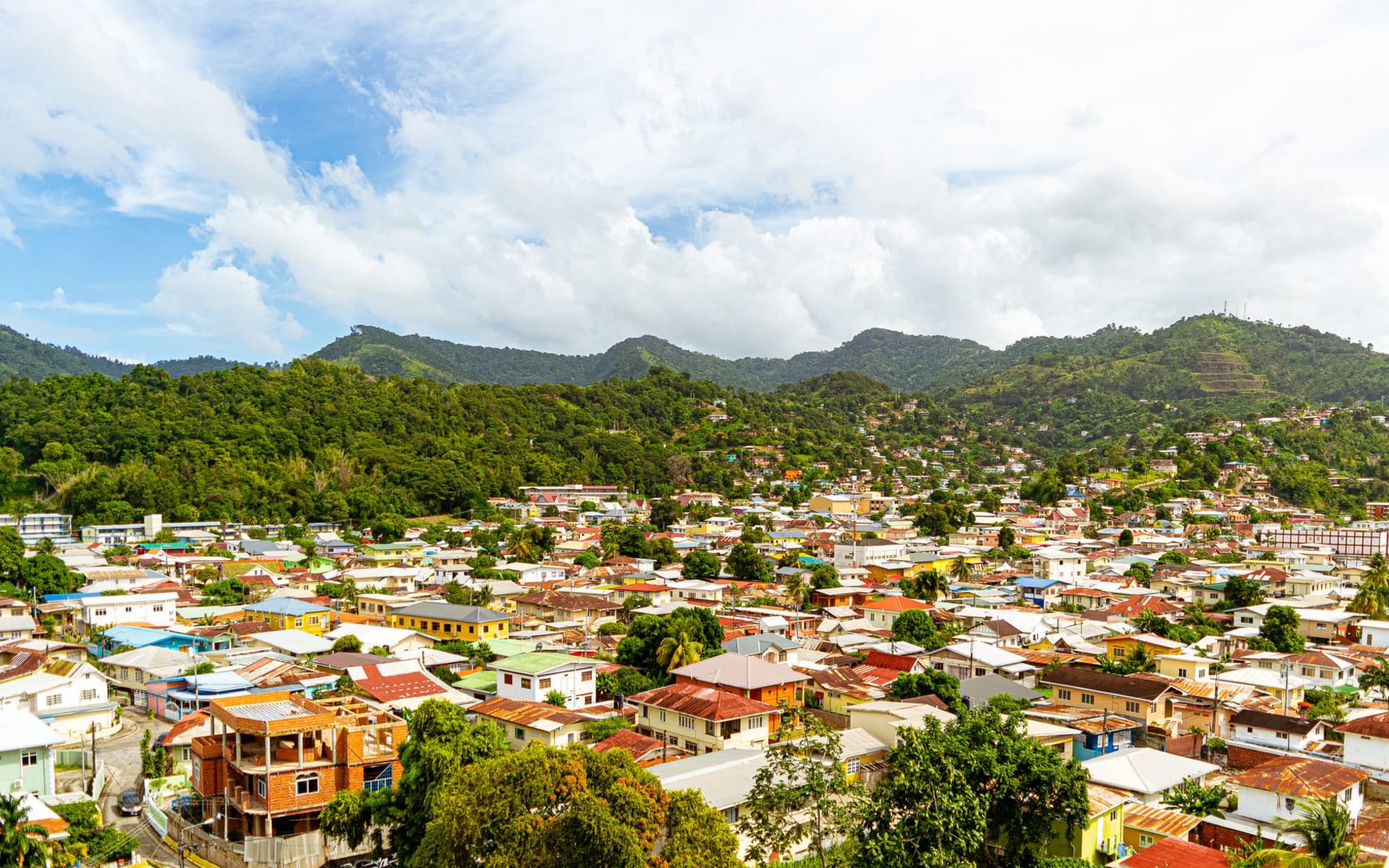
Roseau
"Every other Caribbean capital is trying to look like somewhere else. Roseau is unapologetically itself."
The Saturday market is the reason to be in Roseau before eight in the morning. Not because it closes early — it doesn’t — but because the best of it is gone by nine: the dasheen leaves still misted with dew, the bags of dried bay leaves that perfume the whole block, the yellowfin tuna so fresh it still smells of the sea rather than the market. I arrived on my first morning without planning it, drawn by sound before I registered what I was hearing — the low percussion of vendors calling out, the clatter of crates, a radio somewhere playing something with too much bass for the hour. The market sits beside the river mouth, and the smell is an equal mix of salt water, overripe soursop, and charcoal smoke from the woman frying bakes at the entrance. I ate three of those bakes standing up. I have no apologies.
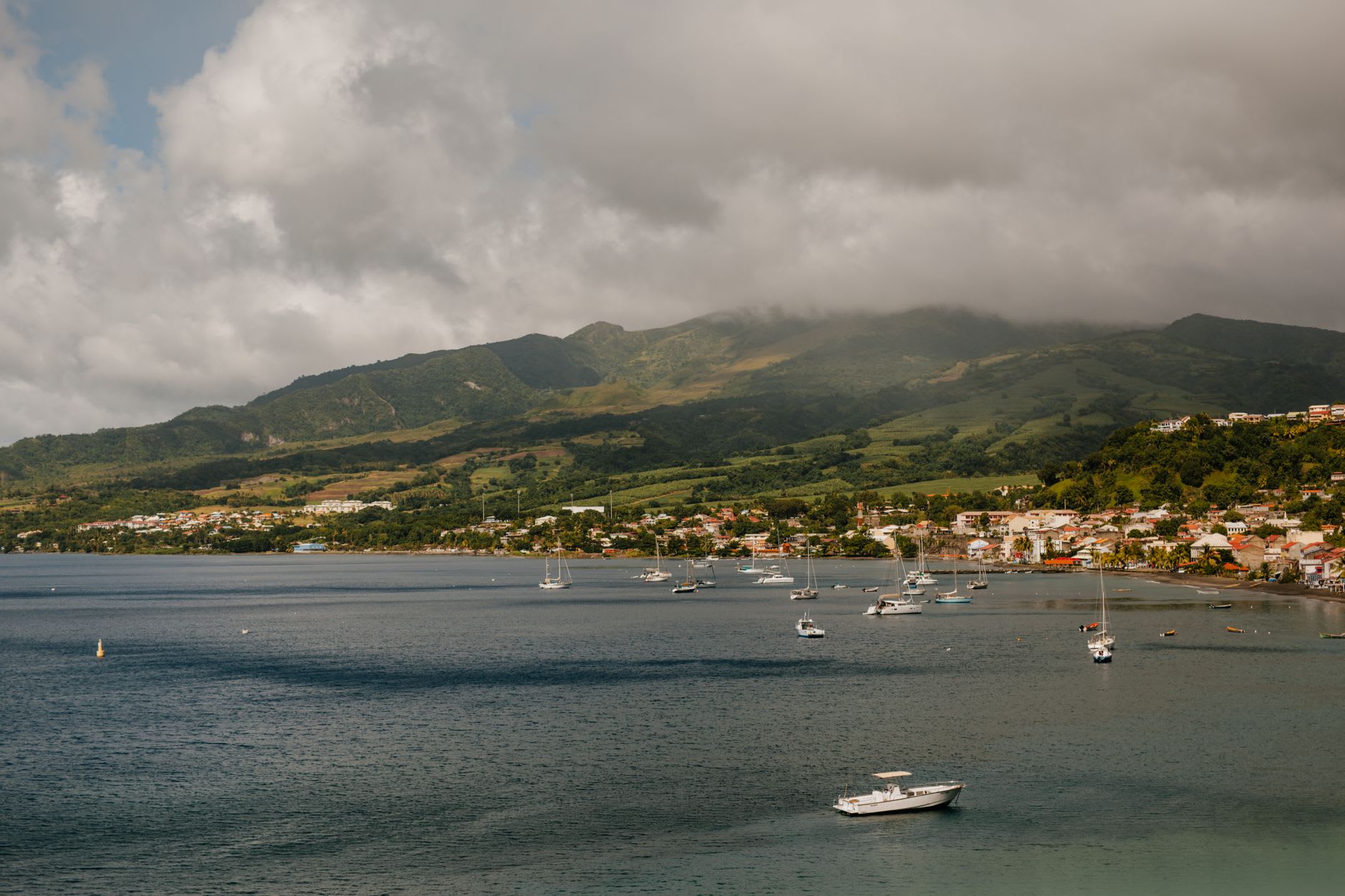
Roseau is a small capital — you can walk its core in twenty minutes — but it earns attention slowly rather than offering it all at once. The architecture along Bay Street and King George V Street is painted wood and jalousie shutters, two- and three-storey buildings in faded yellow and coral and sea-foam green that lean slightly toward the street as though curious about who’s passing. Many of them are in states of gentle disrepair that local building codes seem untroubled by, and this somehow makes them more beautiful, not less. The botanical gardens behind the town have been there since 1890, and the old trees have grown to a scale that makes the rest of the city feel like something arranged beneath them. There is a bus from the pre-revolutionary era crushed under a fallen tree from the 1979 hurricane that the gardeners have simply left in place — a casual monument to the island’s relationship with forces larger than itself.
The food in town is most honest at the places without signs. A woman named Celestine runs what is technically a catering operation out of what is technically her living room on Victoria Street, and on weekdays at lunch you can find callaloo soup with crab claws, stewed saltfish, and ground provisions — the yam, sweet potato, and dasheen that form the carbohydrate backbone of Dominican cooking. Everything arrives on a styrofoam plate with a slice of white bread that you will use to soak up the gravy. The rum shop two streets over pours Macoucherie rum, distilled up the valley, and the man behind the bar will tell you about it at length if you show any interest at all.

What I notice in Roseau, after the food and the buildings, is the pace. Not slow in the self-conscious way of places that market their own slowness to tourists. Slow in the way of a town that has its own internal rhythm and is not particularly interested in adjusting it for visitors. People sit in doorways in the afternoon heat. Conversations happen across the street in full voice. The ferry from Guadeloupe or Martinique arrives and briefly multiplies the population, then the passengers disperse and the town resumes. I found that within two days I had stopped checking my phone and started sitting in doorways myself.
When to go: Roseau functions year-round, but the World Creole Music Festival in late October fills every available room on the island — book months ahead or skip it entirely depending on your tolerance for crowds. The market is best on Saturdays. Arrive early.