Kalinago Territory
"The Kalinago are the reason Dominica has its name in Carib — and their coast feels like a different island entirely."
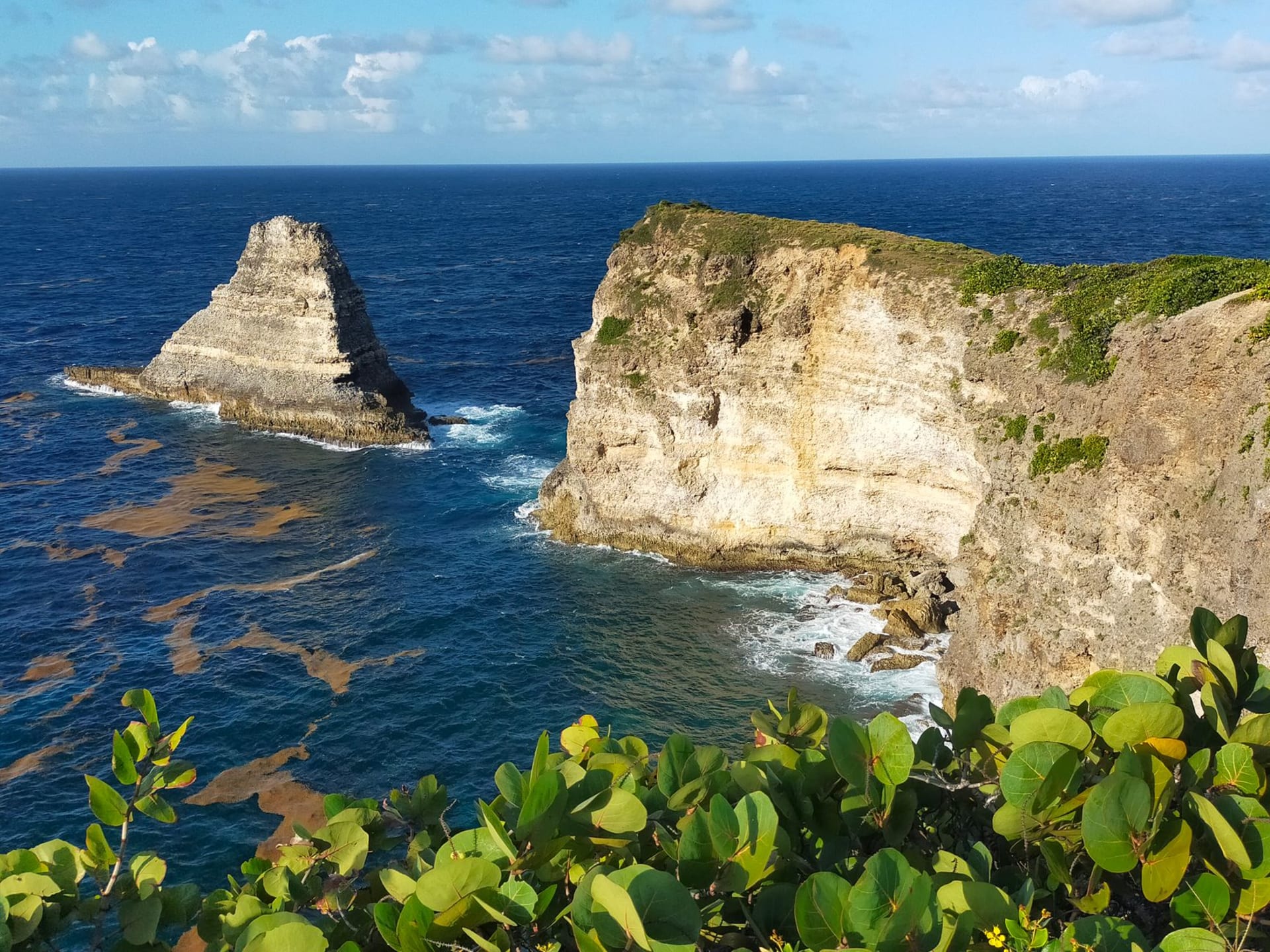
The road to the Kalinago Territory runs along the windward coast, and the moment you leave the central highlands and start dropping toward the Atlantic side, everything changes. The sea here is not the quiet, turquoise Caribbean of the western shore — it is grey-green and muscular, throwing itself against black lava cliffs and black sand beaches with a persistence that has shaped the coast into something raw and dramatic. The villages of the Territory — Salybia, Sineku, Gaulette River and the others — sit in the hills above this coastline, connected by a road that winds between them with the unhurried logic of a path that predates motor vehicles by several centuries.

The Kalinago Model Village at Crayfish River gives context before you explore independently. It is a reconstruction of a pre-colonial Kalinago settlement — a canoe house by the water, a cassava processing area, round thatch huts called carbets — and the guides who walk you through it speak with the directness of people presenting their own history rather than performing someone else’s. I learned things I should have known: that the Kalinago successfully resisted European colonisation of Dominica for more than 200 years; that they were fierce enough to keep the French and British perpetually nervous; that they were eventually confined to this eight-thousand-acre territory by a British treaty in 1903, which sounds like a compromise but was in practice a dispossession with paperwork. The guide did not soften this. I appreciated that.
The basket weaving is what the Territory is most known for among craft buyers, and seeing it made in practice — in doorways, on porches, beside the road — gives the finished objects a weight they lack in a market stall. The baskets are woven from larouma reed, which must be cut, dried, dyed with plant materials, and split before weaving begins. The patterns are geometric and ancestral, and the finest pieces can take weeks to complete. I bought a small bowl-shaped basket from a woman in Sineku who was weaving on her porch while talking on the phone and watching something on a television visible through the screen door. The multitasking was impressive. The basket now lives on my shelf in Mexico and I think about that porch every time I look at it.

What strikes me most about the Territory is the feeling that it is emphatically not curated for visitors. There is no resort hotel, no beach club, no manicured path between attractions. The villages feel like villages: children on bikes, dogs investigating things, someone’s laundry drying in the wind off the Atlantic. You are welcome here, but you are a guest in someone’s home rather than a customer in someone’s attraction, and the distinction matters. Behave accordingly.
When to go: Year-round, but the windward coast is most dramatic in the wet season when the Atlantic is running hard. The Kalinago Cultural Week in late March celebrates Kalinago heritage with dance, food, and craft demonstrations — worth timing a visit around if the subject interests you. Allow a full day; the drive from Roseau takes over an hour on mountain roads.