Dourou
"We stood at the edge of Dourou and the whole plain just opened up beneath us."
A plateau village on the lip of the Bandiagara Escarpment, where a footpath drops off the cliff toward the plain below.
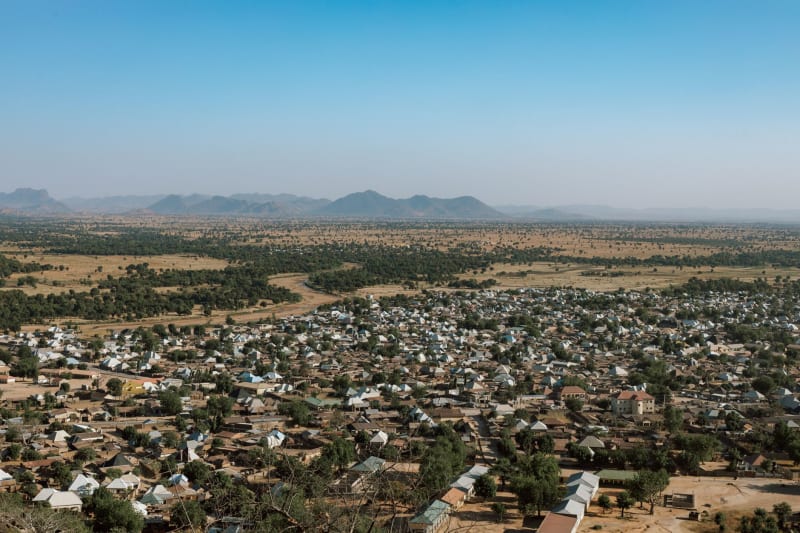
We got to Dourou in the late afternoon, when the light was doing that low, slanted thing that makes every wall look like it’s made of gold instead of mud. Lia and I had been told by our guide that this was where most Dogon treks start, and standing at the edge of the plateau, I understood why immediately. The village just stops at a cliff. One moment you’re walking between granaries and the next you’re looking down 150 kilometers of sandstone escarpment, the plain stretching out toward Bankass like someone unrolled a carpet of sand and scrub all the way to the horizon.
I remember sitting on a flat rock near the edge, drinking warm water from my bottle because nothing stays cold here, and just not saying anything for a while. Lia was next to me doing the same thing. Our guide, Amadou, pointed out the footpath that zigzags down the cliff face toward Teli and Nombori, the villages we’d be walking to the next two days. It looked impossibly steep from up top, more like a suggestion than a path, but he told us Dogon people and their donkeys have used it for generations to move between the plateau and the plain.
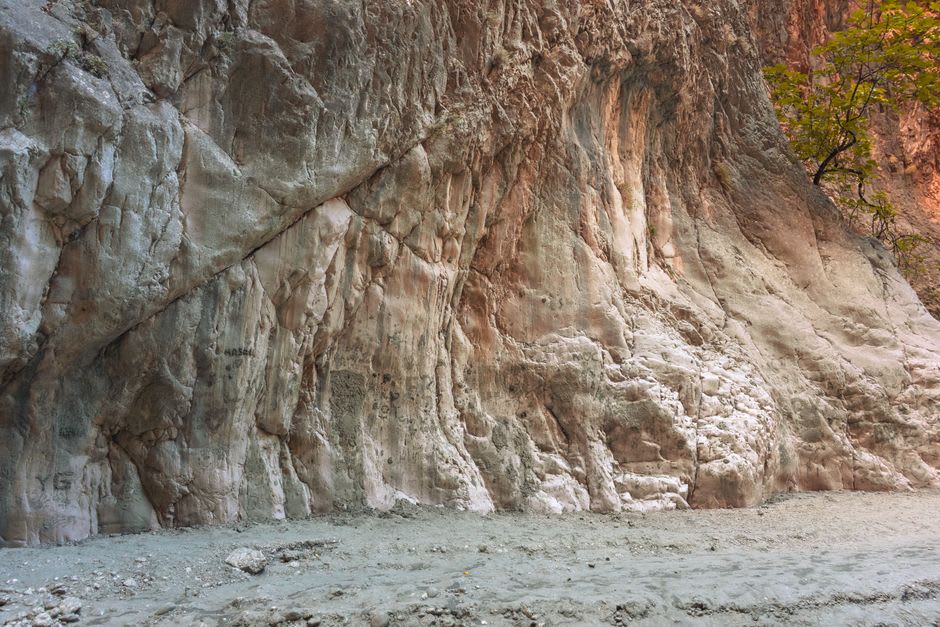
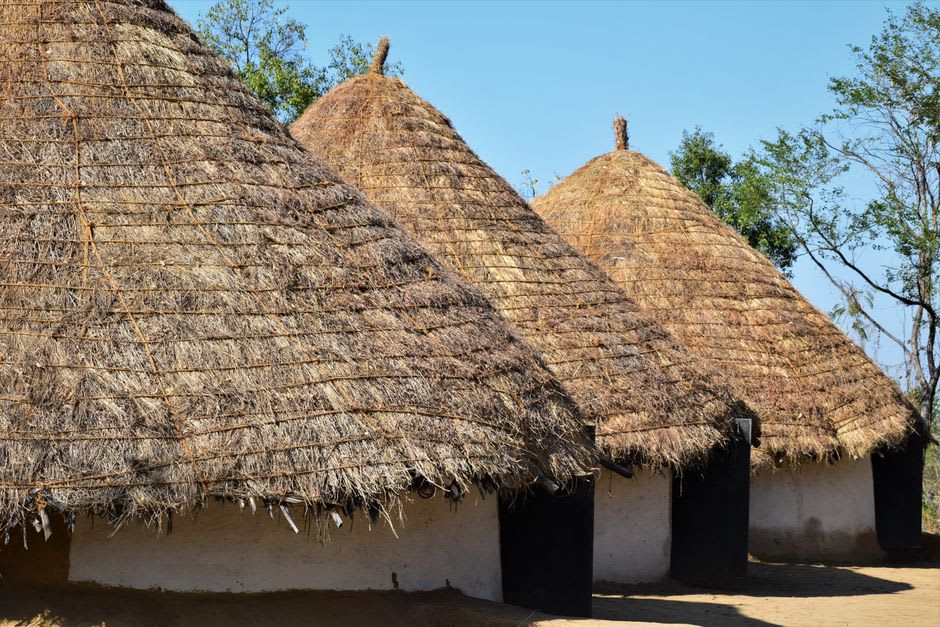
What struck me most about Dourou itself was how the houses seemed to grow out of the rock rather than sit on top of it. Mud-brick walls, conical thatched roofs on the granaries, everything low and compact and built to survive both the sun and the wind that comes ripping across the plateau. Lia kept stopping to photograph the granary doors, which are carved with these small geometric patterns that our guide said mark family lineages. I ate dinner that night with millet couscous and a peanut sauce a family cooked for us, sitting on their rooftop terrace watching the sky do its sunset thing over the escarpment.
Before we started down the cliff path the next morning, I went back to that same rock at the edge one more time. There’s something about Dourou that feels less like a destination and more like a threshold — the last solid ground before you drop into a completely different landscape. Lia said it felt like standing at the edge of the world, and honestly I didn’t have a better way to put it either.
When to go: Visit in the dry season from November to February, when the trekking trails are stable and the views over the escarpment stay clear rather than hazy with heat.
Keep exploring
More from Dogon Country
 dogon-country
 Ende
A weaving village where narrow strips of cloth are still made on wooden looms and the indigo dye has permanently stained the fingers of everyone over forty.
Explore dogon-country
 Hombori
The eastern edge of Dogon territory, where inselbergs rise from the Sahelian plain and the Sahara announces itself in the quality of the light.
Explore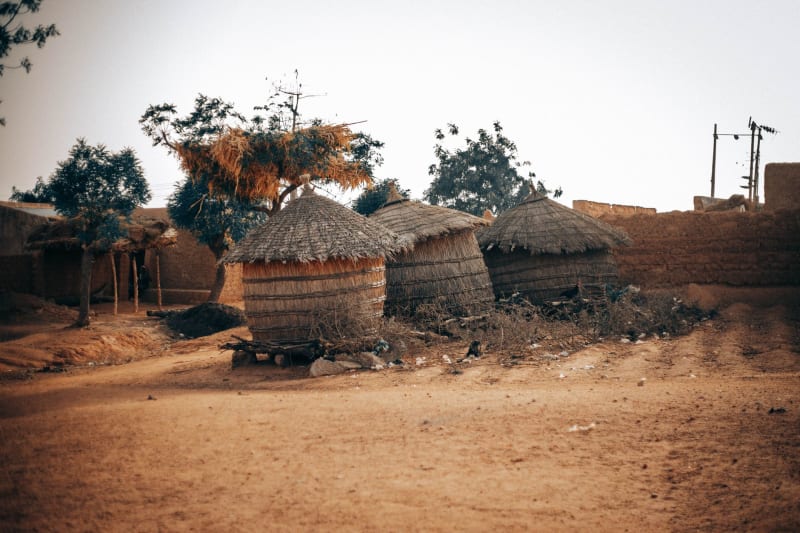 dogon-country
 Kani-Kombole
The end of the classic escarpment trek and the beginning of the sandy plain — a village that feels like a reward you haven't entirely earned yet.
Explore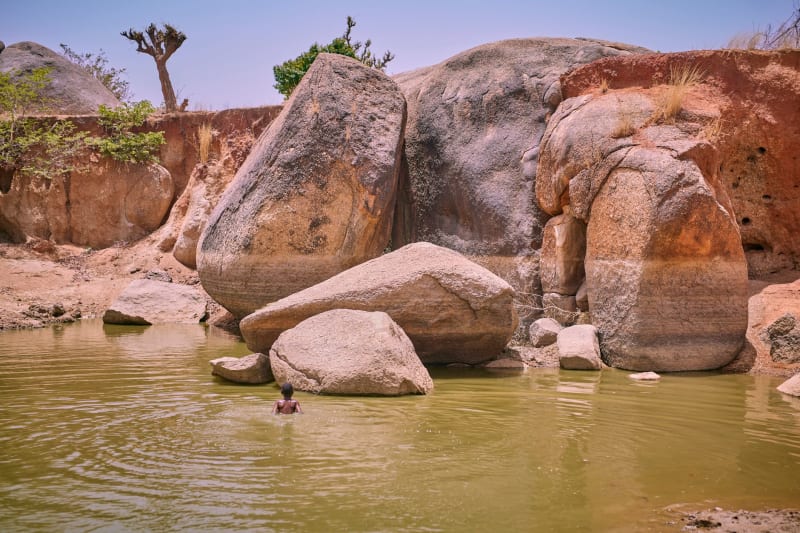 dogon-country
 Mopti
The Venice of Mali — a river port city built on three islands where the Niger and Bani rivers meet and every pirogue carries someone somewhere important.
Explore dogon-country
 Nombori
A cliff village built in the shadow of an overhang so massive you spend the first hour looking up to make sure it isn't moving.
Explore dogon-country
 Sangha
A cluster of plateau villages where masked ancestors still dance for the dead and the living watch from the rocks as if time is a circle.
Explore