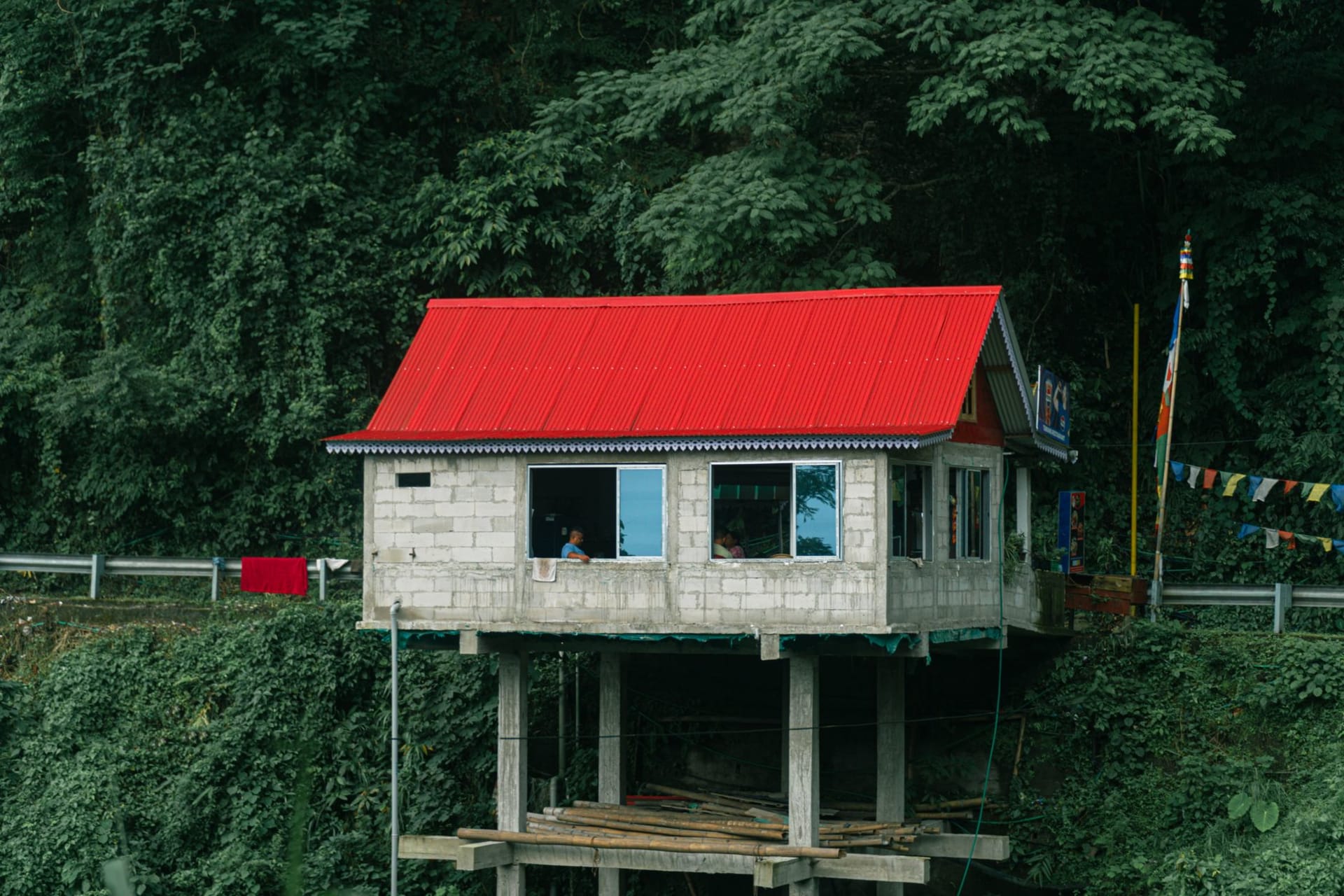
Happy Valley Tea Estate
"The smell inside the factory is not tea. It is something alive, halfway between field and cup — the most honest smell I know."
The path into Happy Valley starts behind a small gate off the main road and descends almost immediately into a different kind of quiet. The town noises — horns, vendors, the distant whistle of the toy train — drop away within two minutes of walking, replaced by the sound of wind moving through tea plants and, if you time it right, the steady rhythm of picking. The bushes themselves are waist-high and dense, trimmed into flat horizontal planes by years of methodical harvest, and walking among them has the slightly disorienting feeling of moving through a landscape designed at the scale of the human hand.
I went in late October during the autumn flush, when a woman named Sunita was working a row about fifty metres from the path. She moved through the plants at a pace that made the whole operation look effortless — pinching the top two leaves and a bud, dropping them into the bamboo basket on her back, moving three inches down the row, repeating. The basket, she told me through my guide’s translation, would weigh perhaps twenty-five kilograms by the end of her shift. The payment: around four hundred rupees for the day. The math of that ratio was something I kept turning over on the walk back.
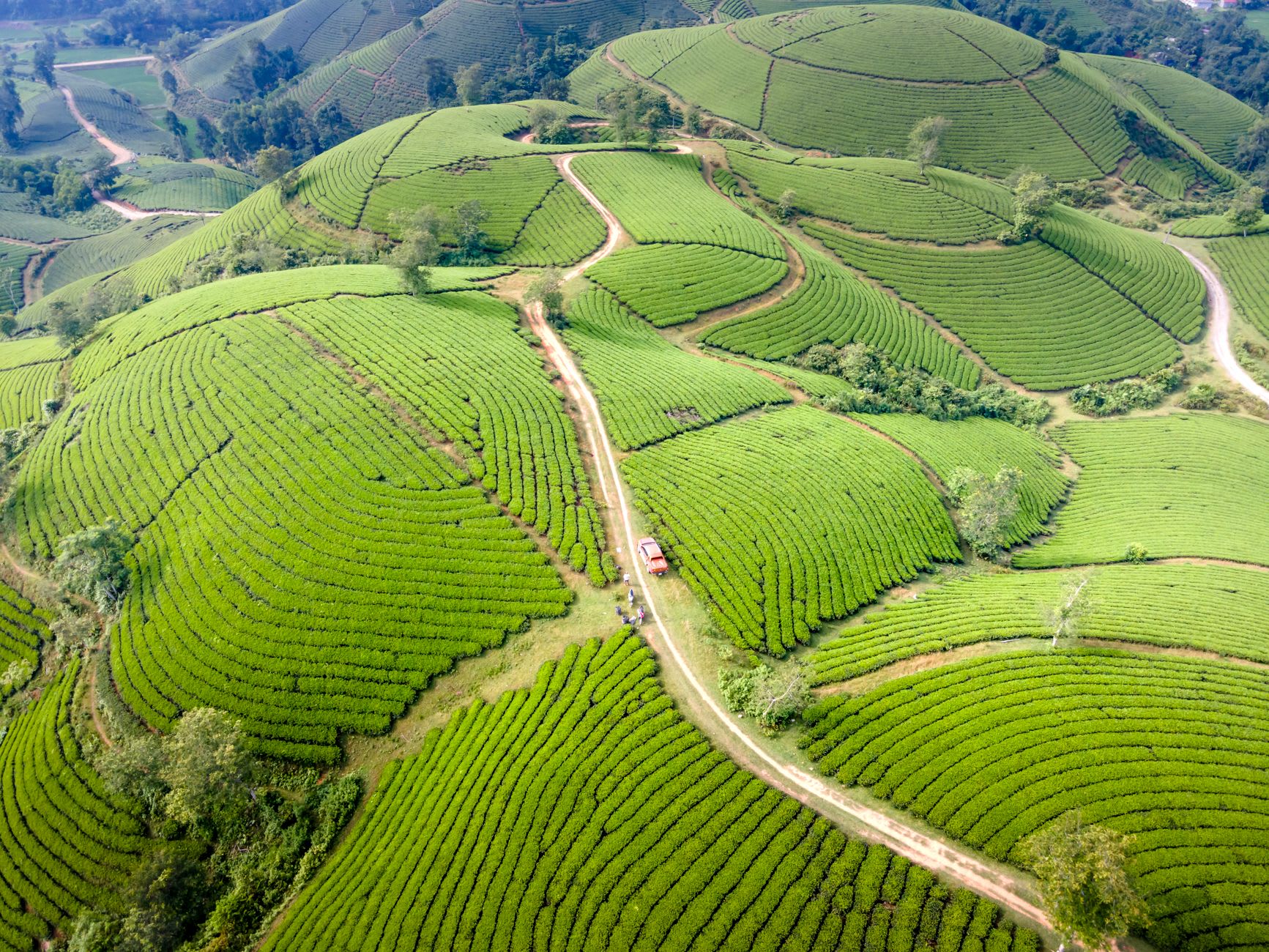
Happy Valley is one of the oldest tea estates still operating in Darjeeling, established in 1854, and it sits close enough to town that you can reach it on foot from Mall Road in twenty minutes if you know the path. The factory building is the thing that stays with me. Inside, the leaf passes through a sequence of steps — withering, rolling, oxidizing, firing — that happens largely as it has for a hundred and fifty years, in rooms where the smell hits you like a physical thing. Not the delicate floral tea smell of the cup, but something rawer and greener, the smell of something alive in the process of becoming something else.
The estate offers tours, and I took one with a guide who had been explaining the same process for sixteen years and had somehow retained genuine enthusiasm for it. He showed me how you tell a first flush leaf from a second flush by the colour — the first being lighter, almost chartreuse. He let me run withered leaf between my palms to feel the texture change. Outside on the factory steps, they brewed a cup from that morning’s batch: still-warm orthodox grade, pale amber, with the Muscatel note that every tasting note talks about and that I had never fully understood until that moment. It is not muscatel grape. It is more like something floral drying in the sun — a perfume more than a flavour.

When to go: April–May for the first flush harvest — the most prestigious picking season and the clearest skies. October–November for the autumn flush — less celebrated commercially but arguably more enjoyable for visitors since the crowds are thinner and the weather crisp and settled. Book the factory tour in advance through the estate’s Darjeeling office.