Læsø
"The seaweed roofs looked like the island had decided to grow its own hair. I understood completely."
The ferry from Frederikshavn takes about ninety minutes and arrives at Vesterø Havn, the main port, which consists of a fish-landing wharf, a small ferry terminal building, and the unambiguous smell of drying seaweed. I had read about the seaweed houses but hadn’t entirely believed them — the photographs looked like something from a fairy tale that had been shot through a green filter, and I suspected the reality would be more modest. It wasn’t. The first house I encountered on the road from the harbour was roofed in a thick mass of dried eelgrass, grey-brown and textured like something living, the eaves extending almost to the ground and giving the farmhouse the appearance of a building in the process of dissolving back into the landscape from which it came. I stopped the bicycle and stared at it for a while.
Læsø sits in the Kattegat between the northern tip of Jutland and the Swedish coast, and its isolation has preserved things that everywhere else has discarded. The seaweed roofing tradition — using dried Posidonia oceanica from the surrounding waters — dates back centuries and was revived in the twentieth century as a deliberate act of conservation. There are now somewhere between fifteen and twenty surviving examples of the traditional seaweed-roofed farmhouses, mostly concentrated around the village of Byrum, and they are among the strangest and most quietly beautiful pieces of vernacular architecture I have encountered anywhere. The seaweed acts as insulation and weatherproofing simultaneously; the roofs last fifty years or more and require no treatment beyond the occasional replacement of sections that have weathered through.

The island’s other extraordinary inheritance is its salt. Læsø sits above geological formations that produce extremely saline spring water — brine so concentrated that the island became, in the medieval period, the primary salt producer for much of Scandinavia and northern Germany. The salt was boiled down using peat fuel, and the operation required so much peat that by the seventeenth century the island had been almost entirely deforested and was sinking under its own denuded weight — the loss of the forests had reduced the weight of the island to the point where the whole thing was measurably lower in the water than it had been centuries earlier. Salt production eventually collapsed, the island impoverished, and the landscape was left with the open heathland character it still has today — which is to say, beautiful in the specific way that landscapes shaped by damage sometimes become.
The salt is being produced again now, by a small operation in Østerby, using reconstructed traditional methods. I visited on a morning when they were boiling down brine from the springs and the salt house smelled simultaneously of the sea and of something mineral and ancient. I bought a small jar. It was expensive and worth it in the way that expensive things connected to genuinely interesting processes often are.

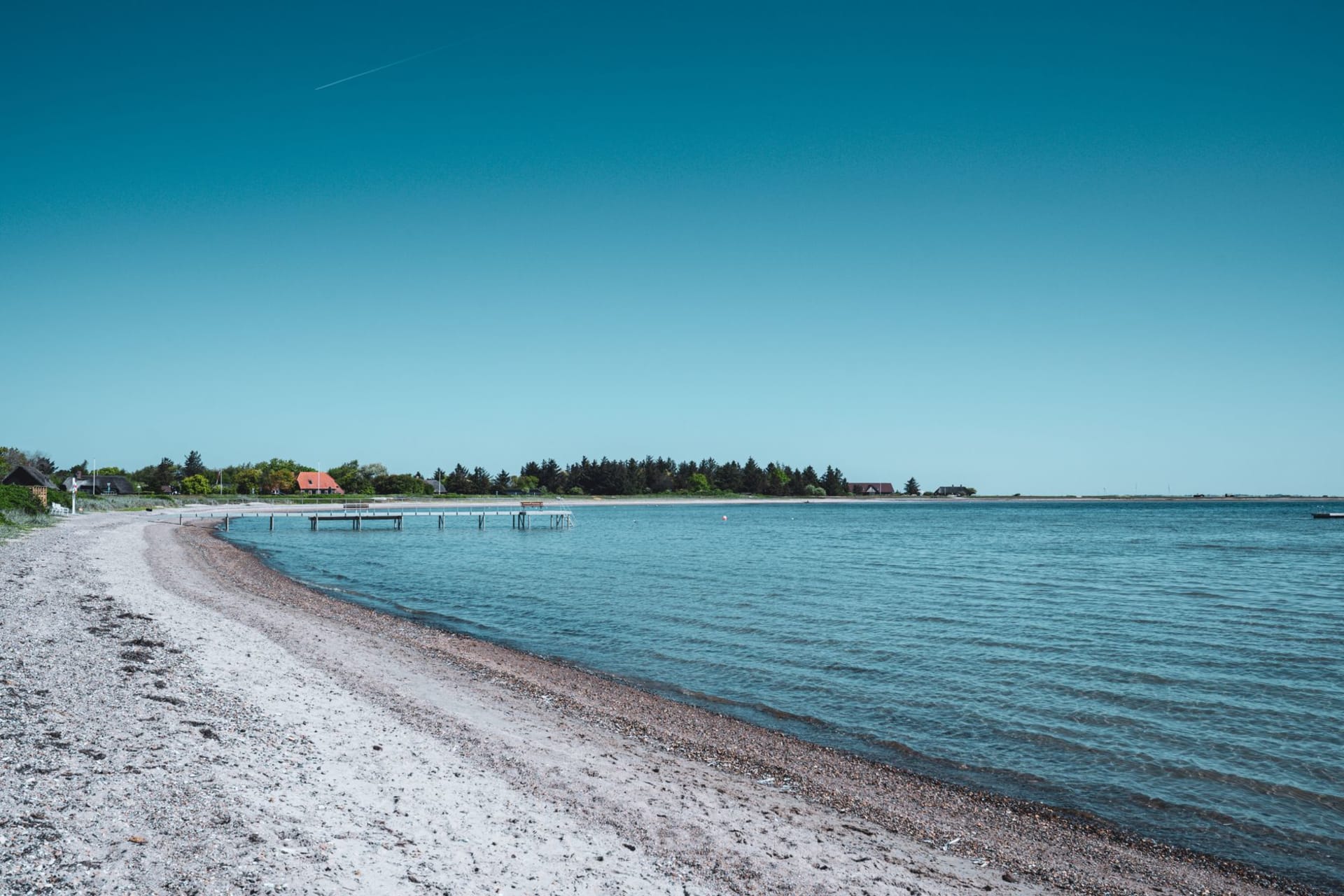
The beaches on the northern and western sides of the island are wide, clean, and almost always empty. The North Sea arrives here with a directness it doesn’t have on the more sheltered Danish coasts — the waves come in proper sets, the wind is reliable, and the sand is the pale powdery variety that squeaks underfoot when it’s dry. I swam off the western beach on a morning when the water temperature was probably somewhere around fifteen degrees and the sky was doing something complicated with clouds and light, and the combination of cold water and that sky and the complete absence of other people felt like a reward for the slightly inconvenient logistics of getting to the island in the first place.
When to go: June and July for the warmest weather and the longest days, though even then Læsø is quieter than you’d expect. September is exceptional — the heather on the moorland turns deep purple and the light thins to something extraordinary. The winter crossings are rough and the island closes down substantially, but if you’re determined, the salt house and the seaweed houses are worth the effort in any season.