The ferry from Svendborg takes an hour and change, and for most of that crossing you’re surrounded by the flat grey water of the Little Belt with nothing to look at except the occasional cormorant and the retreating mainland. Then Ærø appears — low and green, almost apologetically modest on the horizon — and the ferry swings around to dock at Ærøskøbing and everything changes. The town comes into view like something assembled for a film set and then somehow left behind when production wrapped. Except it wasn’t. This is just what Ærøskøbing looks like. It has always looked like this.
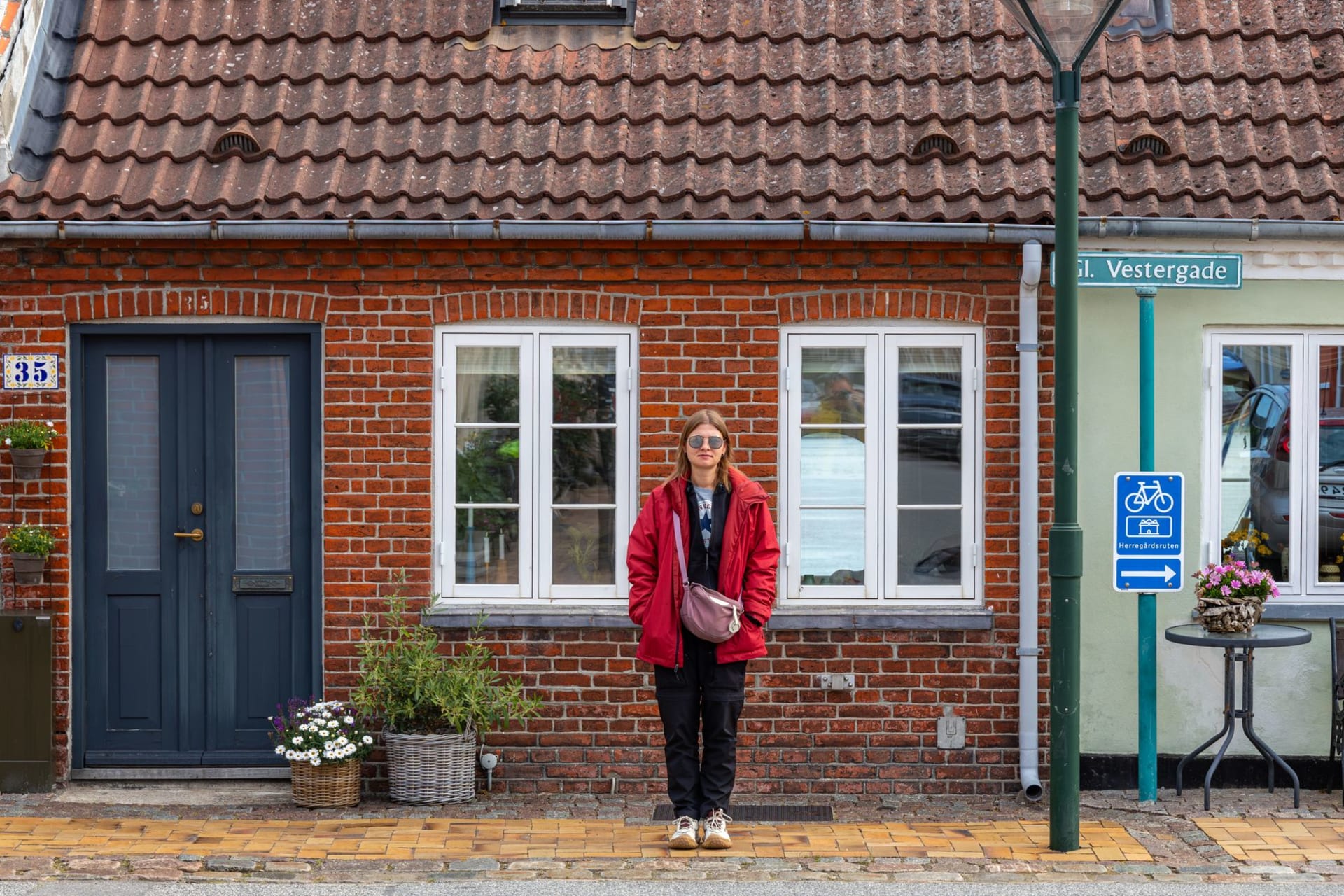
The streets are cobbled with rounded stones that catch the rain and hold it in small glittering pools. The houses lean toward each other at angles that suggest friendly conspiracy rather than structural failure — they are not crumbling; they are merely old and unbothered by it. Many are painted in the deep ochres and dusky reds of the eighteenth century, the colours mellowed now to something even more beautiful than their original brightness. Window boxes overflow with geraniums in summer. In the alleyways between houses, cats regard you with the particular authority of animals who know their position is unassailable. I walked the main street in about four minutes and then walked it again in the opposite direction just to confirm it was real.

The town has about nine hundred residents, almost no industry, one supermarket, and a museum dedicated to bottle ships — those impossible miniature vessels that someone once had the patience and the winter to build inside glass bottles. The bottle ship museum is, against all reasonable expectation, genuinely moving. The craftsman whose work fills most of the collection, a sailor called Peter Jacobsen who made over 1,700 of them in his lifetime, apparently built ships in bottles the way other people breathe — compulsively, without being entirely able to explain why. Standing in front of a cabinet full of his work, these tiny perfectly rigged schooners and brigs trapped in their glass worlds, I found myself thinking about what it means to make something beautiful in a place that already is.
The eating in Ærøskøbing is quiet and confident. There’s a hotel restaurant that does smørrebrød of serious quality — the pickled herring variant came topped with a mustard cream and paper-thin slices of radish that made the whole thing feel composed rather than assembled. I also ate, on my second day, at a kitchen that a local woman ran out of her home three days a week in summer, setting out eight seats and producing a fixed menu that changed daily. The dish I remember most clearly was a cold potato soup with chives and a small mound of something cured on top. It tasted like the island itself: mild, careful, quietly excellent.

The harbor, out beyond the museum, has a fleet of traditionally built wooden sailing vessels — Ærø has a long boat-building tradition that survives in the form of a working shipyard still constructing wooden boats to old designs. On the evening I sat on the harbor wall, a wooden ketch was being moved from the yard to the water with the deliberate slowness of something being done correctly, and a small crowd of locals had gathered to watch without making a production of it. That scene — the wooden hull, the evening light, the unhurried crowd — felt like Ærøskøbing in miniature. A place that does things properly, at the right pace, without needing an audience.
When to go: June through August is the full season, when the home restaurants open and the sailing harbor fills. September quietens everything beautifully and the light turns amber. Avoid July weekends if solitude matters — the Danes have discovered Ærøskøbing thoroughly, and they arrive in numbers.