Dubrovnik
"The Stradun at six in the morning is a different city entirely — one that has not yet been photographed to death."
I walked the city walls of Dubrovnik on an October morning so early that the sea below was still the color of iron, before the light had time to warm it. I had the whole circuit — nearly two kilometers of stone rampart rising forty meters above the water at points — almost entirely to myself, which is not an experience you can reliably arrange in July. Below me the orange rooftops of the old city glowed in the first sun, the Stradun — that broad limestone pedestrian street polished to a mirror surface by centuries of feet — was empty except for a woman hosing down the pavement outside a bakery, and the islands of Lokrum and Elafiti sat in the haze like dark shapes someone had forgotten to paint in. The formal beauty of Dubrovnik from the walls is simply undeniable. You look at it and understand, without effort, why this city existed — why a medieval republic went to the considerable trouble of building these specific walls in this specific configuration above this particular harbour.

The Republic of Ragusa, which is what Dubrovnik was called from the 14th century until Napoleon finished it off in 1808, was a kind of diplomatic miracle — a small city-state that survived by being indispensable to everyone and threatening to no one. It maintained trade relations with the Ottoman Empire while selling ships to Christian crusaders, paid tribute east while insisting on legal independence, and grew rich on the difference. The Rector’s Palace, the old loggia, the customs house on the Stradun — the architecture is the physical record of that confidence: stone buildings put up by people who expected their city to last, and who were, as it turned out, correct. The 1667 earthquake knocked most of it down and they rebuilt it in the same style, more or less from memory.
The narrow lanes off the Stradun — Prijeko to the north, the unnamed alleys climbing the hill toward the upper city — contain the restaurants and bars that Dubrovnik’s remaining residents actually use. The tourist restaurants on the Stradun are not terrible, but they are not where you want to eat. There is a konoba up the Jesuit steps near the cathedral that serves the kind of fish soup that makes you wonder why you ever ate any other kind. Crni rižot — black risotto made with cuttlefish ink — is the thing to order wherever you find a place that looks like it has been making it for longer than you have been alive.

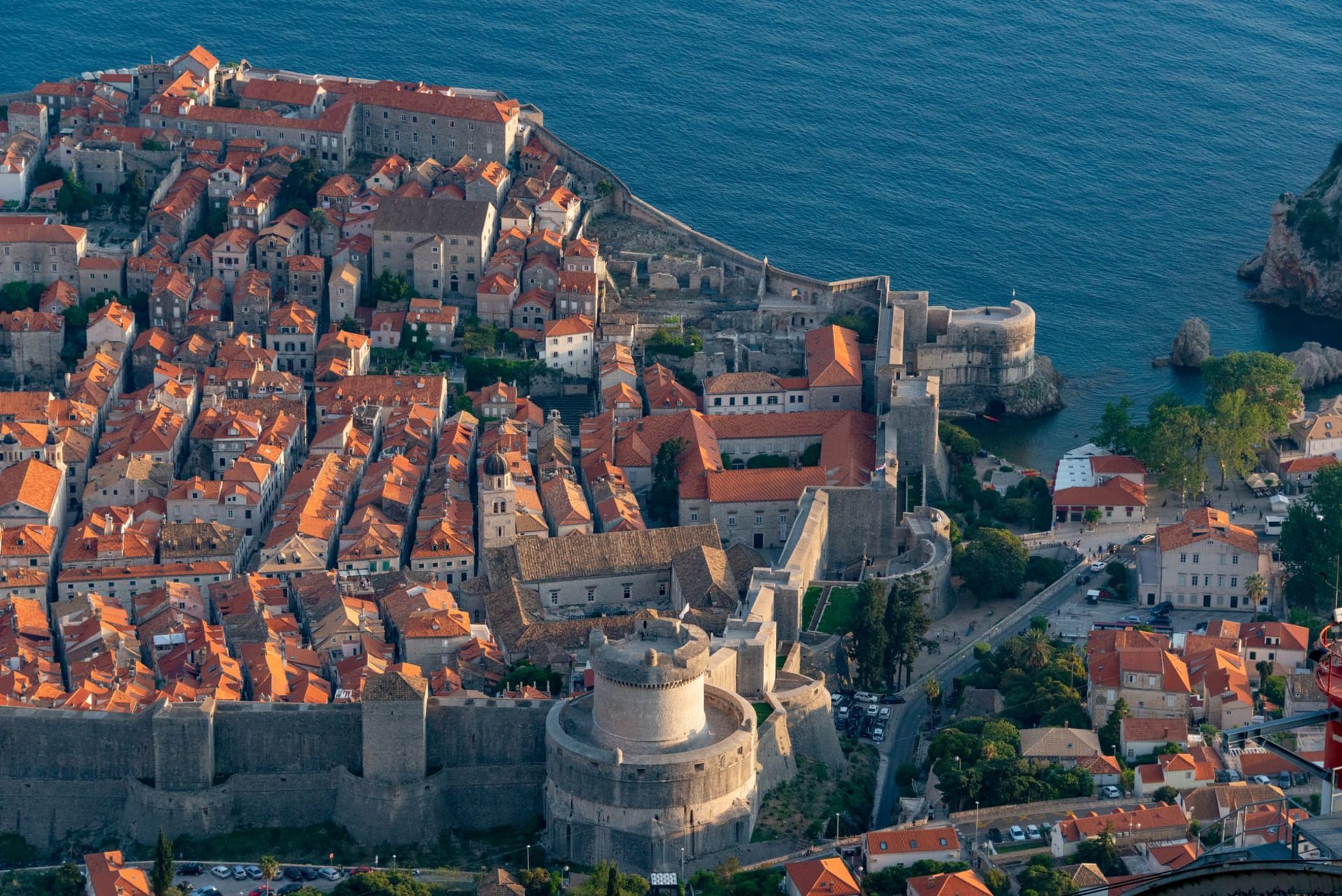
The cable car to Mount Srđ above the city deserves a mention not for the view itself — which is spectacular — but for the scale it gives you. From up there, Dubrovnik’s old city resolves into its actual dimensions: surprisingly small, a dense oval of stone and roof tiles surrounded by modern suburbs and resort hotels, the whole thing tucked under the mountain like a model someone assembled with great care. It is easier to love from up there, in a way. The compression that makes it claustrophobic in summer suddenly reads as architectural brilliance rather than a crowd management problem.
When to go: October is the month I keep returning to — the cruise ships have mostly stopped calling, the evenings are cool enough for a jacket but not cold, and the light on the stone has a particular amber quality that the bleaching summer sun never produces. April and May are also excellent. The height of summer produces scenes that rival any European beach destination for sheer density, and the walls become genuinely unpleasant to walk before nine in the morning.