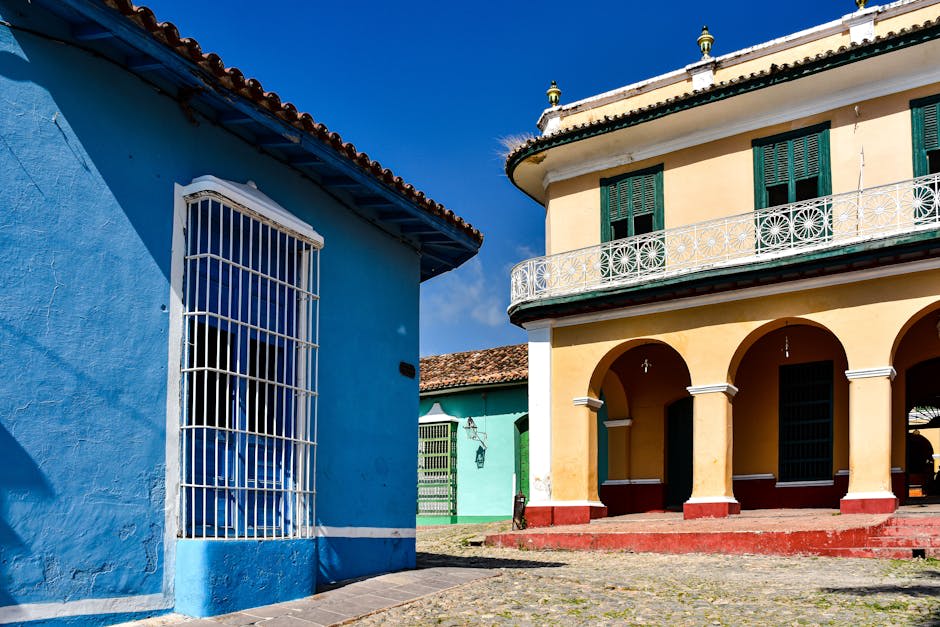
Trinidad is Cuba’s most perfectly preserved colonial town, its wealth built on the sugar trade of the eighteenth and nineteenth centuries and its preservation guaranteed by the economic isolation that followed. The Plaza Mayor is the heart — a cluster of pastel mansions, now museums, surrounding a garden where the town’s founding families once displayed their prosperity. The Museo Romantico and Museo de Arquitectura occupy the finest houses, their interiors frozen in a prosperous past.
I arrived in Trinidad by colectivo from Cienfuegos, squeezed into a 1954 Pontiac with four other passengers and a driver who narrated the entire Escambray mountain road like a tour guide who happened to also be an excellent mechanic. The town revealed itself gradually — first the terracotta rooftops seen from above, then the cobblestones underfoot, then the realization that this is not a reconstruction. These are the actual streets, the actual houses, the actual stones that sugar money laid down two hundred years ago.
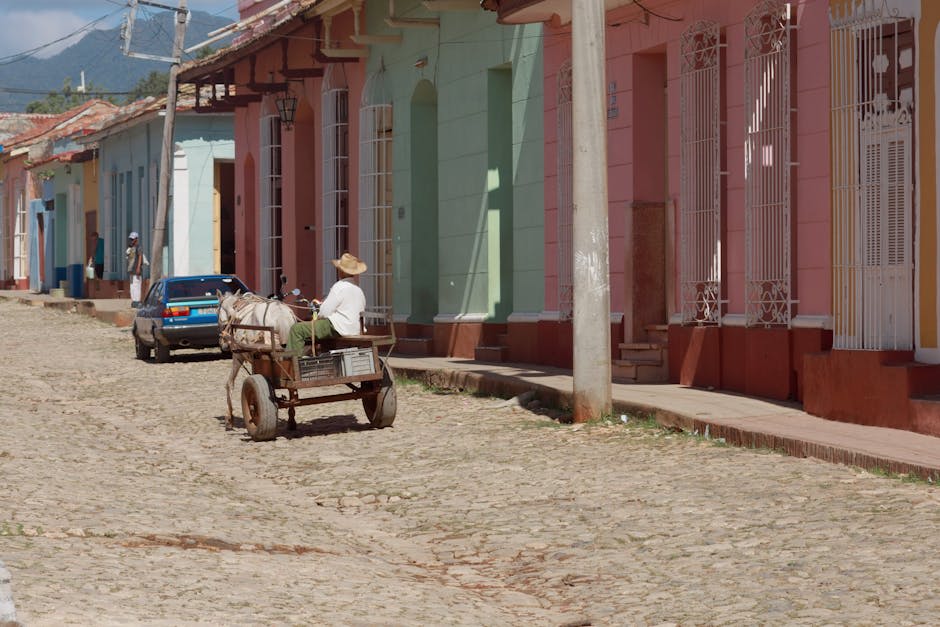
The cobblestone streets climb steeply from the plaza toward the Escambray Mountains, whose green slopes provide the backdrop to every vista. Walking uphill past the Iglesia de la Santisima Trinidad, the views open up — terracotta and pastel rooftops tumbling down toward the Caribbean, with the green wall of the Escambray behind. The Playa Ancon beach, twelve kilometers away, offers Caribbean sand without resort development. I rented a bicycle and rode there on a road lined with ceiba trees, arriving to find a beach that would cost three hundred dollars a night to access anywhere else in the Caribbean.
The Valle de los Ingenios nearby preserves the ruins of sugar mills and slave quarters — the darker foundation beneath the pretty facades. The Manaca Iznaga tower, built so plantation owners could survey their enslaved workers, now offers panoramic views and a complicated reckoning with the beauty-built-on-brutality that defines so many colonial towns.
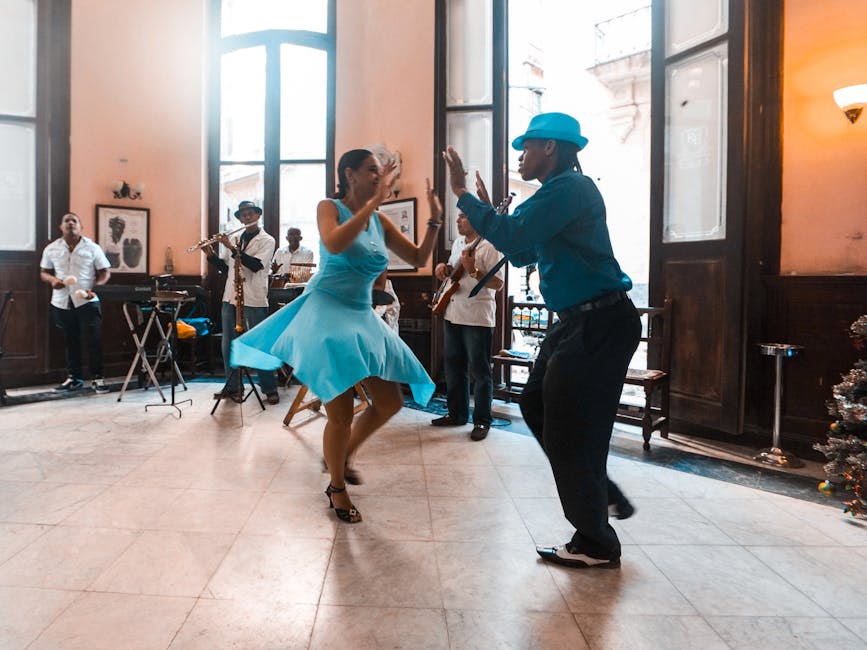
At night, the Casa de la Musica on the church steps transforms into an open-air dance floor where salsa bands play beneath the stars and the entire town seems to show up. I am not a dancer — I am French, which means I have opinions about rhythm but limited ability to express them physically — but Trinidad’s Casa de la Musica at midnight made me forget that. The music is so good, the rum so cheap, and the energy so infectious that self-consciousness becomes irrelevant.
The casa particular where I stayed was run by a retired teacher named Marta who cooked breakfast like it was a competitive sport — fresh tropical fruit, eggs, strong coffee, and a lobby of freshly squeezed juices that changed every morning depending on what the market had. This is Trinidad’s secret weapon: the hospitality is not professional, it is personal.
When to go: November to April for dry season. Trinidad is hot and humid year-round — evenings are the best time to explore.