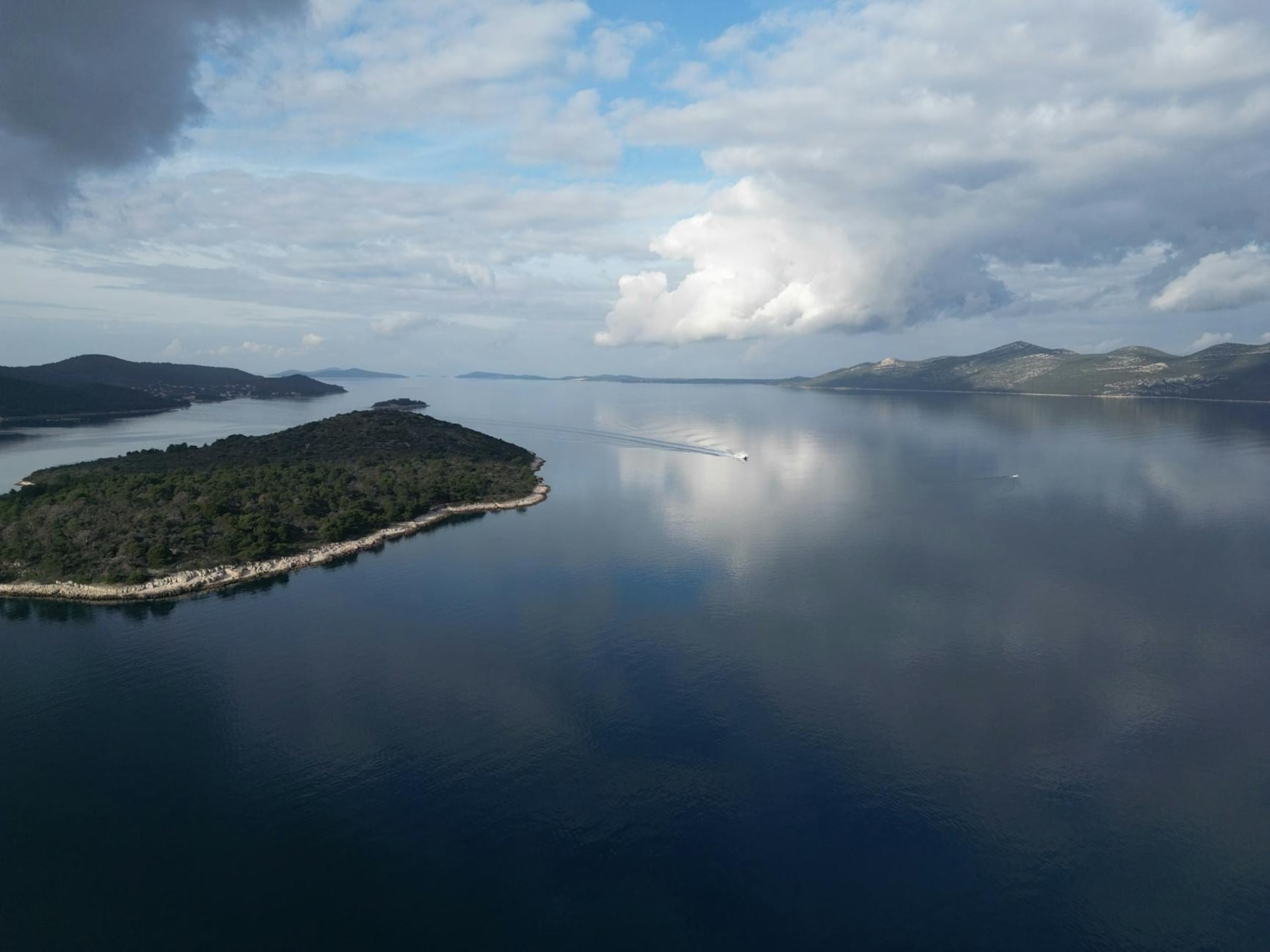
Croatia's most remote inhabited island, closed to foreigners until 1989 as a Yugoslav naval base, now home to the best wine in Dalmatia.
The ferry from Split takes two and a half hours, long enough that the mainland genuinely disappears. By the time Vis Town materialises out of the haze — a crescent of pale stone buildings pressed against the Adriatic, pines dark above them — I already understood why the Yugoslav Navy chose this place. It is remote in the way islands used to be before budget airlines made remoteness a selling point. Here, it still costs something.
What the Closure Left Behind
Until 1989, no foreign passport got you onto Vis. What that four-decade quarantine produced — accidentally, unwillingly — was a kind of preservation. The riva in Vis Town stretches along the bay exactly as it must have in the 1950s: no trinket shops, no English-language menus laminated in plastic. The restaurants along Ul. Bana Josipa Jelačića serve grilled dentex and peka-cooked lamb because those are the things people here actually eat, not because a tourist board told them to.
Lia found a bottle of Plavac Mali at a konoba so small it had no sign — just an open door and the smell of braised meat and beeswax. The wine was from the Plisko Polje plateau above town, almost black in the glass, tasting of dried fig and iron. The woman who poured it said her grandfather planted those vines when the navy still had checkpoints on the road.
The Surprise Inside the Fortress
I expected the ruins of Fort George above Vis Town to be a viewpoint, nothing more. What I did not expect was a bar inside the Austro-Hungarian ramparts serving natural wine by the carafe as the sun went horizontal across the water. The walls were three feet thick. Swallows cut between the battlements. Below, the bay turned the precise copper of old Armagnac. I sat there longer than I planned, which is the best thing a place can do to you.
Blue Cave, Better Skipped at Noon
Every agency on the island sells speedboat trips to Modra Špilja — the Blue Cave on nearby Biševo. Worth going. Not worth going at eleven in the morning with forty other boats. We took a private taxi boat at seven, slipped inside before the tour groups arrived, and floated for twenty minutes in that blue that has no name in French or English. The light comes through an underwater opening and fills the entire grotto. It looks invented.
When to go: Late May or early September. July and August bring enough day-trippers to dull the edge of what makes Vis worth the crossing — go when the ferry is half-empty and the konobas still have tables.