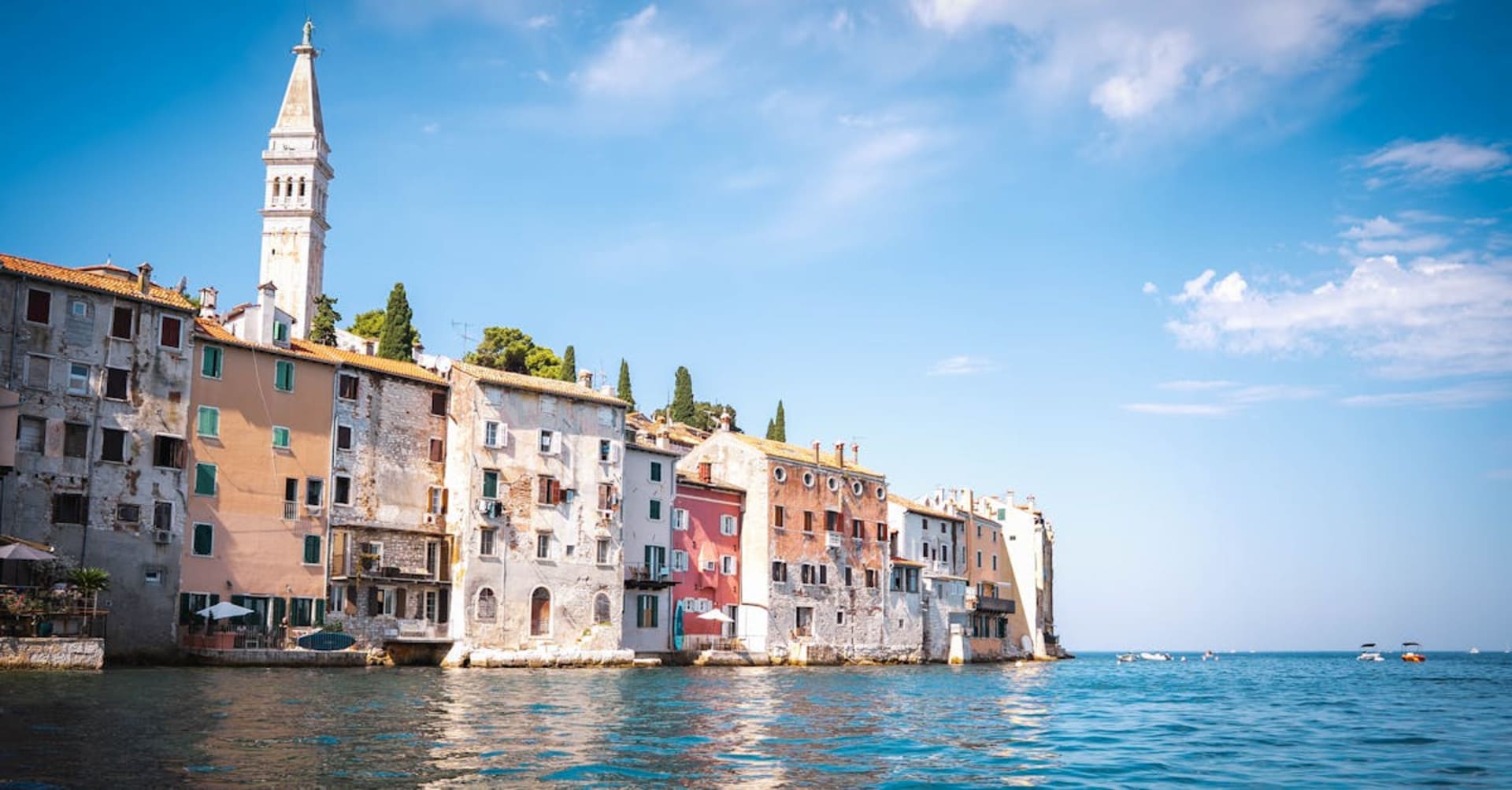
Istria is where Croatia feels most Italian — which makes sense, given that the peninsula was part of Italy until 1947. The hilltop towns of the interior could pass for Tuscany: Motovun perches on a conical hill above truffle-rich forests, Groznjan is an artists’ colony with jazz festivals and stone streets, and Oprtalj looks down on a valley of vineyards producing malvasia and teran wines that are beginning to earn international attention.
The food is Istria’s strongest argument. White truffles from the Motovun forest, olive oil that wins global awards, wild asparagus foraged from hillsides in spring, pasta shapes with names like fuzi and pljukanci that are neither quite Italian nor quite Slavic. The coast offers its own pleasures: the Roman amphitheatre in Pula is the sixth-largest surviving and still hosts concerts. The Lim Fjord cuts inland between forested cliffs, and the Brijuni Islands offshore are a national park with Roman ruins and the private zoo of a former Yugoslav president.
When to go: May for wild asparagus and empty hilltop towns. October for truffle season, grape harvest, and autumn colors in the interior forests.