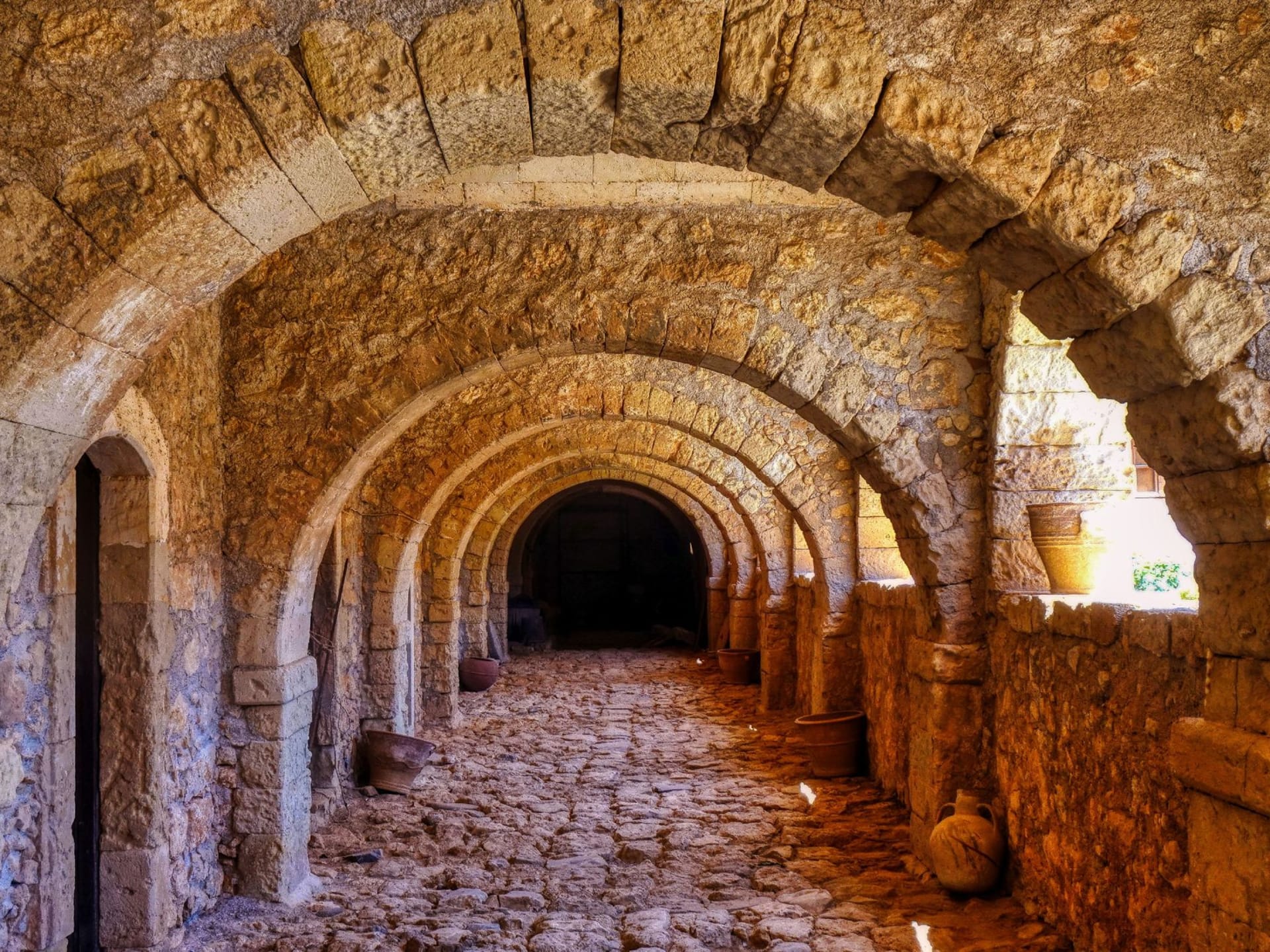
Knossos
"The throne room is 3,500 years old and you are standing in it. No amount of preparation makes that comfortable."
The Bronze Age palace Evans controversially rebuilt, where 3,500 years collapse into a single disorienting morning.

The correct time to arrive at Knossos is when the gate opens, at eight in the morning. Not because the site becomes unbearably crowded later — though it does — but because in those first forty minutes, with the air still cool and the light still slanted and low across the stone, there is a quality of silence that lets you imagine the place as it was rather than as it is being explained. By nine, the tour groups arrive with their audio guides and colored umbrellas, and the spell is harder to maintain. I had read everything I could find before coming, which may have been a mistake. The reading prepared me for facts. Nothing prepares you for the scale of what actually happened here.
Sir Arthur Evans reconstructed Knossos in the early twentieth century with a confidence that later archaeologists found deeply troubling. The painted concrete columns, the restored upper stories, the vivid reds and blacks and blues of the reproduced frescoes — all of this is Evans’ interpretation as much as historical fact. Standing in what he called the Throne Room, looking at the alabaster seat set into a painted wall of griffins, I found I could not muster the purist’s objection. What Evans gave us is a framework for understanding what four millennia of decay had reduced to rubble, and without that framework the site would be a field of stones meaningful only to specialists. The throne room — whatever its actual function — demands engagement, and Evans made engagement possible at the cost of accuracy. That trade feels worth it.
The palace complex is larger than you expect, spreading across a hillside in a maze of courtyards, storage rooms, workshops, and corridors. This, of course, is where the Minotaur legend comes from: a labyrinthine palace where something monstrous lived at the center. Walking the paths between low walls in the morning heat, it is easy to understand how a traveler from the Greek mainland, encountering this place for the first time, might reach for myth to explain what they were seeing. A civilization more sophisticated than your own is always difficult to process without a narrative frame. The Minotaur is the narrative frame.
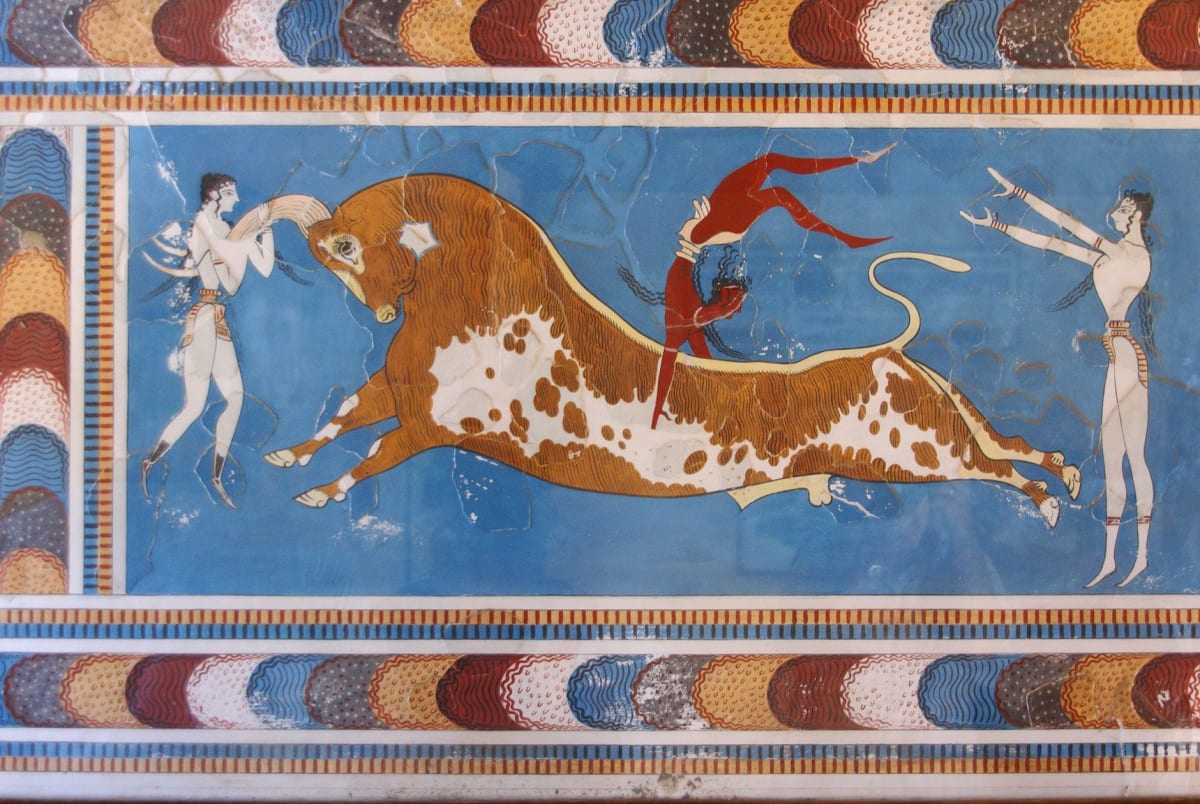
The original frescoes are not here — they are in the Archaeological Museum in Heraklion, which is where you should go first, ideally the day before, so that you arrive at the site with the images already in your mind. The reconstructed versions at Knossos are good enough to read the energy of a culture that painted bulls in flight and women in profile with elaborate dress and joyful, confident line — but the originals, more faded and more partial, carry a different weight. The weight of the actual.

What remains after the visit is harder to name than fact. I sat on a low wall at the site’s edge after the tour groups had thickened and the explanatory voices had merged into a general noise, and tried to hold the concept that I was sitting on a hill where, 3,500 years ago, people were living in a palace with running water, drainage systems, and frescoes on the walls. The thought is too large to hold comfortably. That discomfort is, I think, the actual gift of Knossos — not the facts it confirms but the scale of what it refuses to let you assume about the past.
When to go: Open year-round. Visit in April, May, or October to avoid the worst summer crowds. Always go at opening time. Visit the Heraklion Archaeological Museum the day before to see the original frescoes in context.
Keep exploring
More from Crete
 crete
crete Lassithi Plateau
A flat agricultural valley at 840 meters, surrounded by peaks, where Zeus was supposedly hidden and windmills outnumber tourists.
Explore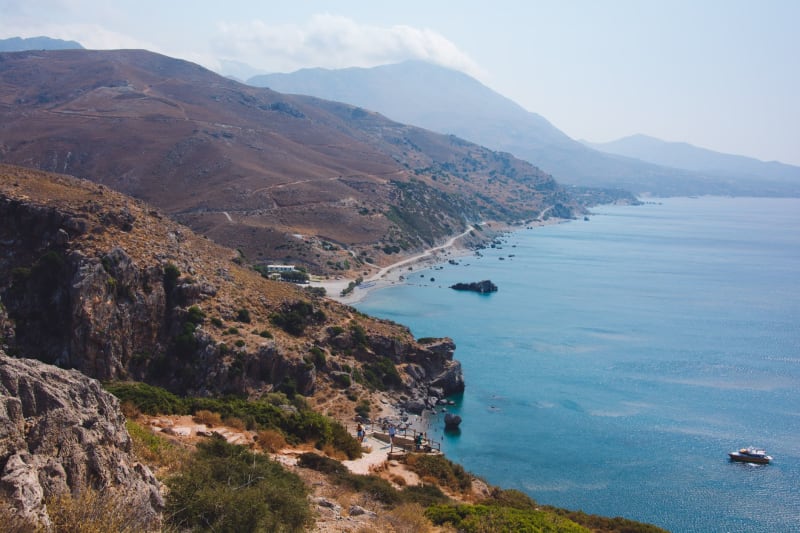 crete
crete Loutro
A village with no road in, accessible only by boat or foot, where silence is structural and the water is impossibly clear.
Explore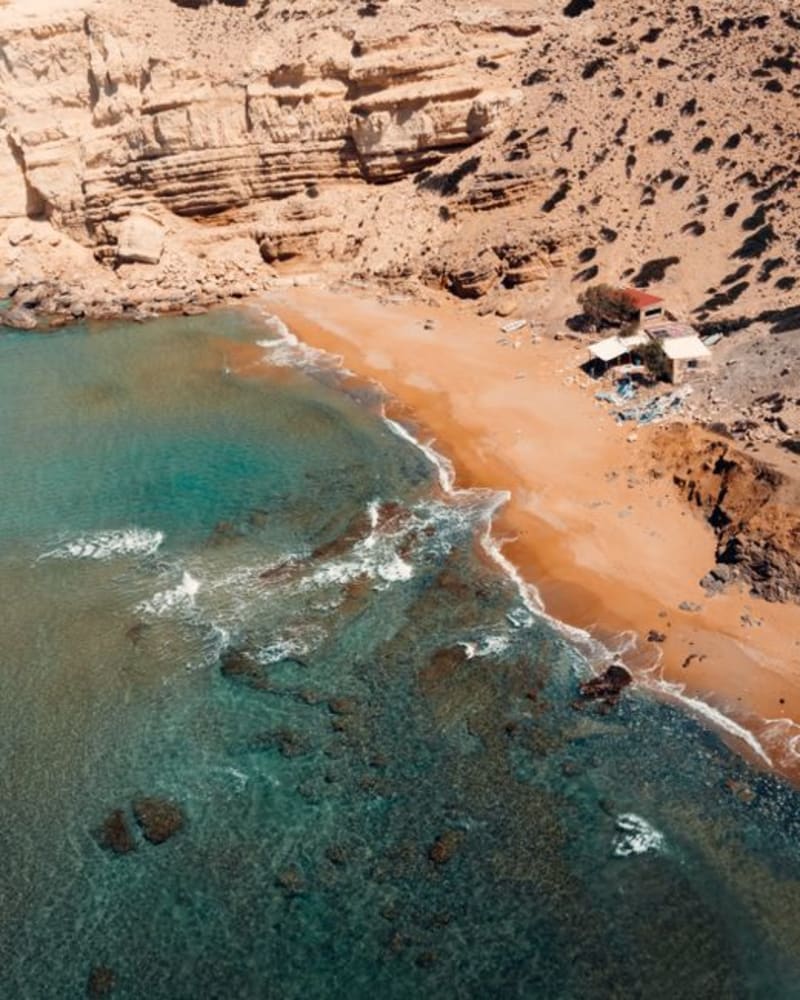 crete
crete Matala
A crescent of sand under cliffs pocked with ancient tombs turned hippie caves, where Joni Mitchell once slept and the Aegean still hums with that old freedom.
Explore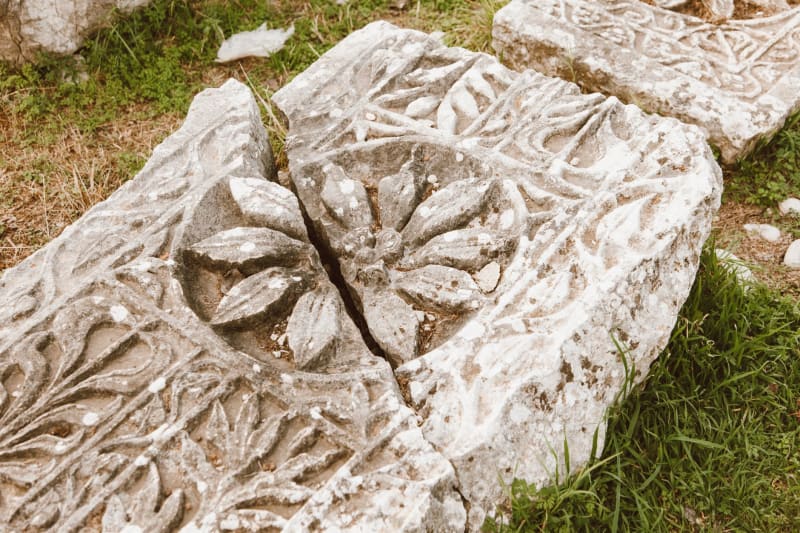 crete
crete Phaistos
The second Minoan palace, perched on a ridge above the Messara plain, with almost no tourists and almost too much time to think.
Explore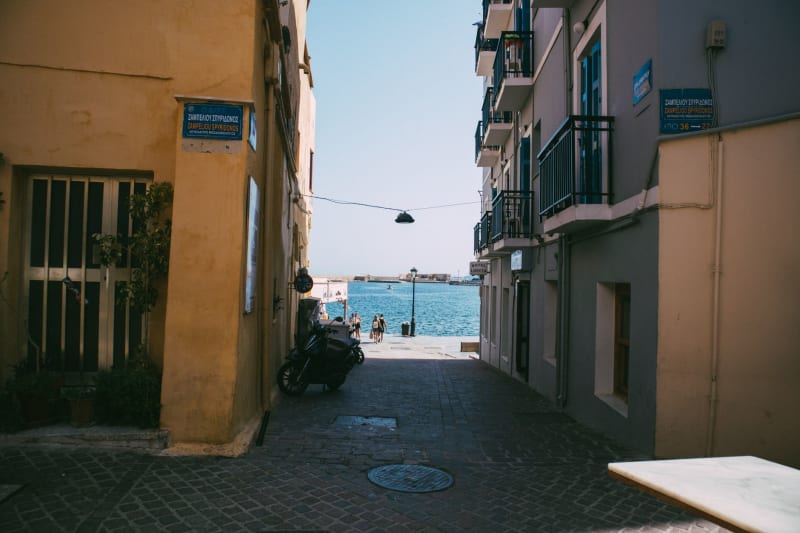 crete
crete Rethymno
The town that got Venice, then the Ottomans, then forgot to erase either, with a long sandy beach thrown in for free.
Explore crete
crete Samaria Gorge
Sixteen kilometers of limestone canyon that earns every cliché written about it, ending in the Libyan Sea.
Explore