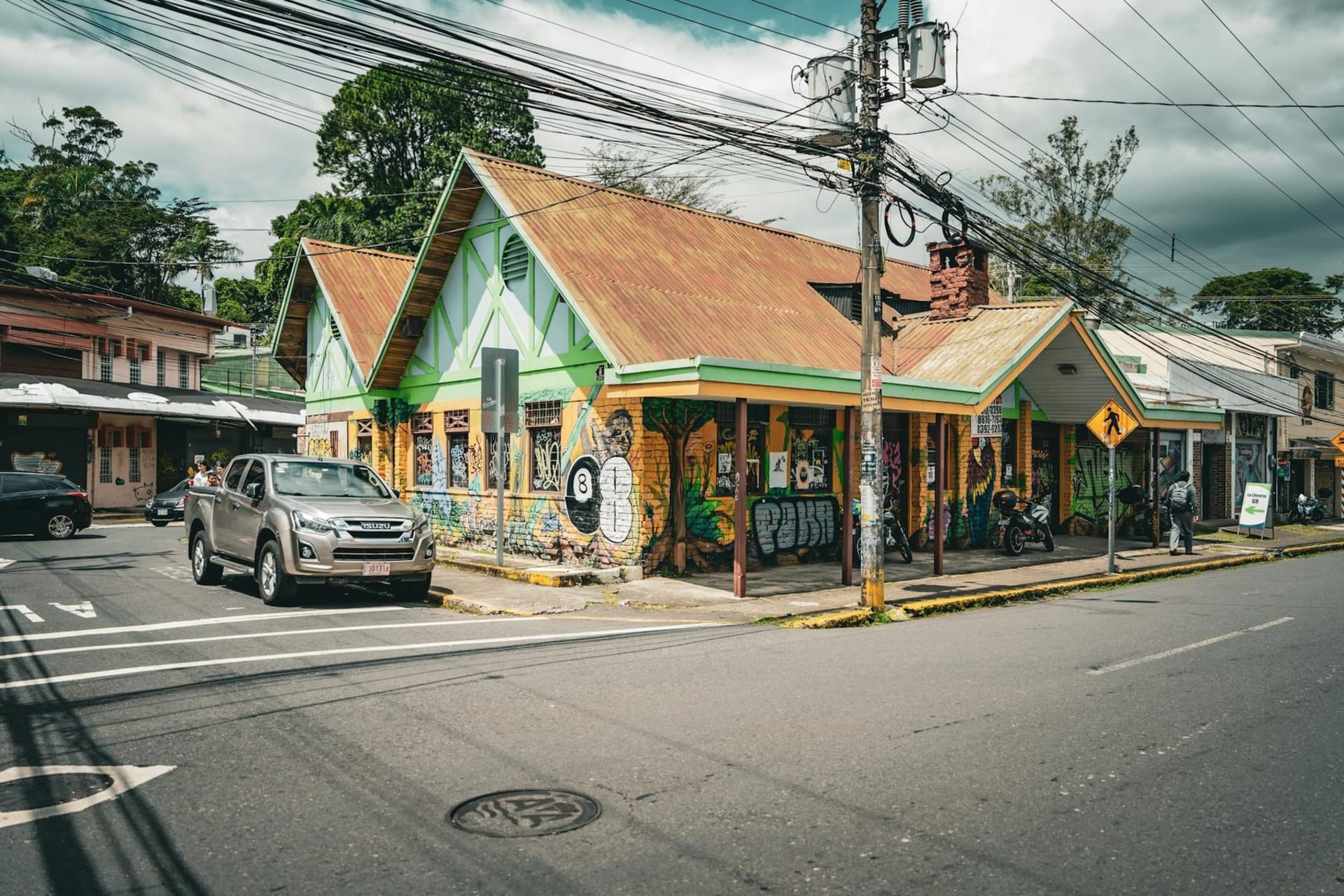
San Jose Costa Rica
"San Jose gets overlooked in the rush to everywhere else — a city worth the pause."
Costa Rica's compact capital punches above its size with world-class museums, pre-Columbian gold, and excellent coffee.
Everyone we met on the bus from the airport had the same plan: clear customs, grab a coffee, and be somewhere greener by noon. I used to be one of those people. Now I think San Jose is worth the pause they all refused to give it.
The Gold That Stopped Me Cold
The Museo del Oro Precolombino sits underneath the Plaza de la Cultura, which means you descend into it like ducking beneath the city’s noise. Lia spotted the entrance — I would have walked past the unmarked stairwell entirely. Inside, the Bribri and Diquís pieces are displayed in near-darkness, each object lit from below so the gold seems to generate its own heat. I stood for longer than I expected in front of a small frog cast sometime before the twelfth century, the kind of object that makes you reconsider what you think you know about what came before. The museum charges less than five dollars to enter. It should charge more.
Avenida Central Before the Heat Sets In
San Jose mornings smell like diesel and ripe mango. By seven, the pedestrian stretch of Avenida Central is already loud with vendors and school uniforms and the particular negotiation of a city that doesn’t slow down for anyone. I had gallo pinto and black coffee at a soda on Calle 7 — the coffee was the best I drank in all of Costa Rica, which surprised me given the country’s reputation for exporting its finest beans. The owner roasted his own, a micro-lot from Tarrazú, and he was not subtle about his pride in the fact.
The Teatro Nacional anchors the plaza nearby. The neoclassical exterior is almost too grand for the scale of the city around it, imported marble and allegory, built in the 1890s by a coffee oligarchy that wanted Europe in the tropics. It worked, mostly.
The Neighbourhood the Guidebooks Mention Last
Barrio Escalante, east of the centre, was the unexpected discovery. I had no plan to go there — we ended up walking further than intended after leaving the Mercado Central, where the smell of fresh coriander and raw fish and warm tortillas occupies a single dense block. Escalante was quieter, painted walls, a good bookshop, a wine bar that opened at four. We stayed until dark.
When to go: December through April is the dry season and the easiest time to move around the country, but San Jose itself functions year-round. The rains from May onward make the light in the city softer and the streets less crowded with tourists in transit.