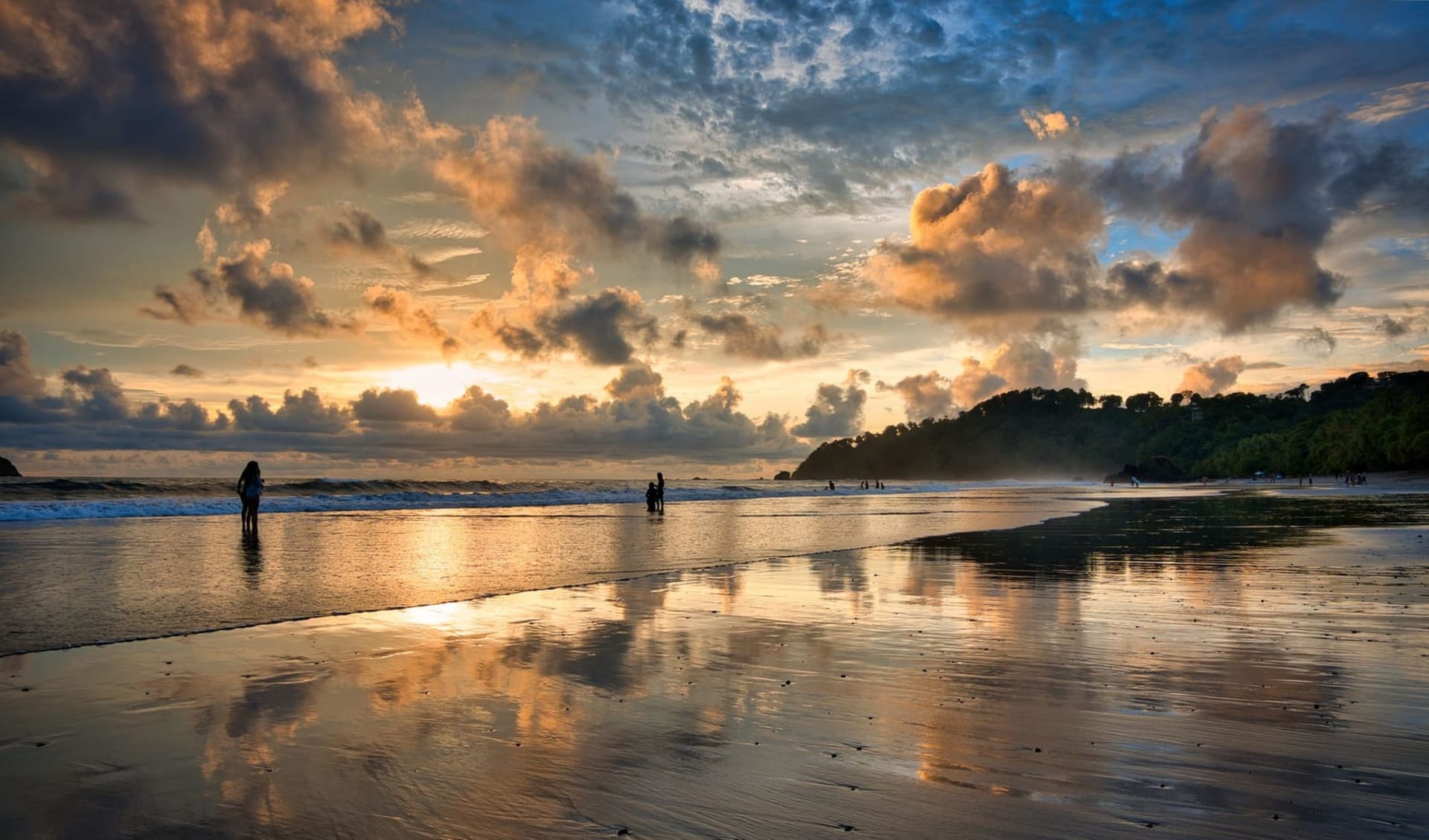
Manuel Antonio
"Costa Rica compressed its best idea into a small national park and named it Manuel Antonio."
White-sand beaches bordered by jungle where white-faced monkeys steal your lunch and sloths ignore your camera.
The road into Manuel Antonio drops down from Quepos through a corridor of hotels and souvenir stands, and then — suddenly — you smell it before you see it: the sea cut through with something green and animal, the particular damp warmth of a jungle that runs all the way to the water’s edge. I had been warned that this place was crowded. It is. It is also, despite that, exactly as extraordinary as everyone claims.
The Park Behaves Like It Owns You
We arrived at the national park entrance on Avenida Central just after opening, already sweating through our shirts in the eight o’clock heat. The trail to Playa Manuel Antonio cuts through a forest so dense it feels pressurized. Howler monkeys announced themselves from somewhere overhead — that sound less like an animal and more like the jungle clearing its throat.
Lia spotted the first white-faced capuchin before I did, perched on a trailside bench with the calm authority of someone who has watched tourists lose their lunch for fifteen years. Which is exactly what happened: a family ahead of us set down a bag and turned to photograph the canopy, and in the time it took to frame the shot, a capuchin had opened the zipper and extracted a plastic-wrapped arepa with the efficiency of a practiced thief. The monkey did not run. It sat and ate, looking at nobody in particular.
Playa Manuel Antonio itself delivers what the photographs promise: pale sand, low palms, water that shifts from turquoise in the shallows to a deep volcanic blue offshore. The difference is that you share the beach with coatis routing through abandoned towels and brown pelicans dive-bombing the break.
What I Did Not Expect: The Sloth Light
The surprise came on the trail between Playa Espadilla Sur and the park’s interior viewpoint. A ranger pointed without ceremony at a cecropia tree and I looked for a full minute before I saw it — a three-toed sloth, motionless, its fur the exact color and texture of dead lichen. Late afternoon light was falling golden through the canopy onto the tree, and the sloth was positioned in the center of that light the way a subject in a painted portrait sits in their window. It did not acknowledge the seven people pointing cameras at it. It has no particular interest in us. That indifference felt, somehow, like a gift.
Eating on the Road to Quepos
After the park, the road back into Quepos holds the better eating: small sodas with plastic chairs on the gravel shoulder where a casado de pescado — rice, black beans, fried plantain, and a whole grilled pargo — costs less than four dollars and comes with a cold Pilsen that sweats immediately in the heat. We ate at a place without a visible name, just a handwritten sign reading Mariscos taped inside the window. The pargo was excellent.
When to go: The dry season, December through April, brings reliable sun and calmer Pacific water. Arrive at the park gate by 7am to beat the tour buses and, if possible, spend the midday heat somewhere with shade and a cold beer rather than on the open beach.