Limón Province
"Limon reminded me that Costa Rica has more than one accent and more than one soul."
Costa Rica's Afro-Caribbean Caribbean coast where calypso, Caribbean cooking, and reef snorkeling coexist.
Puerto Limón arrived before I was ready for it. I’d spent two weeks on Costa Rica’s Pacific side — the side that fills the brochures, the side that smells like surf wax and hotel shampoo — and crossing the Talamanca range felt like flipping a coin and watching it come up as something no one had predicted. The air changed first. Heavier, salted, threaded with wood smoke and something sweet I couldn’t name until Lia pointed at a roadside fritanga: plantain frying in coconut oil.
A Coast With Its Own History
The port city of Limón is not beautiful in any composed way. Calle 3 and Avenida 2 tangle around each other near the mercado, walls painted in salt-bleached pastels, a Carnival mural half-faded under a decade of rain. But it carries weight — the weight of the Afro-Caribbean families who arrived here in the 1870s to lay the Atlantic Railroad tracks and never fully left, who built their own dialect of Spanish laced with English Creole, who kept their Jamaican grandmother’s recipes when the rest of Central America wasn’t looking. I spent an afternoon at the JAPDEVA port just watching container ships idle against the horizon, enormous and unhurried, while a man sold coconut water from a shopping cart directly below a no-vending sign neither of them acknowledged.
Cahuita and the Reef
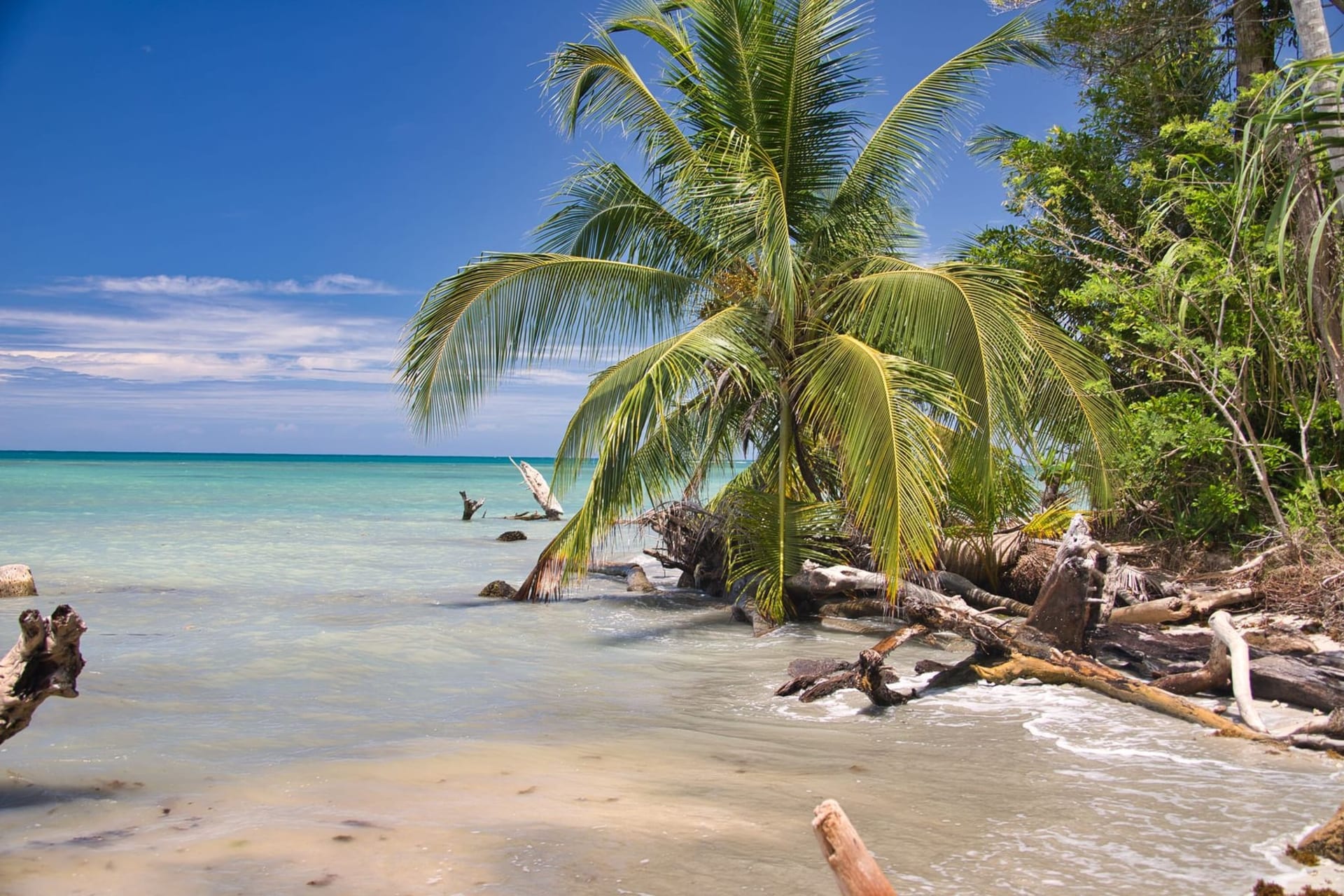
South of the city, the coast softens. Cahuita National Park begins where the paved road loses confidence, and the first thing you notice is that the sand is not white — it’s the color of raw sugar, almost amber, fringed by almendro trees whose roots grip the shore like arguments. I snorkeled the reef at Punta Cahuita on a Tuesday when the water was the kind of clear that makes you doubt your own eyesight. What I didn’t expect was the coral garden’s scale: brain coral formations the size of small cars, parrotfish clicking past in pairs. A sea turtle surfaced three meters to my left and looked at me with what I can only describe as professional indifference.
The Food That Changed My Reference Points
I’d eaten rice and beans across Costa Rica. In Limón, I ate rice and beans cooked in coconut milk with thyme and scotch bonnet — a dish called rondon exists in variations all along this coast, a slow stew of whatever the sea or the garden offered that morning. The version I had at a small comedor near the Puerto Viejo bus terminal had green banana, cassava, and a fish I never identified. It was the most honest meal I ate in the country.
When to go: The Caribbean coast runs on its own weather system — September and October tend to be drier when the Pacific side is soaked. February and March also offer calmer seas and better visibility for snorkeling the Cahuita reef.