Cahuita
"Cahuita operates on Caribbean time, which runs about three hours behind everywhere else."
An Afro-Caribbean village on Costa Rica's wildest coast where reggae, reef snorkeling, and cacao farms coexist.
The bus from San José drops you on the main road through town — which is also the only road through town — and the first thing you notice is that nobody is hurrying anywhere. Not the man selling coconuts near the park entrance, not the dogs sleeping across the bicycle path, not the bartender at Miss Edith’s who waves hello before you’ve even asked for anything. After five hours of switchbacks through the central highlands, the deceleration feels almost physical, like stepping off a moving train.
The Reef Before Breakfast
Cahuita National Park begins where the village ends, and entry on the Puerto Vargas side is a matter of walking past a sleepy ranger station and leaving a donation in a wooden box. The reef that runs parallel to Punta Cahuita is one of the best-preserved in Central America, and I made a habit of getting into the water before eight in the morning when the light hits the coral at an angle that turns everything amber and gold. Parrotfish, sergeant majors, the occasional nurse shark idling between sea fans. Lia found a sea turtle the first morning and watched it long enough that her fins went numb.
The water temperature hovers around 28 degrees regardless of the season, which means you never need a wetsuit and you never want to get out.
Rice, Beans, and the Taste of Somewhere Specific
The Afro-Caribbean cooking of this coast bears almost no resemblance to the casados served in the mountains. At Restaurante La Pecora Nera — a ten-table spot near the soccer pitch on Calle Principal — the rice and beans are cooked in coconut milk with a stalk of thyme buried somewhere in the pot, and the result is something rounded and faintly sweet in a way that Central American food almost never is. The rondon, a slow-cooked stew of whatever fish came in that morning plus green banana, yuca, and a Scotch bonnet that announces itself slowly and then all at once, took me entirely by surprise. I’d expected something generic; this tasted like a specific history.
Local cacao farms dot the road toward Hone Creek, and a morning tour through one — cracking pods, fermenting, roasting over a wood fire — clarified why the chocolate from this region tastes different from anything made further west.
Evening Without Agenda
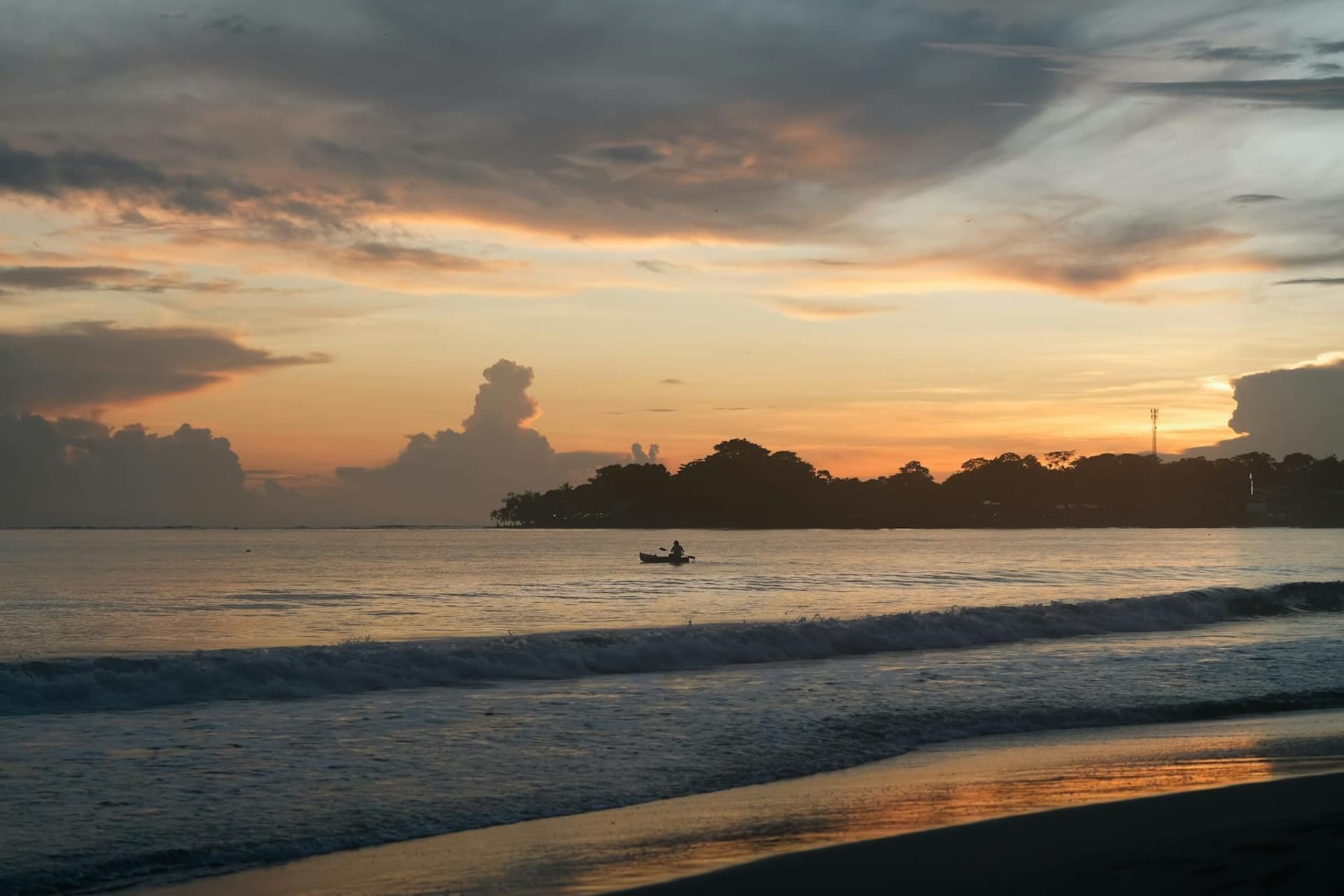
By five o’clock the reggae starts drifting out of the open-fronted bars along the main strip, competing good-naturedly with the frogs and the surf. We usually sat somewhere between the two sounds with cold cans of Imperial, watching the fishing boats come back.
When to go: The Caribbean coast runs on a different weather pattern from the rest of Costa Rica — September and October are the driest months here, when everywhere else is soaked. February through April also tend to be calm and clear, ideal for snorkeling visibility on the reef.