Europe
Cornwall
"The one place in England where the sea feels genuinely wild."
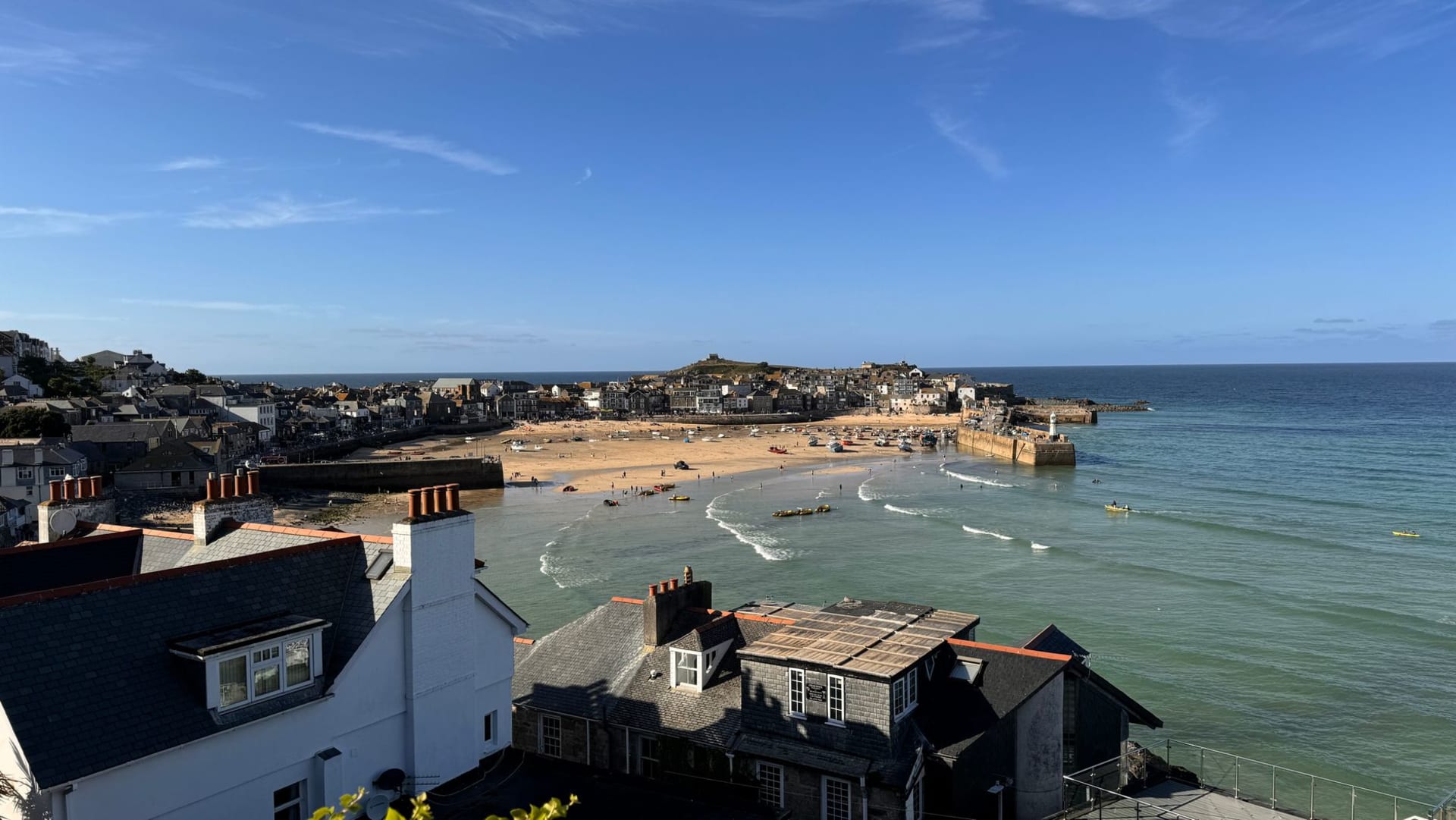
I arrived at St Ives on a Tuesday in October, which turned out to be the best possible version of the decision. The summer crowds had gone, the light was doing something I still can’t fully explain — low, amber, hitting the harbor water at an angle that made the boats look painted — and I walked down to Porthmeor Beach and stood there alone for twenty minutes feeling like I’d stumbled onto the set of someone else’s dream. Cornwall has a way of doing that. It is a place that doesn’t care much whether you’ve planned anything.
The peninsula runs southwest from the English mainland and seems to grow more itself the further you go. Falmouth has a working harbor with oysters and good coffee and a maritime museum that doesn’t feel like a punishment. The Eden Project, domed and unlikely in an old china clay pit near St Austell, is genuinely worth the visit and genuinely surprising — one of the rare tourist attractions that delivers on its promise. But the soul of Cornwall is in the smaller things: the Cornish pasty, with its thick crimped crust eaten by tin miners who held the edge with dirty hands and threw away the part they’d touched; the clotted cream on a scone in the right order (cream first, then jam, and don’t let anyone from Devon tell you otherwise); the fishing villages like Mousehole and Padstow where the harbor walls are close enough to touch from both sides. St Mawes across the Fal estuary is quiet enough in autumn that you can walk the castle headland and see nothing but water and a single sailboat and feel like the county is letting you in on something.
The coast path — the South West Coast Path — is one of the great long-distance walks in Europe, and Cornwall holds the most dramatic sections. The stretch between Zennor and St Ives crosses a headland that looks nothing like England and everything like the edge of the known world. The engine houses of old tin mines stand ruined on clifftops, rust-red against the grey Atlantic. This was a working landscape within living memory, and the ruins aren’t decorative — they’re evidence.
When to go: May to June, or September to October. Summer brings the whole of Britain with it, which is too many people for a peninsula with one main road. The shoulder seasons give you the light, the space, and the version of Cornwall that actually lives here.
What most guides get wrong: They treat Cornwall as a beach destination. It is not, or not mainly. The beaches are beautiful but the water is cold and the weather is unpredictable even in August. Come for the coast path, the food, the light, and the particular feeling of being somewhere with its own gravity — a place that has been doing things its own way since before England existed as a concept.