South America's oldest colonial city sits between the Caribbean and the Sierra Nevada, gateway to Ciudad Perdida.
I arrived in Santa Marta at the wrong end of an overnight bus from Cartagena, bleary and vaguely damp, and the city slapped me into wakefulness immediately. The heat here is different from Cartagena’s — less theatrical, more honest. Salt air from the Caribbean mixes with something green and vegetable off the mountains, and by seven in the morning the Parque de los Novios was already full of men arguing over tintos and pigeons doing their mechanical shuffle across the tiles.
The Old City at Dawn
The centro histórico is the oldest European-founded city on the South American mainland, a fact that sits quietly in the architecture without announcing itself. Walking Calle 19 before the shops open, I noticed how the colonial facades have absorbed two centuries of equatorial sun into something the color of old bone — not the candy pastels of Cartagena, but bleached, salt-scoured, honest. The Catedral Basílica de Santa Marta anchors the plaza with a kind of tired authority, its white walls holding the morning light like a lamp shade. I had a carimañola from a woman with a cart near the corner of Carrera 3 — fried yuca stuffed with spiced beef — and ate it standing up, watching the city shake itself awake.
Where the Sierra Comes Down to the Water
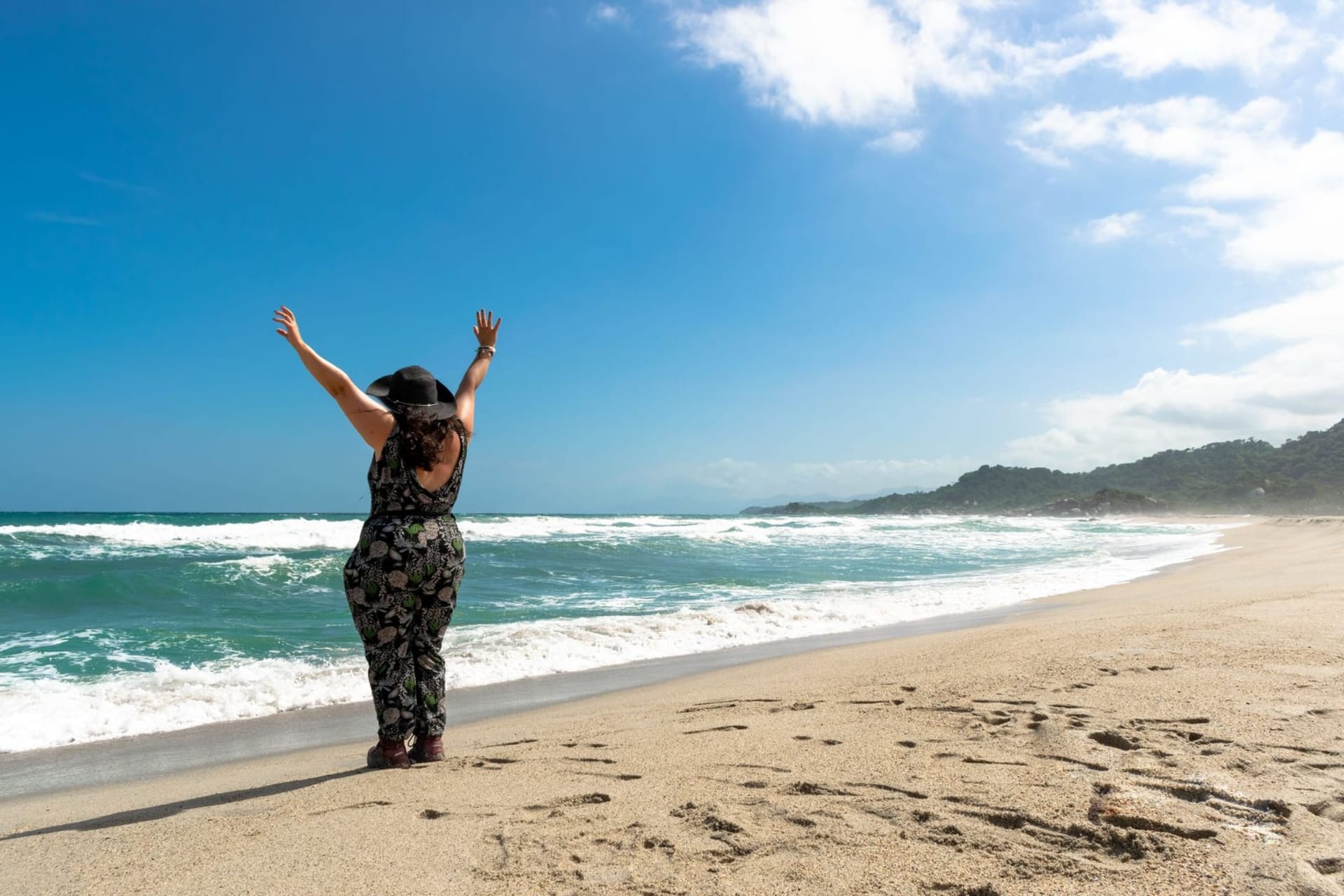
What stops me every time is the view north from the malecón: the Caribbean flat and opaque in the morning haze, and directly behind the rooftops, the Sierra Nevada already dark green and vertical, impossibly close. Lia said it looked like someone had pushed a mountain range right up to the beach and forgotten to leave any transition zone. She wasn’t wrong. The sierra doesn’t ease toward the coast — it drops. That compression is what makes Santa Marta feel charged, a city squeezed between two ecosystems with nowhere to expand.
We spent an afternoon in Taganga, the fishing village twenty minutes north by mototaxi, thinking we’d find somewhere quiet. What I didn’t expect was the silence of early evening there, after the backpackers had retreated — just the creak of wooden boats, a dog asleep on a painted hull, the smell of drying fish and motor oil. Completely unremarkable to anyone who grew up near water. To me, arriving from landlocked months in Mexico City, it felt like a revelation.
Gateway to the Lost City
Most people use Santa Marta as a staging post for the Ciudad Perdida trek — four to six days into the sierra to reach the pre-Columbian terraces carved into the mountain above the Buritaca river. I didn’t do the trek this visit, but I spent an evening in Minca, the mountain village two hours up into the coffee zone, and understood why people come back from the jungle looking slightly unhinged with gratitude. The air changes completely. The birds are absurd and constant.
When to go: December through March is the driest window, when the Caribbean is calm and the sierra trails are passable. Avoid October and November — the rains come hard off the mountains and everything turns slow and sodden.