Mysterious pre-Columbian stone statues scattered across green highlands in Huila, carved by a civilization no one fully understands.
I had read about the statues before arriving, seen photographs, understood intellectually that they were old. None of it prepared me for the first moment I stood in front of one — a squat basalt figure with jaguar teeth emerging from the corners of its mouth, hollow sockets where eyes should be, its expression unreadable across fifteen hundred years. The grass around it was wet. A mist was moving through the trees. I felt, absurdly, like I had been caught trespassing.
San Agustín sits at over 1,700 meters in the Huila department, in the southwestern Colombian highlands where the Andes begin their serious business. The town itself is small and unremarkable — a main square, a handful of hostels along Calle 3, a fritanga place near the market that opens at seven in the morning and smells of chicharrón frying in pork fat. You eat standing up. The coffee comes in small glasses, so dark it stains the cup.
The Mesitas
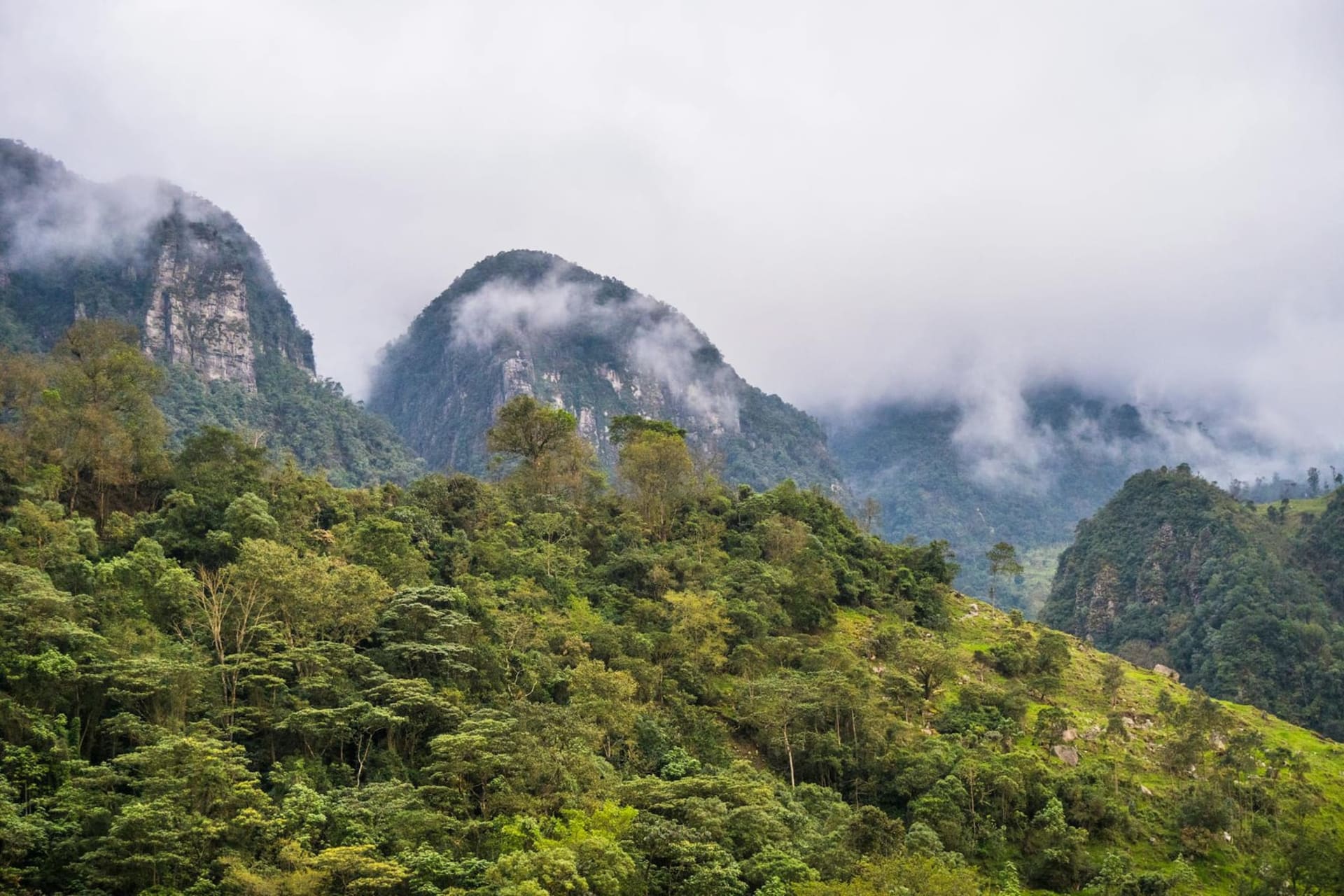
The statues are scattered across a dozen sites in the surrounding hills — the Mesitas, flat-topped ridges in the humid cloud forest around town. The main archaeological park holds the densest concentration: hundreds of figures carved from volcanic stone, some masked, some helmeted, some smiling with filed teeth, some holding objects that nobody has definitively identified. The civilization that made them flourished between the first and eighth centuries CE and then vanished, leaving no written record, no descendants who claim them, no explanation. Archaeologists argue. The statues say nothing.
The best time to be at the Mesitas is early morning, when the light is flat and grey and the hills are still draped in cloud. Lia moved ahead of me on the path, pausing at each figure, and I watched her stand very still in front of one — a seated shaman with a serpent draped over his shoulders — for a long time. She didn’t say anything when she came back. Neither did I.
The Fuente de Lavapatas
The unexpected discovery, the one I hadn’t read about properly: a ceremonial fountain carved directly into the bed of a river, at a site called Fuente de Lavapatas. Channels and spirals and serpent faces cut into living rock, designed to conduct the water through them — the water still runs through, still animates the carved faces, still makes the stone look alive. Standing over it with the river cold and fast around my ankles, watching water pour through a face carved two thousand years ago, I felt something I can only describe as vertigo. Not from height. From time.
The path from the main mesita down to the fountain passes through stands of wax palms and cecropia, the air thick with something damp and green, and occasionally you round a corner and find another statue standing alone in the grass with no fence around it, no label, just the Andean sky behind it.
When to go: December through February or July through August, when the rains ease up. The highlands are green year-round, but the unpaved trails to the outlying sites become difficult after sustained rain — and the mist, while atmospheric, means the morning light disappears fast.