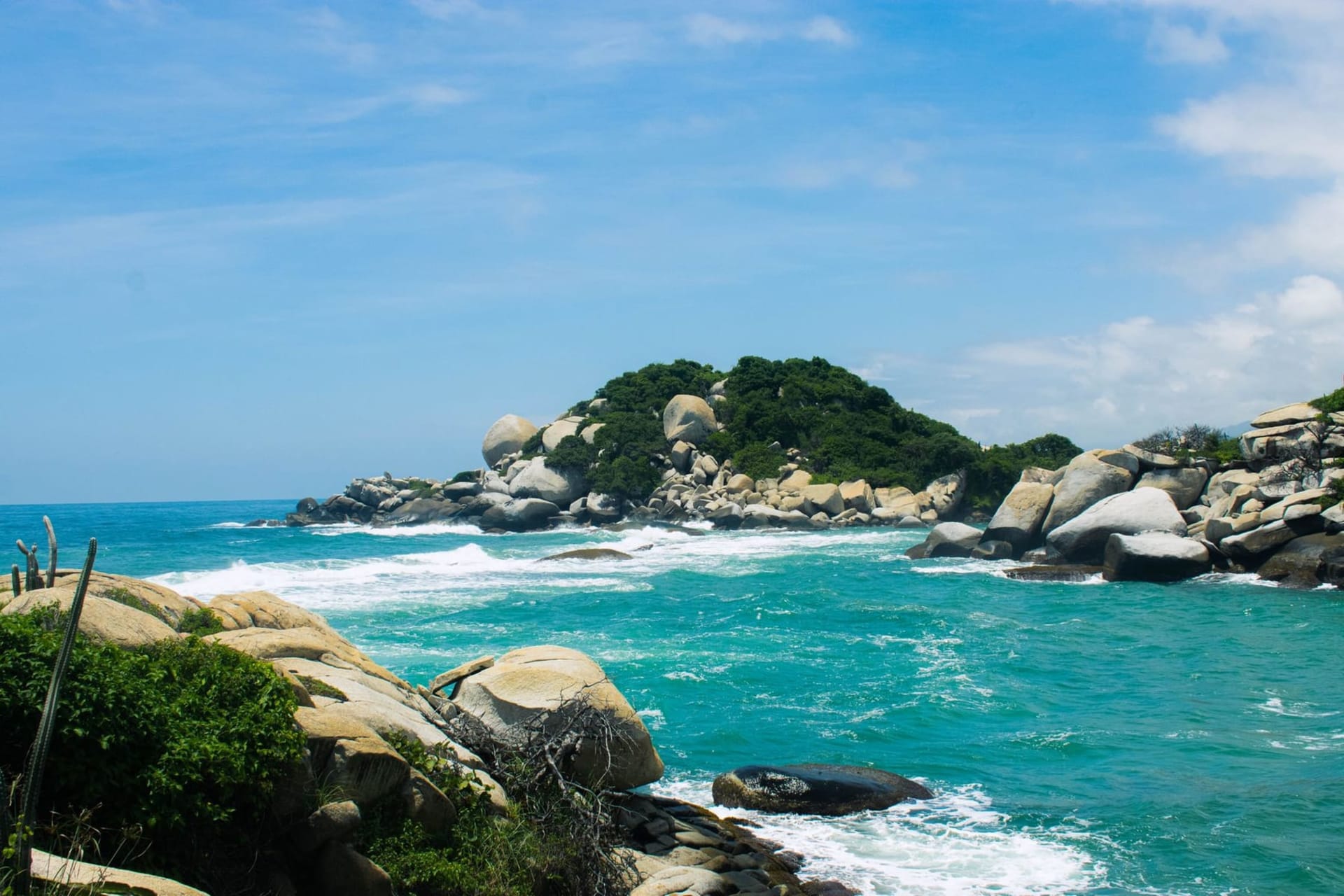
Providencia Island
"Providencia has no reason to hurry — the reef is right there, and so is the rum."
A tiny Raizal island with the Caribbean's third-largest coral reef and a Creole culture entirely its own.
The propeller plane from San Andrés takes twenty minutes and lands on a strip so short it feels like a dare. Then you step out into air that smells of salt and frangipani and something faintly sweet I later identified as the ripe sapodilla falling from the trees along the road to Santa Isabel. That is roughly when I understood that Providencia operates on a different logic than the rest of the Caribbean — quieter, more deliberate, convinced of its own sufficiency.
The Reef and What It Does to a Morning
We dropped into the water off Manta’s Place before the dive boats from the mainland had even crossed the channel. The Old Providence McBean Lagoon National Natural Park stretches the full eastern flank of the island, and the coral here — elkhorn, brain coral, great sea fans the color of dried blood — is still largely intact in a way that reefs elsewhere only are in photographs. A spotted eagle ray passed beneath me so close I could have counted the dots on its back. Lia surfaced laughing, mask still fogged, and said nothing, which told me everything. We spent three mornings in that water and never once saw the same configuration of fish.
Santa Isabel and the Raizal Kitchen
The island’s main settlement is small enough that you learn it in an afternoon. The Raizal people — descendants of enslaved Africans and English Puritan settlers — speak a Creole English among themselves that sounds lilting and coastal, nothing like the Spanish Colombia sent over with its administrators. At a wooden house on the road past the Catholic church, a woman named Miss Enid sold us rondón: a rich coconut-milk stew with yuca, plantain, and whatever fish came in that morning, served with a sweetness that does not exist in any recipe I have found since. We went back two more times. She seemed unsurprised.
The unexpected discovery came on our last afternoon: a hand-lettered sign near the old fort pointing to a freshwater lake hidden inside the island’s central ridge, a place called Lago Freshwater that nobody at the hostel had mentioned. We climbed through dense secondary forest and arrived at still, dark water completely enclosed by trees, the reef and the rum shacks and the entire Caribbean invisible behind the green. It felt like finding a secret the island kept for people who stayed long enough.
When to go: December through April brings the driest, calmest weather and the clearest diving visibility. Avoid September and October, which sit deep in hurricane season and can leave the island’s single airstrip closed for days.