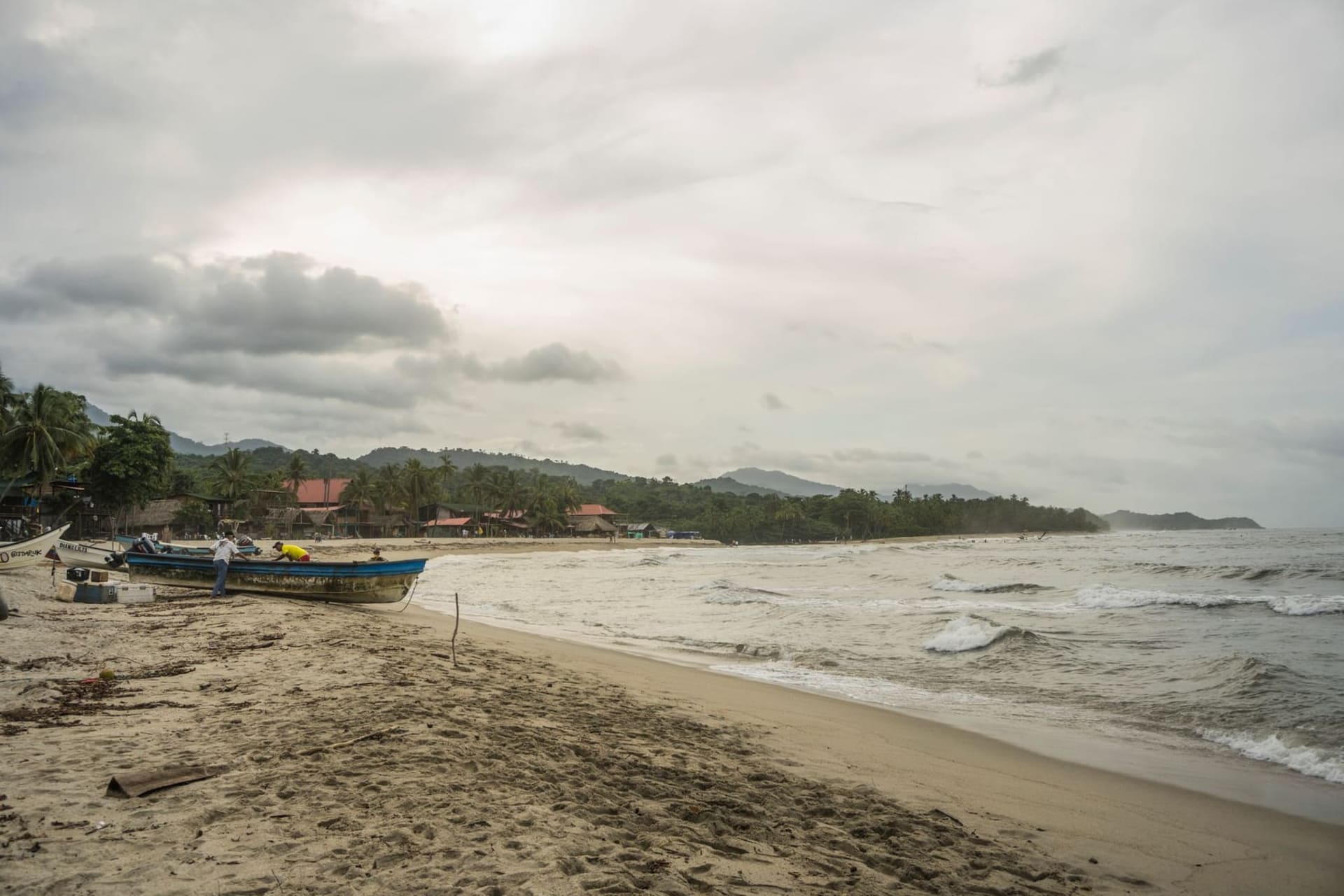
Where a jungle river meets the Caribbean at the foot of the Sierra Nevada, Palomino is Colombia's laid-back secret.
There is a particular quality to the light at Palomino in the late afternoon — it comes down through the palms at an angle that makes everything look slightly overexposed, like a photograph taken with too much tenderness. I arrived on the bus from Santa Marta, three hours of coast road and cumbia leaking from the driver’s speakers, and stepped off into a heat that smelled of wet leaves, salt, and something frying in a kitchen I couldn’t see.
Palomino is not a town so much as a long exhale. One main road, the Troncal del Caribe, cuts through it without ceremony. The rest is footpaths through sand, hammocks strung between coconut palms, and the low wooden hostels that have learned, somehow, not to ruin the place.
The River
The Río Palomino is the reason people come, and it exceeds the rumor. Every morning, local guides load rubber tubes at the put-in point behind the village — a ten-minute walk up a trail that crosses the Troncal and disappears into shade — and you spend the next hour drifting downstream through jungle corridor, the canopy closing overhead, the current doing all the work. Lia fell asleep on her tube somewhere in the middle stretch and woke up with the sound of surf. That is the thing about this river: it ends at the sea. You float out of jungle and land on a beach, blinking, as if the world changed genres mid-sentence.
What I did not expect was the cold. The Río Palomino comes down off snowfields in the Sierra Nevada, and even in the lowland heat the water holds something of altitude. It cuts through the Caribbean warmth like a clean thought.
Eating on the Troncal
Back on the main road, the best meal I had was the simplest: a bandeja of rice, red beans, fried fish, and patacones from a woman cooking out of her front room beside the panadería near the central park. No sign, no menu. She looked at us and named a price that seemed almost apologetic. The fish was sierra, pulled from the sea that morning, and the patacones were thick and salted like something from another century.
In the evenings the road gets social. Plastic chairs appear, cold Águilas sweat in the heat, and somewhere a speaker plays vallenato at a volume that is not negotiable.
Up Toward the Mountains
North of the village, a dirt road leads toward Wiwa and Kogui indigenous territory in the Sierra Nevada foothills. I walked it one morning before breakfast, alone, past cacao groves and small fincas where roosters argued with each other across the mist. The mountains were visible, briefly, before the clouds came down. That brief glimpse — white peaks above jungle, framed by banana leaves — felt like the real secret of Palomino, the thing the river was pointing at all along.
When to go: December through March is dry season on this stretch of coast and the best time to visit — clear skies, reliable river conditions, and the Sierra Nevada sharp on the horizon. Avoid October and November when rains can swell the Palomino and make tubing unpredictable.