Medellín Innovation
"Medellin built cable cars to the hillsides it used to fear — and brought the whole city along."
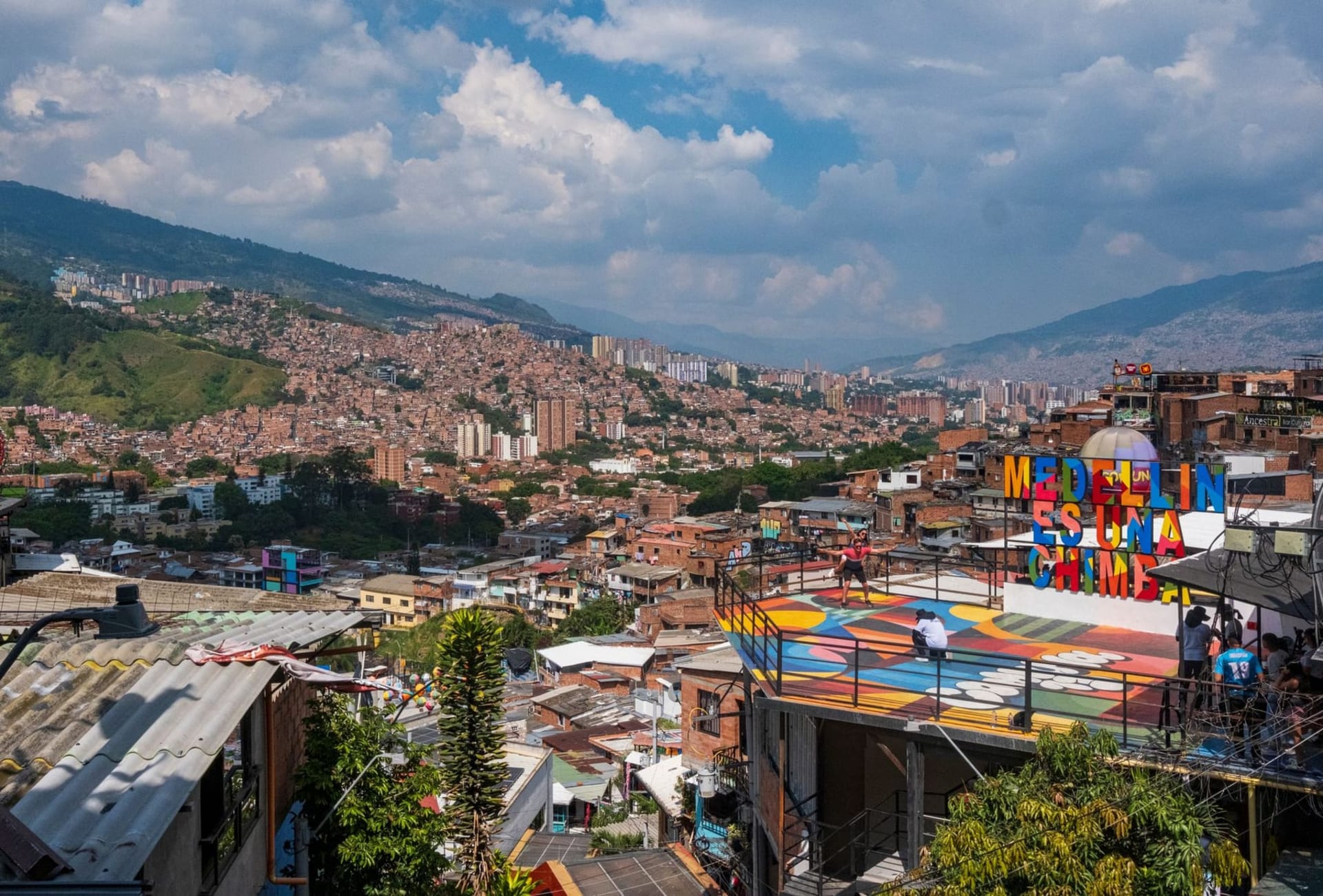
I had read the statistics before coming. Every city that has pulled off something improbable has its statistics. But the Metrocable Line K — orange gondolas threading above Comunas 1 and 2, lifting you in silence over tens of thousands of terracotta rooftops, the city sprawling below like a sentence still being written — does not feel like a statistic. It feels like a decision made by people who refused to believe their city was finished.
What the Gondolas Actually Changed
The cable car was never just transport. In 1991, Medellín was the most violent city on earth. The comunas on the northeastern hillsides — Santo Domingo Sábana, La Francia, Popular — were effectively cut off, inaccessible to the police, unreachable by the Metro that ran only through the flat valley floor. The Metrocable arrived in 2004, and with it came something the planners almost certainly didn’t put in the cost-benefit analysis: the sense that the city had turned to face these neighborhoods and said you count.
I took Line K on a Tuesday morning, watching the city tilt below me. At the Acevedo interchange, a woman with an enormous bag of yuca got on without looking up from her phone. Three stops later, a schoolboy in a white uniform fell asleep against the window. This was just how people moved. The extraordinary had become ordinary, which is, I think, the whole point.
España Library and the Architecture of Intent
At the Santo Domingo Sábana station, the España Library sits on a promontory above the neighborhood — three black rock volumes that look, from a distance, like volcanic formations risen from the hillside. Inside, the reading rooms smell of cool concrete and old paper, and teenagers sit at computers in a space that communicates, through its sheer quality of construction, that their presence here is expected and deserved.
Lia stood at the window for a long time, looking down at the rooftops. “They built something beautiful here on purpose,” she said. “Not a functional box. Something beautiful.” The architect, Giancarlo Mazzanti, had designed it as a signal — that public investment in a poor neighborhood could be as ambitious as anything in El Poblado.
What I hadn’t expected was the community below the library: a staircase of public escalators, murals six stories high, and a cluster of open-air tiendas where I ate a bandeja paisa — a platter of red beans, chicharrón, chorizo, fried egg, rice, and arepa — so large it required a brief renegotiation of plans for the afternoon. The arepa was charred at the edges and tasted of woodsmoke and corn in a way that nothing called an arepa has tasted before or since.
The City That El Poblado Doesn’t Show You
Most visitors stay in El Poblado, Medellín’s polished enclave of brunch restaurants and rooftop bars, and leave thinking they’ve seen the city. They’ve seen its most exported version. The real metabolism of Medellín is in the Laureles neighborhood’s cycle paths on Sunday mornings, when Avenida El Poblado goes car-free and fills with families on rented bikes and old men in cycling jerseys taking it very seriously. It’s in the flower market at Minorista, which blooms before dawn in a riot of Birds of Paradise and anthuriums and stems so vivid they seem artificially saturated.
The surprise that rearranged my mental map came on the last evening, riding the Metrocable at dusk. The sun was setting behind the western ridge, throwing the valley into deep shadow, and from inside the gondola the city’s lights were coming on — block by block, hillside by hillside — until the whole basin glittered. A city of three million, visible in its entirety, from a cable car that twenty years ago didn’t exist. Medellín didn’t overcome its history by burying it. It overrode it, gondola by gondola, library by library, until the new thing was the thing people knew.
When to go: December through March for Medellín’s eternal spring at its driest — the city sits at 1,500 meters and earns its nickname La Ciudad de la Eterna Primavera year-round, but the Christmas Alumbrado light festival in December transforms the Río Medellín corridor into something genuinely surreal.